
Summary: Researchers report that an odor identification test could help predict cognitive decline and detect early-stage Alzheimer’s disease.
Source: Columbia University Medical Center.
Smell test may provide a low-cost option for early detection of Alzheimer’s disease.
Researchers from Columbia University Medical Center (CUMC), the New York State Psychiatric Institute, and NewYork-Presbyterian have reported evidence that a standardized odor identification test can help predict future cognitive decline and identify early-stage Alzheimer’s disease. The findings come from two studies presented at the Alzheimer’s Association International Conference in Toronto, and highlight the potential of the University of Pennsylvania Smell Identification Test (UPSIT) as a practical, low-cost screening tool.
In the first study, investigators administered the UPSIT to 397 older adults (average age 80) drawn from a multiethnic community in northern Manhattan. All participants received structural MRI scans to measure entorhinal cortex thickness, a brain region known to be affected early in Alzheimer’s disease.
After four years of follow-up, 50 participants (12.6 percent) had developed dementia and nearly 20 percent showed measurable cognitive decline. The researchers found that low UPSIT scores — indicating a reduced ability to correctly identify odors — were significantly associated with later development of dementia and Alzheimer’s disease. By contrast, entorhinal cortical thickness measured on MRI did not independently predict dementia in the same analysis.
Although entorhinal cortical thickness alone did not predict transition to dementia across the whole sample, it was significantly associated with UPSIT scores in the subgroup who later transitioned to dementia. Overall, the study indicates that impairments in odor identification can serve as an early clinical predictor of cognitive decline and may even precede detectable thinning of the entorhinal cortex in the earliest stages of Alzheimer’s disease.
“Our research showed that odor identification impairment, and to a lesser degree, entorhinal cortical thickness, were predictors of the transition to dementia,” said Seonjoo Lee, PhD, assistant professor of clinical biostatistics (in Psychiatry) at CUMC and presenting author. “These findings support odor identification as an early predictor, and suggest that impairment in odor identification may precede thinning in the entorhinal cortex in the early clinical stage of Alzheimer’s disease.”
The second study evaluated how well UPSIT and measures of brain amyloid predict memory decline. The team tested 84 older adults (median age 71), including 58 people with mild cognitive impairment, using UPSIT and either beta-amyloid PET imaging or cerebrospinal fluid analysis. Participants were followed for at least six months.
At follow-up, 67 percent of the participants showed signs of memory decline. A positive result for amyloid, whether detected by PET imaging or by changes in cerebrospinal fluid, predicted subsequent memory decline. UPSIT score on its own was not a statistically significant predictor in this smaller, shorter study; however, participants with UPSIT scores below 35 were more than three times as likely to experience memory decline compared with those scoring higher.
“Our research suggests that both UPSIT score and amyloid status predict memory decline,” said William Kreisl, MD, the Boris and Rose Katz Assistant Professor of Neurology (in the Taub Institute) at CUMC and a neurologist at NewYork-Presbyterian/Columbia. “Younger age, higher education, and shorter follow-up may explain why UPSIT did not predict decline as strongly in this study as in previous studies. Although more research is needed, odor identification testing, which is much less expensive and easier to administer than PET imaging or lumbar puncture, may prove to be a useful tool in helping physicians counsel patients who are concerned about their risk of memory loss.”
Current clinical methods typically detect Alzheimer’s disease only after substantial brain damage has occurred. Molecular imaging with PET can reveal amyloid plaque accumulation years before symptoms appear, but PET scans are expensive. Beta-amyloid can also be measured in cerebrospinal fluid obtained by lumbar puncture, and imaging of abnormal tau protein is advancing rapidly in research settings.
“Our study adds to the growing body of evidence demonstrating the potential value of odor identification testing in the detection of early-stage Alzheimer’s disease,” said D.P. Devanand, MD, professor of psychiatry (in Neurology and in the Gertrude H. Sergievsky Center) at CUMC and senior author of both studies.
Heather Snyder, PhD, director of medical and scientific operations at the Alzheimer’s Association, noted that using a broader range of biomarkers to detect Alzheimer’s disease at earlier stages — particularly low-cost, non-invasive measures — could improve early detection and disease management.
Funding: The study “Predictive Utility of Entorhinal Cortex Thinning and Odor Identification Test for Transition to Dementia and Cognitive Decline in an Urban Community Population,” led by Seonjoo Lee, PhD, was supported by the National Institute on Aging (grants K01AG051348, R01AG034189, R01AG037212, K99/R00AG042483, R01AG041795). The study “Both Odor Identification and Amyloid Status Predict Memory Decline in Older Adults,” led by William Kreisl, MD, was supported by the National Institute on Aging (grants R01AG17761 and R01AG041795).
Source: Karin Eskenazi — Columbia University Medical Center
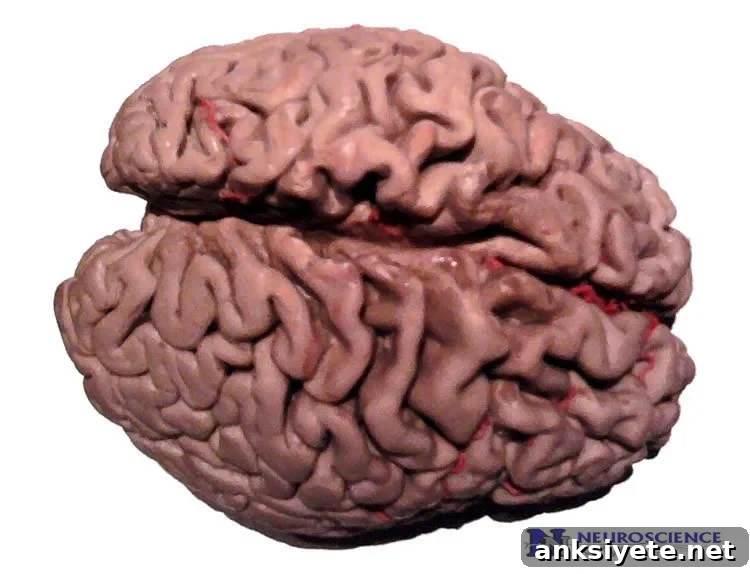
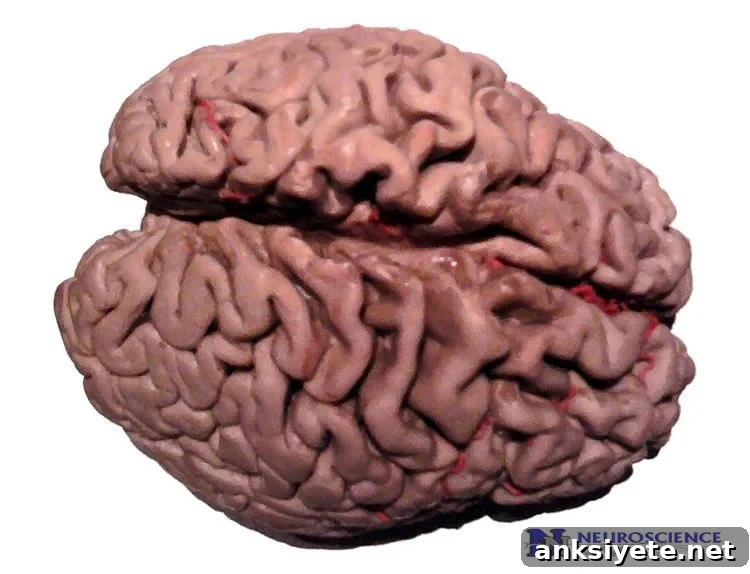
Image Source: This image is reported as public domain.
Original Research Presentation: Findings were presented at the Alzheimer’s Association International Conference, July 22–28, Toronto, Canada.