Summary: A new study identifies a specific cellular mechanism—endocytosis—as disrupted in spinal muscular atrophy (SMA), offering a fresh lead for future therapies and suggesting a possible infection-related consequence for carriers.
Source: Brown University
Researchers have long known that spinal muscular atrophy (SMA) results from loss of function in both copies of the SMN1 gene, producing insufficient survival motor neuron (SMN) protein. What remained unclear was how the loss of SMN causes motor neurons to fail and muscles to weaken. A new study led by investigators at Brown University shows, for the first time, that reduced SMN impairs endocytosis—a fundamental cellular recycling process—providing a new direction for understanding disease mechanisms and potential interventions.
The study also produced an unexpected insight: a milder impairment of the same cellular mechanism in people who carry a single defective SMN1 copy might reduce susceptibility to certain infections.
SMA is the most common genetic cause of infant mortality in the United States and currently lacks a universally effective cure, said corresponding author Anne Hart, professor of neuroscience at Brown. The disorder affects roughly one in 10,000 children in Caucasian populations, where patients have defects in both SMN1 copies. Approximately one in 40 people are carriers, with one functional and one nonfunctional SMN1 allele.
Published in the Proceedings of the National Academy of Sciences, the study reports that lower levels of SMN protein disrupt endocytosis, the process cells use to internalize, recycle and redistribute membrane components and proteins. Endocytosis is especially critical at neuronal synapses, where fast recycling of synaptic vesicles and membrane is required for ongoing neurotransmitter release and reliable communication between neurons and muscle.
“Without efficient neurotransmitter recycling and endocytosis, synaptic vesicles cannot be recycled fast enough to sustain normal nerve and muscle activity,” Hart said.
The study authors note that many pathogens exploit endocytic pathways to enter or infect cells. A partial reduction in endocytosis among SMN1 carriers could therefore make it harder for some viruses or bacteria to complete their infection cycles, potentially providing a selective advantage in certain contexts. The study does not prove carriers are less likely to become ill from infections; establishing such a protective effect would require epidemiological and clinical studies beyond the scope of this work.
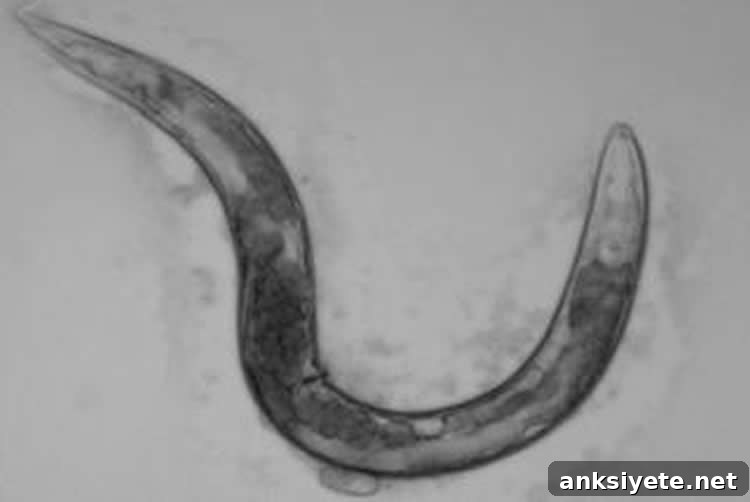
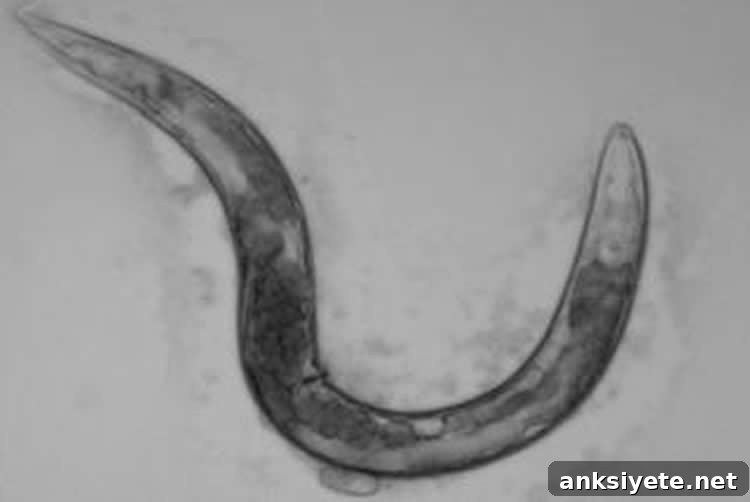
Most experiments were conducted in the nematode Caenorhabditis elegans, a widely used model organism that carries an SMN ortholog and has motor neurons and neuromuscular junctions comparable in key features to those of humans. Worms with reduced function of the SMN ortholog (smn-1) displayed multiple indicators of impaired endocytosis and altered synapse structure compared with worms with normal SMN levels. These defects included changes in synaptic endocytic proteins and ultrastructural alterations in endosomal compartments, together indicating disrupted membrane trafficking at synapses.
Complementing the worm experiments, the researchers tested infection in human cells, including cells derived from SMA patients. They used JC polyomavirus (JCPyV) as a model endocytosis-dependent pathogen. The virus, which is commonly harbored by people and typically causes disease only under conditions of weakened immunity, infected cells with reduced SMN less efficiently than control cells, consistent with a functional link between SMN levels, endocytosis, and susceptibility to endocytosis-dependent infection.
While this work shows that low SMN levels interfere with endocytic pathways, the exact molecular mechanisms connecting SMN deficiency to endocytic disruption remain to be determined. Hart and colleagues identify this mechanism as a next priority for research aimed at understanding how SMN loss leads to motor dysfunction and, ultimately, how that knowledge might be translated into therapies.
“No one had focused on this possibility before,” Hart said. “These preliminary findings place SMN and endocytosis on the radar for researchers studying infectious disease genetics and may help explain why the carrier state persists in the population.”
From an evolutionary perspective, the authors note that if carriers did experience even a modest protection from certain infections, that advantage could help explain why SMN1 carrier frequency remains relatively high in human populations, similar to other balanced polymorphisms where carrier status confers protection against particular pathogens.
The paper’s lead author is Maria Dimitriadi, formerly a fellow at Brown University. Other contributors include Aaron Derdowski, Geetika Kalloo, Melissa Maginnis, Patrick O’Hern, Bryn Bliska, Altar Sorkac, Ken Nguyen, Steven Cook, George Poulogiannis, Walter Atwood and David Hall. Funding was provided by the SMA Foundation and the National Institutes of Health.
Abstract
Decreased function of survival motor neuron protein impairs endocytic pathways
Spinal muscular atrophy (SMA) is caused by depletion of the ubiquitously expressed survival motor neuron (SMN) protein. SMN is essential for assembly of ribonucleoprotein complexes, but how reduced SMN compromises motor neuron function has been unclear. Using Caenorhabditis elegans, the authors show that decreased function of the SMN ortholog perturbs endocytic pathways at motor neuron synapses and in other tissues, producing defects in neuromuscular function and synaptic structure. Diminished SMN levels correlated with changes in synaptic endocytic proteins and ultrastructural defects in endosomal compartments, including fewer docked synaptic vesicles. In human cells, endocytosis-dependent infection by JC polyomavirus was reduced when SMN levels were lowered. Together, these results demonstrate that SMN depletion impairs endosomal trafficking and synaptic function even before motor neuron cell death occurs.
“Decreased function of survival motor neuron protein impairs endocytic pathways” by Maria Dimitriadi et al., Proceedings of the National Academy of Sciences, published online July 11, 2016. DOI: 10.1073/pnas.1600015113