Study in humans and rats finds increased FGF9 and physical changes in depressed brains
Depression often evokes images of loss, low mood, and diminished function. However, new research reveals that some molecular factors may be elevated, not reduced, in depressed brains. Scientists have identified increased levels of fibroblast growth factor 9 (FGF9) in the hippocampus of people with major depressive disorder and demonstrated that altering FGF9 in rats changes behavior in ways that resemble depression and anxiety.
The team found that FGF9 was about 32 percent higher in the hippocampus of people who had major depression compared with non-depressed controls. Complementary rodent experiments showed that chronic social stress raised hippocampal FGF9, injecting FGF9 into the brain produced anxiety- and depression-like behaviors, and reducing FGF9 in the dentate gyrus reduced anxiety. Together, the human and animal results strengthen the view that depression is a biological brain disorder and highlight FGF9 as a potential therapeutic target.
The discoveries were made by researchers from the University of Michigan Medical School, the Pritzker Neuropsychiatric Disorders Research Consortium, and collaborators at several institutions. These findings were published in the Proceedings of the National Academy of Sciences after extensive analyses of postmortem human brain tissue and targeted rodent studies.
Human differences: a surprising finding
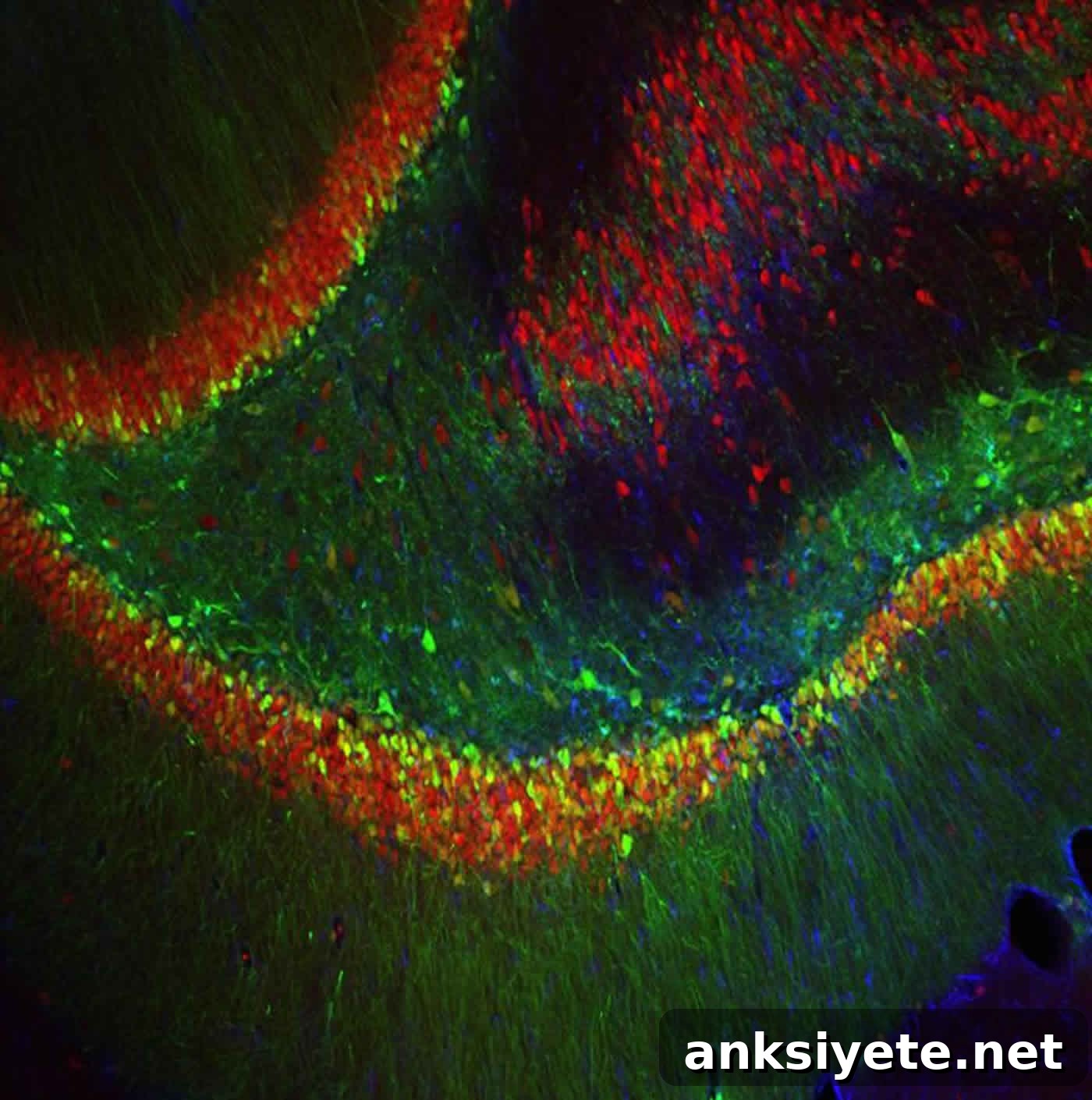
Investigators examined hippocampal tissue from a high-quality brain bank collection that included 36 individuals with major depressive disorder and 56 non-depressed controls. Using three independent microarray gene expression analyses and confirming quantitative PCR tests, they assessed gene activity in the hippocampus, a brain region crucial for memory, learning and stress regulation and known to be affected in depression.
Contrary to expectations based on prior work showing reductions in some fibroblast growth factors (notably FGF2) in depression, FGF9 expression was consistently elevated in depressed brains. This elevation persisted after accounting for demographic and postmortem variables. At the same time, levels of several other FGF family members were decreased when FGF9 was high, suggesting an imbalance across the FGF signaling system in depression.
Rodent studies reveal FGF9 function
To determine whether elevated FGF9 is a cause or consequence of stress-related changes, the researchers turned to rat models. First, rats exposed to repeated social stress for more than a week showed increased hippocampal FGF9, social withdrawal, and poorer weight maintenance—behaviors that model aspects of depression.
Next, chronic intracerebroventricular administration of FGF9 increased anxiety- and depression-like behaviors and reduced locomotor activity compared with controls. These behavioral changes persisted with repeated dosing, indicating that elevated brain FGF9 can drive negative affective behavior.
Finally, the team used a lentiviral vector to knock down FGF9 expression specifically in the dentate gyrus, a subregion of the hippocampus. This targeted reduction lowered FGF9 by roughly 30 percent while leaving other FGF family members unchanged, and it produced a measurable decrease in anxiety-like behaviors. These complementary experiments established both the responsiveness of FGF9 to stress and its causal role in behavioral changes relevant to mood disorders.
Implications and next steps
Because therapies that inhibit excessive production of a molecule often produce fewer side effects than those that aim to raise deficient factors, FGF9 represents an intriguing candidate for therapeutic development. The research team is pursuing further studies to understand what drives FGF9 upregulation, how FGF9 interacts with other FGFs and neural circuits, and whether modulating FGF9 can be safe and effective. The investigators caution that FGF9 also has important functions outside the brain, including roles in lung and vascular biology, so any drug development would need to address potential systemic effects.
The research team included Elyse Aurbach and Huda Akil from the University of Michigan, co-first author Edny Gula Inui, colleagues at the University of California, Irvine, the HudsonAlpha Institute for Biotechnology, Cornell University, Stanford University, and support from the U-M Vector Core.
Funding: Support came from the Pritzker Consortium, the National Science Foundation, the Office of Naval Research, the National Institute of Mental Health, the Hope for Depression Research Foundation, and the University of Michigan Neuroscience Graduate Program funded by the NIH. The authors acknowledge with gratitude the patients and families who donated brain tissue for research.
Source: Kara Gavin – University of Michigan
Image credit: University of Michigan – Akil laboratory
Abstract (summary)
Gene expression profiling of postmortem human hippocampus and complementary animal studies implicate FGF9 as a novel modulator of negative affect. FGF9 is up-regulated in the hippocampus of individuals with major depressive disorder and rises in response to chronic social defeat stress in rodents. Chronic central administration of FGF9 increases anxiety- and depression-like behaviors, whereas lentiviral knockdown of FGF9 in the dentate gyrus reduces anxiety-like behavior. These findings suggest that elevated hippocampal FGF9 contributes to mood and anxiety disorder-related behaviors and that the balance among FGF family members may influence vulnerability or resilience to affective disorders.