
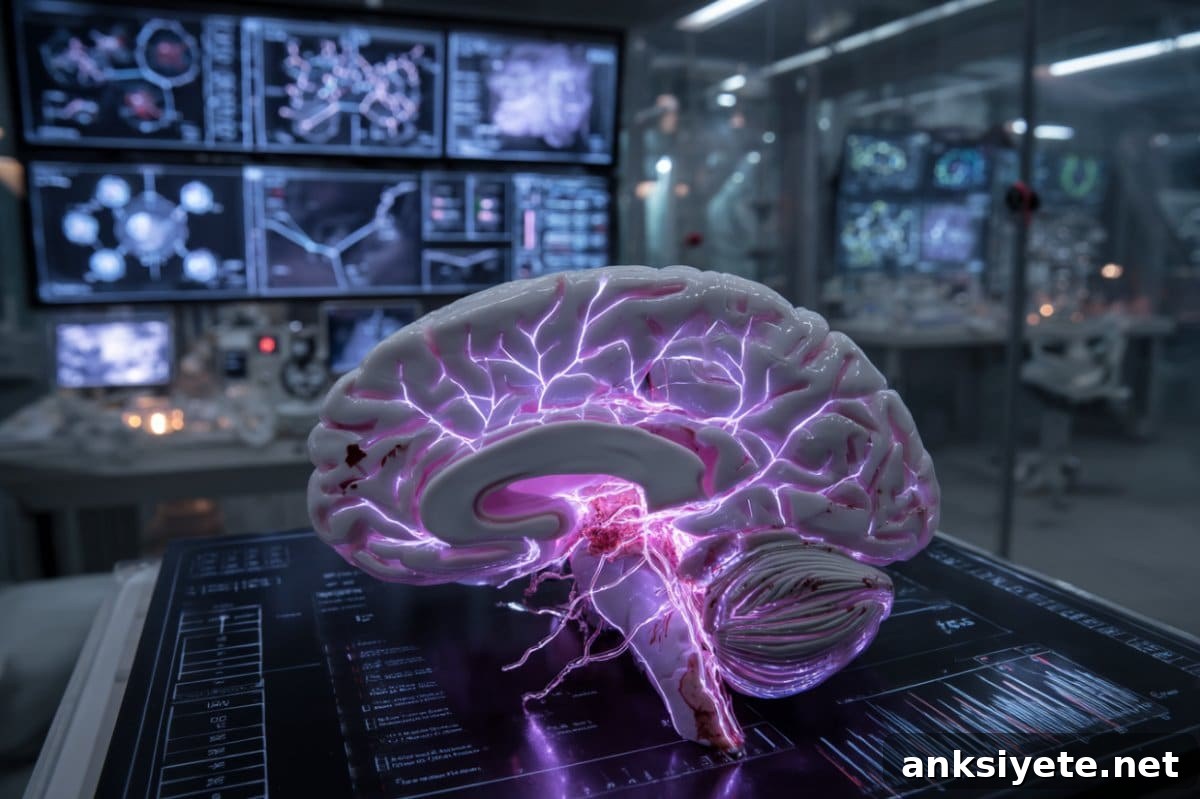
Summary: Researchers have created an advanced three-dimensional brain model that reproduces both the structure and function of human brain tissue. Using biomimetic 3D bioprinting, the Bioengineered Neural Network (BENN) separates gray and white matter regions, supports aligned axonal pathways, and responds to electrical stimulation with electrophysiological activity similar to that of native brain tissue.
When exposed to low, socially relevant levels of alcohol over several weeks, BENN developed hallmark signs associated with Alzheimer’s pathology and showed structural damage in neural fibers. These results reveal how even moderate alcohol consumption can produce region-specific neurotoxic effects and demonstrate the model’s potential as a platform for real-time study of disease processes and improved preclinical testing.
Key Facts:
- 3D Brain Model: BENN recreates human brain architecture with separate, functionally distinct gray and white matter compartments.
- Alcohol Impact: Daily exposure to moderate ethanol levels increased Alzheimer’s-related proteins and caused morphological damage in axons within the model.
- Clinical Potential: BENN enables real-time visualization of neurotoxic responses, supporting early detection research and more accurate drug evaluation in preclinical settings.
Source: POSTECH
Research team: A multidisciplinary team led by Professor Dong‑Woo Cho (Department of Mechanical Engineering, POSTECH) and Professor Jinah Jang (Departments of Mechanical Engineering, IT Convergence Engineering, Life Sciences, and Interdisciplinary Graduate Program), together with Dr. Mihyeon Bae and Dr. Joeng Ju Kim, developed this three-dimensional brain model that closely mimics human brain structure and function.
Their findings were published in the International Journal of Extreme Manufacturing, a journal focused on advances in manufacturing and materials science.
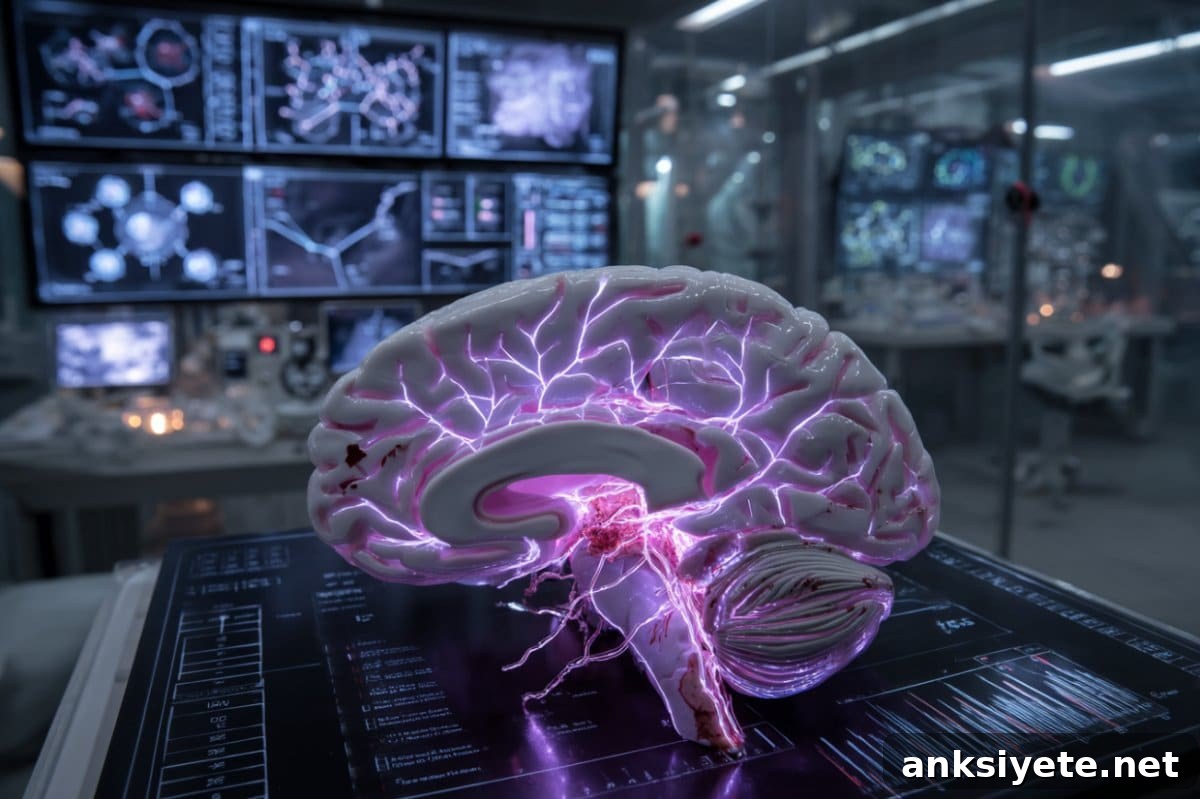
Neurodegenerative disorders such as Alzheimer’s and Parkinson’s disease are difficult to reverse once they begin, making early diagnosis and reliable predictive models essential for developing effective treatments. The brain’s extreme cellular complexity and tightly regulated signaling networks present a major challenge for laboratory models.
Conventional two-dimensional cell cultures and many stem cell-derived organoids struggle to reproduce the brain’s compartmentalized architecture, long-range axonal alignment, and electrophysiological behavior. To address these limitations, the POSTECH team designed BENN: a 3D bioprinted neural construct built layer by layer to emulate the brain’s organization.
BENN’s defining feature is its biomimetic compartmentalization into gray and white matter–like regions. The gray matter analogue houses neuronal cell bodies, while the white matter analogue contains densely aligned axons engineered to support directional signal transmission. The researchers used controlled electrical stimulation to steer axonal growth along a preferred direction, encouraging the formation of aligned neural tracts and interconnected pathways that resemble those found in vivo.
Functional assessment of BENN included real-time monitoring of calcium flux, which demonstrated spontaneous and evoked electrophysiological responses comparable to those of living brain tissue. These measures indicate that the model not only reproduces structural features but also supports circuit-like activity and signal propagation.
To evaluate BENN as a tool for studying neurodegeneration, the team exposed the model to daily treatments of ethanol at 0.03%—a concentration chosen to mimic moderate social drinking—over a three-week period. In the gray matter compartment, researchers detected increased accumulation of Alzheimer’s-associated proteins, including amyloid-beta and hyperphosphorylated tau. In the white matter compartment, axonal fibers displayed swelling, deformation, and other morphological abnormalities. Signal transmission through the engineered network was also reduced, showing attenuated propagation consistent with functional impairment.
This work is the first to visualize and quantify region-specific neurotoxic responses to alcohol in real time within a bioengineered brain model. By enabling high-resolution observation of both structural and functional changes, BENN opens new possibilities for identifying early pathological events and assessing how candidate therapeutics affect neural connectivity.
Professor Dong‑Woo Cho commented that the BENN platform allows detailed analysis of neural connectivity and electrophysiology that was previously difficult to obtain, and that it could significantly improve early detection strategies and preclinical evaluation of treatments. Professor Jinah Jang emphasized the study’s importance for investigating the early stages of brain disease in controlled laboratory conditions.
Funding: This research received support from the Korean Fund for Regenerative Medicine (Ministry of Science and ICT and Ministry of Health and Welfare, Republic of Korea; grant 22A0106L1) and the National Research Foundation of Korea (NRF) funded by the Korea government (MSIT; grant No. 2022M3C1A3081359).
About this neurotech and neuroscience research news
Author: Jinyoung Huh
Source: POSTECH
Contact: Jinyoung Huh – POSTECH
Image credit: Neuroscience News
Original Research (open access):
“3D bioprinted unidirectional neural network and its application for alcoholic neurodegeneration” by Dong‑Woo Cho et al., International Journal of Extreme Manufacturing. DOI: 10.1088/2631-7990/add632
Abstract
3D bioprinted unidirectional neural network and its application for alcoholic neurodegeneration
The brain’s physiology is defined by a specialized extracellular matrix, compartmentalized organization (gray and white matter), and aligned axonal networks that enable directional signal transduction. Capturing these features in vitro is essential for studying how neuronal signaling interacts with the pathogenesis of neurological disease.
Three-dimensional bioprinting offers advantages over patterned two-dimensional substrates by allowing the reconstruction of axonal kinetics without the geometric limitations of planar systems. In this study, the BENN model was developed using 3D bioprinting to recreate compartmentalized brain structure and to guide axonal directionality through applied electrical stimulation.
The printed axonal networks displayed mature neuronal characteristics and spontaneous calcium signaling, validating BENN as a reliable neural analogue. When exposed to alcohol, BENN revealed region-specific pathological markers, such as amyloid-beta accumulation in somata and axonal deformation in white-matter-like regions. These observations illustrate BENN’s utility for investigating neurodegeneration and for studying dynamics of axonal networks relevant to neurological disease research.