
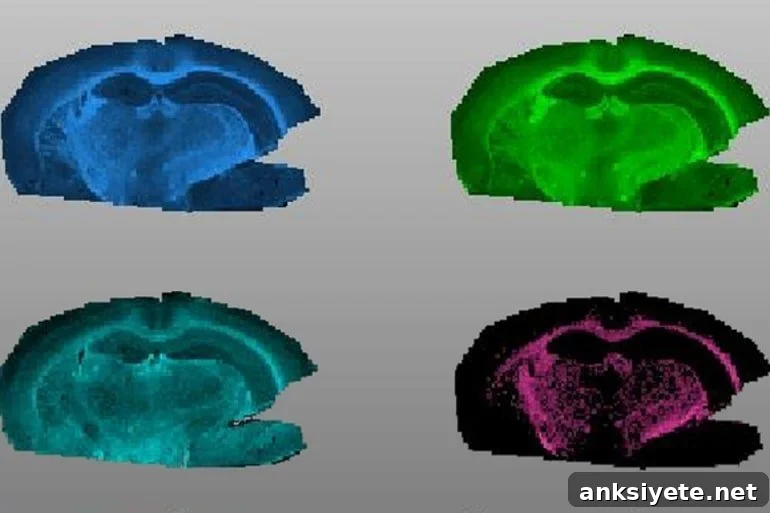
Summary: Researchers have identified a family of brain lipids, called SGDGs (3-sulfogalactosyl diacylglycerols), that decline with age. These lipids show anti-inflammatory activity and may be relevant to aging-related brain changes and neurodegenerative disease.
Source: Salk Institute
Aging involves many interconnected processes—chronic inflammation, metabolic shifts, cellular stress, and molecular damage among them.
A collaborative team from the Salk Institute and UC San Diego has now highlighted another contributor to brain aging: a class of lipids called SGDGs. Their study reports that SGDG levels fall in the aging brain and that these lipids have anti-inflammatory properties, opening new directions for understanding and potentially treating age-related neurological conditions.
Published in Nature Chemical Biology on October 20, 2022, the work connects changes in the brain lipidome to aging and inflammation and suggests mechanisms that could contribute to neurodegenerative disease.
“These SGDGs clearly play an important role in aging, and this finding opens up the possibility that there are other critical aging pathways we’ve been missing,” says co-corresponding author Alan Saghatelian, professor in Salk’s Clayton Foundation Laboratories for Peptide Biology. “This is a clear case of a discovery that deserves deeper study.”
Lipids are essential to brain structure and function, but unlike genes and proteins, many lipid species remain poorly characterized. Dysregulated lipid metabolism has long been associated with aging and neurological disorders, yet specific lipid classes and their roles often go unexamined. Saghatelian’s laboratory specializes in discovering and characterizing previously overlooked lipids.
Working with Professor Dionicio Siegel at UC San Diego, the team made three key findings about SGDGs: lipid profiles in older mouse brains differ substantially from those in younger animals; SGDGs and related lipid family members show consistent age-dependent changes; and SGDG levels appear connected to biological pathways already implicated in aging.
The researchers combined large-scale lipid profiling (untargeted lipidomics) with structural chemistry and advanced data analysis. They measured lipidomes from mouse brains at five ages, from one month to 18 months, using liquid chromatography–mass spectrometry. Improved instrumentation generated far more data points than earlier studies, and modern computational tools revealed age-related patterns among thousands of lipid signals.
After identifying SGDGs as a class that declines with age, the team synthesized SGDG molecules in the lab to test their biological activity. “SGDGs were first identified in the 1970s but then largely forgotten and absent from many lipid databases,” says first author Dan Tan, a postdoctoral fellow in Saghatelian’s lab. “We didn’t expect these lipids to be regulated by aging or to have measurable bioactivity.”
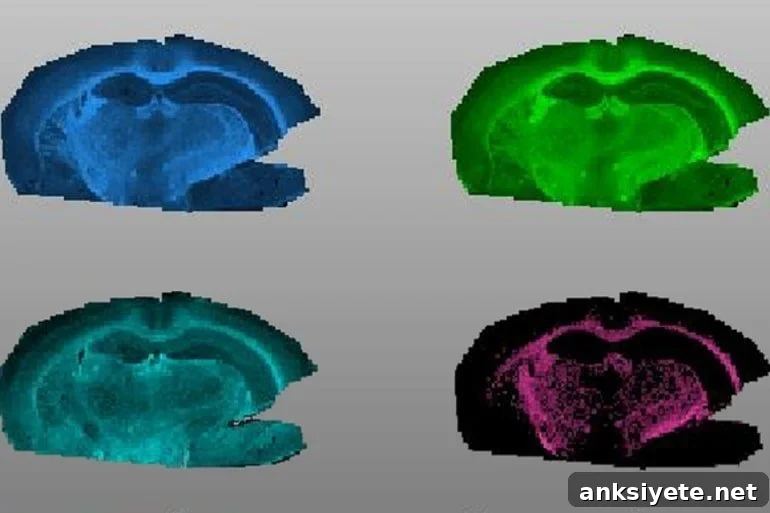
Functional assays revealed that SGDGs can suppress inflammatory signaling: a representative SGDG markedly reduced lipopolysaccharide (LPS)-induced gene expression and the release of pro-inflammatory cytokines from macrophages and microglia, acting through the NF-κB pathway. These anti-inflammatory effects suggest SGDGs may influence neuroinflammation, a common feature of aging and many neurodegenerative disorders.
Importantly, SGDGs were detected not only in mice but also in human and macaque brain tissue, indicating evolutionary conservation and increasing the relevance of these findings to human health. Further work is needed to confirm whether changes in SGDGs contribute directly to human neuroinflammatory processes and disease progression.
Looking ahead, the researchers plan to investigate how SGDG levels are controlled during aging—identifying the enzymes that synthesize and degrade them could reveal previously unknown genetic or biochemical pathways linked to brain aging. With defined structures and the ability to synthesize SGDGs in the lab, the field is now positioned to explore their biology and therapeutic potential.
“With the structure of SGDGs clarified and the ability to produce them, studying these lipids is now wide open,” says Dionicio Siegel, co-corresponding author.
Additional contributors include researchers from Salk, UC San Diego, UCLA, the University of Campinas (Brazil), UC Berkeley, Stanford University, and Oregon Health and Science University. The multidisciplinary team combined expertise in lipid chemistry, neuroscience, and computational analysis to reveal this previously overlooked lipid class.
Funding: This research received support from Ferring Pharmaceuticals and Frederik Paulsen, the National Institutes of Health (grant numbers listed in the original publication), the Oregon National Primate Research Center, the Wu Tsai Human Performance Alliance and the Joe and Clara Tsai Foundation, several private foundations, the Howard Hughes Medical Institute, the CZI Neurodegeneration Network, and Sãn Paulo Research Foundation.
About this aging and neuroscience research news
Author: Salk Communications
Source: Salk Institute
Contact: Salk Communications – Salk Institute
Image: Image credit: Salk Institute
Original Research: Closed access. “A class of anti-inflammatory lipids decrease with aging in the central nervous system” by Dionicio Siegel et al., published in Nature Chemical Biology.
Abstract
A class of anti-inflammatory lipids decrease with aging in the central nervous system
Lipids are fundamental to brain structure and function, and disruptions in lipid metabolism are associated with aging and neurological disease. Despite this, the composition and dynamics of the brain lipidome across the lifespan are not well understood.
Using untargeted lipidomics across the mouse lifespan, co-expression network analysis revealed a progressive decline in 3-sulfogalactosyl diacylglycerols (SGDGs) and related pathway members, including potential degradation products such as lyso-SGDGs. The age-related decrease in SGDGs appears specific to the central nervous system and correlates with myelination patterns.
Functionally, an SGDG species significantly suppressed LPS-induced gene expression and reduced pro-inflammatory cytokine release from macrophages and microglia by modulating the NF-κB signaling pathway. Detection of SGDGs in human and macaque brains supports evolutionary conservation and relevance beyond rodent models.
These findings highlight the complexity of the brain lipidome, point to SGDGs as important players in aging and brain inflammation, and provide a foundation for future studies on their roles in aging and inflammatory neurological conditions.