
Summary: Scientists have identified a rare, potentially harmful population of senescent neurons in human brains that may offer a new therapeutic target for Alzheimer’s disease.
Source: Wake Forest Baptist Medical Center
For the first time, researchers have found a distinct population of senescent brain cells in humans that could be targeted by future Alzheimer’s disease therapies.
The study, published in the December 10 issue of Nature Aging, was led by Miranda Orr, Ph.D., assistant professor of gerontology and geriatric medicine at Wake Forest School of Medicine and research health scientist at the W.G. Hefner VA Medical Center, together with Habil Zare, Ph.D., assistant professor of cell systems and anatomy at the University of Texas Health San Antonio. Funding came from the U.S. Department of Veterans Affairs and the National Institute on Aging.
Senescent cells are aged or damaged cells that stop dividing and fail to perform their normal functions. Rather than undergoing programmed cell death, they persist and release inflammatory molecules and other factors that can harm neighboring cells and tissue. Over time, accumulation of senescent cells contributes to aging, inflammation, and degenerative diseases, including cognitive decline and cancer.
Previous work by Orr and colleagues in 2018 showed that senescent cells build up in mouse models of Alzheimer’s disease, contributing to brain cell loss, inflammation, and memory deficits. Clearing those cells in mice halted disease progression and reduced neuronal death. Until now, however, the prevalence and identity of senescent cells in the human brain were unclear.
Using advanced statistical and transcriptomic techniques, the team analyzed tens of thousands of individual cells from postmortem brains of people who had died with Alzheimer’s disease. They developed a sensitive “senescence eigengene” approach to detect the subtle and heterogeneous molecular signals that define senescence when single marker genes are insufficient. This method reduced noise in the large datasets and enabled detection of rare cell populations.
The analysis identified roughly 2% of brain cells as having a senescence-like transcriptomic signature. Importantly, these senescent cells were primarily excitatory neurons—the key information-processing units of the brain that are central to memory and are preferentially lost in Alzheimer’s disease.
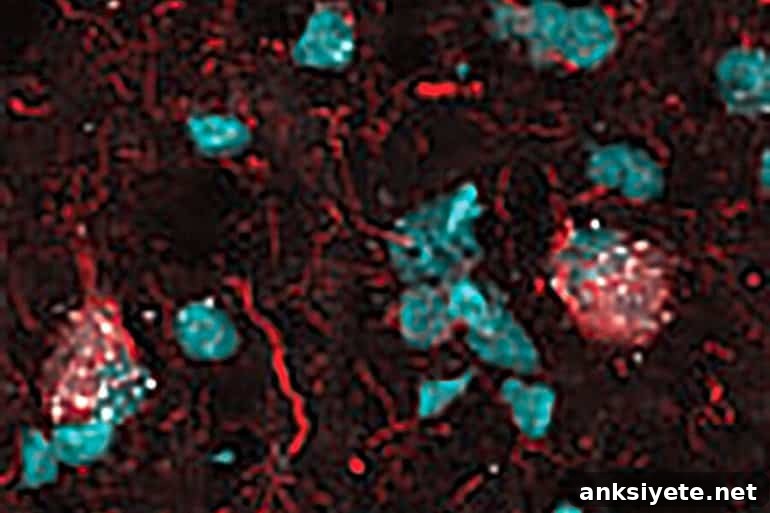
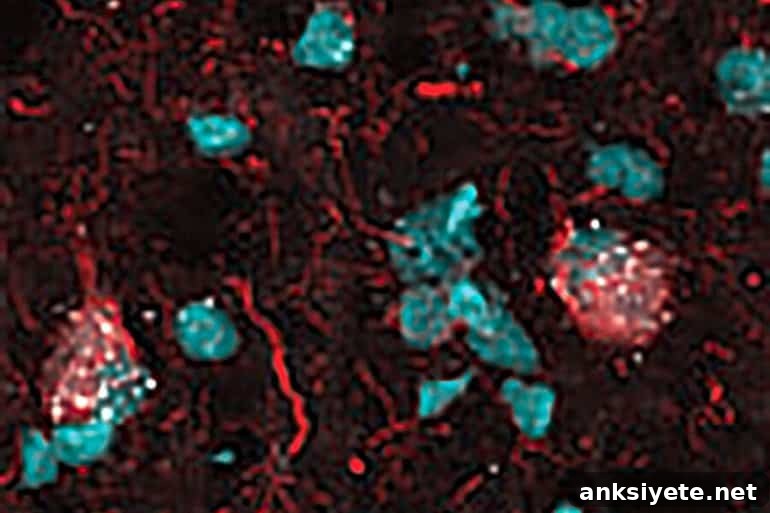
The researchers then examined whether these senescent neurons also contained neurofibrillary tangles—abnormal accumulations of the tau protein that form inside neurons and correlate closely with Alzheimer’s severity. They found that senescent neurons overlapped substantially with neurons containing tau tangles, to the point that distinguishing the two pathologies was often difficult.
A key molecular marker identified by the analysis was CDKN2D (also known as p19), which emerged as a major contributor to the primary senescence eigengene. Follow-up validation using RNAscope and immunofluorescence confirmed elevated CDKN2D/p19 expression in Alzheimer’s brain tissue. Neurons expressing p19 tended to have enlarged nuclei and greater accumulation of lipofuscin, a pigment associated with aging cells—both hallmark features of cellular senescence. These features were even more pronounced in neurons that also contained tau tangles.
The team confirmed their findings in an independent cohort of postmortem brain samples from people with Alzheimer’s disease, strengthening the evidence that CDKN2D/p19-expressing neurons with tau pathology represent a distinct, senescence-like cellular population in human Alzheimer’s brains.
Identifying these cells opens new avenues for therapeutic development. Orr is preparing a Phase 2 clinical trial, supported by the Alzheimer’s Drug Discovery Foundation, to test a treatment strategy that clears senescent cells in older adults with mild cognitive impairment or early Alzheimer’s. The intervention repurposes an FDA-approved drug known for clearing cancer cells combined with a flavonoid antioxidant, an approach that showed efficacy in Alzheimer’s mouse models and a favorable safety profile in prior human studies for other conditions. Wake Forest School of Medicine, University of Texas Health San Antonio, and the Mayo Clinic will collaborate on the trial.
Howard Fillit, M.D., founding executive director and chief science officer of the Alzheimer’s Drug Discovery Foundation, commented that this work highlights a promising new approach to target underlying biological processes—such as toxic senescent cell buildup—that contribute to Alzheimer’s disease. The findings support the idea that successful therapies will likely need to address multiple age-related mechanisms driving neurodegeneration.
About this Alzheimer’s disease research news
Author: Press Office
Source: Wake Forest Baptist Medical Center
Contact: Press Office – Wake Forest Baptist Medical Center
Image: The image is credited to Wake Forest School of Medicine
Original Research: Closed access.
Title: “Profiling senescent cells in human brains reveals neurons with CDKN2D/p19 and tau neuropathology” by Shiva Kazempour Dehkordi, Jamie Walker, Eric Sah, Emma Bennett, Farzaneh Atrian, Bess Frost, Benjamin Woost, Rachel E. Bennett, Timothy C. Orr, Yingyue Zhou, Prabhakar S. Andhey, Marco Colonna, Peter H. Sudmant, Peng Xu, Minghui Wang, Bin Zhang, Habil Zare & Miranda E. Orr. Published in Nature Aging.
Abstract
Profiling senescent cells in human brains reveals neurons with CDKN2D/p19 and tau neuropathology
Senescent cells promote pathology and dysfunction in animal models, but their sparse distribution and diverse phenotypes make them difficult to detect in human tissues. To overcome this, the researchers developed a senescence eigengene method tailored to identify these rare cells within large single-nucleus RNA sequencing datasets.
Applying these eigengenes to approximately 140,000 nuclei from 76 postmortem human brains spanning a range of Alzheimer’s disease pathology, the team detected about 2% of cells with a senescence-like signature. Over 97% of these senescent cells were excitatory neurons and showed strong overlap with neurons containing neurofibrillary tangle tau pathology. CDKN2D/p19 was the most significant contributor to the primary senescence eigengene and was validated at the tissue level. p19-expressing neurons had larger nuclei and more lipofuscin than p19-negative neurons, and these senescence features were amplified in the presence of tau tangles.
Together, these data indicate that CDKN2D/p19-positive neurons with tau neuropathology form a unique senescence-like population in human Alzheimer’s disease. The eigengene tools developed in this study may aid future efforts to profile senescent cells and identify biomarkers for targeted histological and therapeutic investigations.