
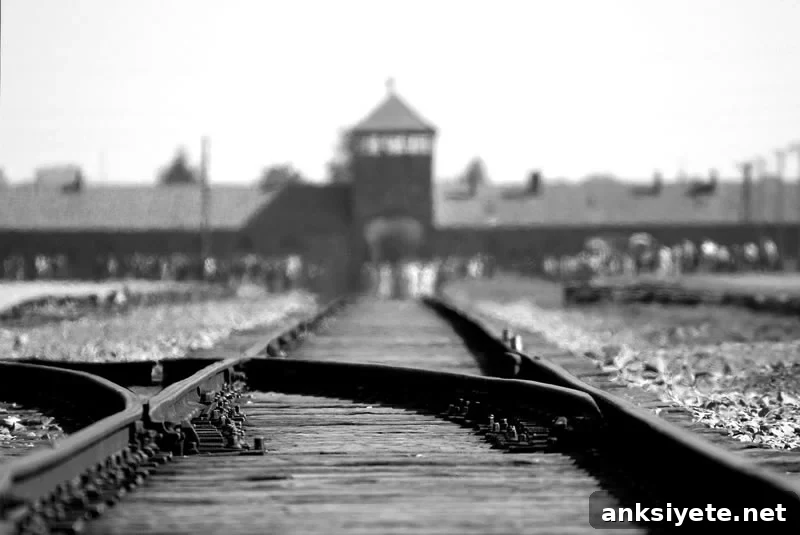
Summary: A new study reports that contemporary Germans living near former World War II Nazi concentration camp locations show higher levels of xenophobia, greater support for extreme right-wing parties, and reduced tolerance toward immigrants and religious minorities. The authors note a comparable historical association has been observed in the United States between racist attitudes and residence in regions where slavery was once widespread.
Source: Rice University
Who — or what — is responsible for the rise of xenophobia, political intolerance and radical-right support across Germany and parts of Europe? Research from Rice University and Washington University in St. Louis identifies proximity to former Nazi concentration camps as a significant factor.
The study, titled “Legacies of the Third Reich: Concentration Camps and Outgroup Intolerance,” is scheduled for publication in the American Political Science Review. Lead author Jonathan Homola, an assistant professor at Rice University, together with co-authors Miguel Pereira and Margit Tavits of Washington University, examined why some communities exhibit stronger resentment of outgroups and higher backing for radical right-wing parties.
The researchers concentrated mainly on Germany while also considering broader European patterns. They analyzed survey data from the European Values Study and the German General Social Survey, along with recent electoral outcomes. Their primary concerns were intolerance toward Jews, Muslims and foreign-born residents, and support for extreme-right parties. The analysis incorporated census information, historical records on the locations of Third Reich concentration camps, and archival election data.
Across multiple analyses, the team found a consistent pattern: contemporary residents living closer to former concentration camp sites are more likely to express xenophobic attitudes, exhibit lower tolerance toward Jews, Muslims and immigrants, and show higher electoral support for extreme right-wing parties. The researchers also found preliminary signs of similar effects in other European regions examined.
“We believe that individuals living near concentration camps during World War II were more likely to conform to the belief system of the regime,” Homola said. “And we think this was because of cognitive dissonance.”
The authors argue that cognitive dissonance helps explain how such attitudes persisted. Cognitive dissonance refers to the psychological process by which people reconcile new information or behaviors that conflict with their self-image or moral values—often by adjusting beliefs to reduce guilt or discomfort. In this case, local populations exposed to Nazi institutions and policies may have altered or justified their beliefs at the time, and those altered beliefs were then transmitted across generations.
“While scholars have long investigated the origins of the Holocaust, its long-term sociopolitical consequences have received less attention,” Homola added. “Our findings show that political attitudes shaped by proximity to these institutions are measurable today. Prejudice instilled by such a racist and brutal system can be persistent, even after the institutions themselves have disappeared.”
Homola noted that similar historical associations have been documented elsewhere. Prior research in the United States has linked residence near regions where slavery was common to present-day racial attitudes and political extremism. Such findings underscore how historical institutions and social environments can leave durable cultural and political legacies.
The researchers emphasize the importance of understanding both contemporary drivers and historical legacies that make exclusionary political messages appealing. By identifying how past institutions shaped local attitudes, the study contributes to explanations for current patterns of political intolerance and the resilience of prejudiced beliefs.
Funding: This research was supported by Washington University’s Weidenbaum Center on the Economy, Government and Public Policy.
Source:
Rice University
Media contacts:
Jeff Falk – Rice University
Image source:
The image used in this article is in the public domain.
Original research (citation):
“Legacies of the Third Reich: Concentration Camps and Out-group Intolerance.” Jonathan Homola, Miguel M. Pereira, and Margit Tavits. American Political Science Review. DOI: 10.1017/S0003055419000832. (Closed access)
Abstract
Legacies of the Third Reich: Concentration Camps and Out-group Intolerance
This study examines the long-term political consequences of the Third Reich and finds that contemporary political intolerance, xenophobia, and voting for radical right-wing parties are associated with proximity to former Nazi concentration camps in Germany. The relationship persists after accounting for contemporary attitudes, the placement of camps, geographic sorting, economic impacts of the camps, and current uses of former camp sites. The authors propose that cognitive dissonance led those more directly exposed to Nazi institutions to align with the regime’s belief system, and that these attitudes were transmitted across generations. The results illuminate both the enduring influence of historical institutions and sources of contemporary political intolerance.