
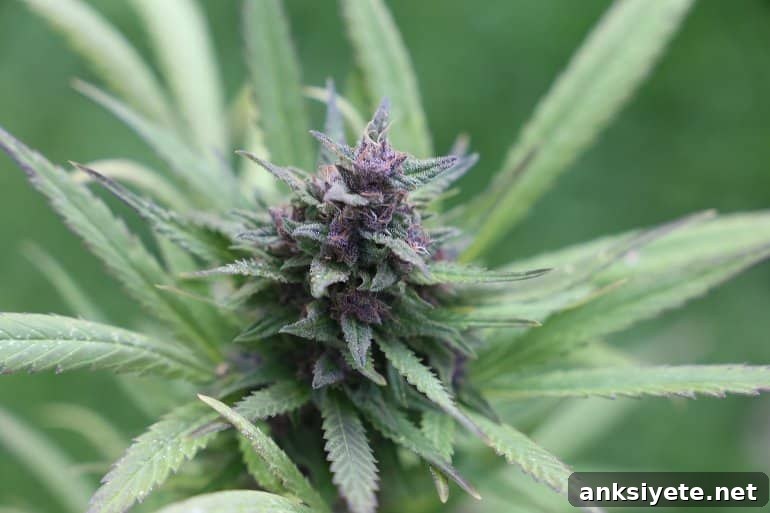
Summary: Using cannabis flower appears to reduce feelings of fatigue, according to a large real-world study. Participants who smoked joints reported greater relief than those who used pipes or vaporizers.
Source: University of New Mexico
Researchers at the University of New Mexico used a mobile app to track how different commercially available cannabis flower products affect fatigue in real time.
Across the study sample, more than 91% of users who consumed cannabis flower to address fatigue reported improvements in their symptoms.
Notably, participants who smoked cannabis in the form of joints experienced larger reductions in fatigue than those who used pipes or vaporizers.
Fatigue is a common symptom across many medical conditions. Prior research has found that patients with chronic pain, cancer, Parkinson’s disease, and multiple sclerosis sometimes report increased energy after using medical cannabis.
Other studies have documented patients reducing or replacing prescription medications with medical cannabis, reflecting a preference among some patients for this traditional, plant-based option.
In their paper, “The Effects of Consuming Cannabis Flower for Treatment of Fatigue,” published in Medical Cannabis and Cannabinoids, UNM researchers report that most users experience immediate reductions in fatigue after consuming cannabis flower.
This is the first large-scale analysis showing that, on average, users report a 3.5-point improvement on a 0-to-10 fatigue scale after combusting cannabis flower, commonly called “buds.”
“Contrary to the idea that frequent cannabis use leads to reduced activity or an ‘amotivational syndrome,’ many people report an immediate boost in energy following cannabis consumption,” said co-author Jacob Miguel Vigil, associate professor in UNM’s Department of Psychology.
The study analyzed 3,922 self-reported cannabis sessions logged by 1,224 individuals using the patented Releaf App, a mobile tool that lets users record product details and track symptom changes and side effects in real time.
Because cannabis plants vary widely in their chemical makeup, consumers often encounter inconsistent strain availability. The Releaf App helps users maintain an electronic diary of each session so they can monitor which products and consumption methods work best for their symptoms.
“One surprising result was that symptom relief for fatigue was not limited to products with high THC or CBD, nor to products labeled as sativa versus indica,” said co-author Sarah Stith, associate professor in UNM’s Economics Department.
Vigil added that the lack of clear correlation between the primary cannabinoids—tetrahydrocannabinol (THC) and cannabidiol (CBD)—and fatigue relief suggests that minor cannabinoids and other plant chemicals such as terpenes may play a larger role than previously recognized.
“As the market matures, patients may gain access to more precisely characterized cannabis products with known chemical profiles tailored to specific health needs and lifestyles,” Vigil said.
Tyler Dautrich, COO of MoreBetter, the company behind Releaf App, said, “Real-world data supporting cannabinoid use for fatigue and energy management could influence treatment choices for patients and offer alternatives to energy drinks and supplements.”
About this cannabis and fatigue research news
Author: Press Office
Source: University of New Mexico
Contact: Press Office – University of New Mexico
Image: The image is in the public domain
Original Research: Open access.
“The Effects of Consuming Cannabis Flower for Treatment of Fatigue” by Xiaoxue Li et al., Medical Cannabis and Cannabinoids
Abstract
The Effects of Consuming Cannabis Flower for Treatment of Fatigue
Objectives: This study evaluates, for the first time at scale, how commercially available cannabis flower products affect self-reported feelings of fatigue.
Methods: Between June 6, 2016, and August 7, 2019, 1,224 people logged 3,922 cannabis flower self-administration sessions using the Releaf App. Each session recorded real-time changes in fatigue intensity before and after consumption, product characteristics (labeled phenotype, cannabinoid potency), combustion method, and any side effects experienced.
Results: Overall, 91.94% of users reported reduced fatigue after cannabis use, with an average reduction of 3.48 points on a 0–10 visual analog scale (SD = 2.70, d = 1.60, p < 0.001). Labeled plant phenotypes (C. indica, C. sativa, or hybrid) showed no reliable differences in fatigue relief. However, individuals who smoked joints reported greater symptom relief than those who used pipes or vaporizers. THC and CBD levels were generally not associated with changes in fatigue scores, suggesting other compounds may be influential. A minority of users (<24%) experienced negative side effects linked to increased fatigue (e.g., feeling unmotivated or couch-locked), while up to 37% reported positive side effects associated with increased energy (e.g., feeling active, energetic, or productive).
Conclusions: The findings indicate that most users experience decreased fatigue after consuming cannabis flower in real-world settings. The size of the benefit and the risk of side effects likely vary depending on individual metabolism and the plant’s combined chemical profile, highlighting the need for further research into the roles of minor cannabinoids and terpenes in fatigue management.