
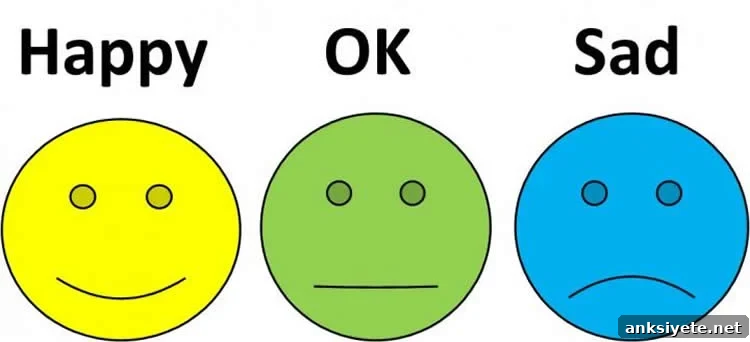
Summary: A new questionnaire that uses emoticon-like facial expressions could help teachers communicate complex emotions with young children.
Source: University of Exeter.
A simple, child-friendly questionnaire built around emoticon-style faces can help teachers and other school staff engage children as young as four in conversations about their happiness and wellbeing at school.
The How I Feel About My School (HIFAMS) questionnaire was developed by experts at the University of Exeter Medical School and is available to download from the Medical School website. The tool uses three emoticon-style faces—happy, neutral (ok) and sad—so very young children can easily indicate how they feel in seven school-related situations, such as on the way to school, in the classroom and in the playground. The questionnaire is intended to give teachers a simple, reliable way to discuss emotions and wellbeing with primary school pupils.
The project received support from the National Institute for Health Research Collaboration for Applied Health Research and Care South West Peninsula (NIHR PenCLAHRC).
Professor Tamsin Ford, Professor of Child and Adolescent Psychiatry at the University of Exeter Medical School, led the design of HIFAMS and involved children in choosing a format they could relate to. “When we’re carrying out research in schools, it can be really hard to meaningfully assess how very young children are feeling,” she said. “We couldn’t find an existing measure that met our needs, so we decided to create one.”
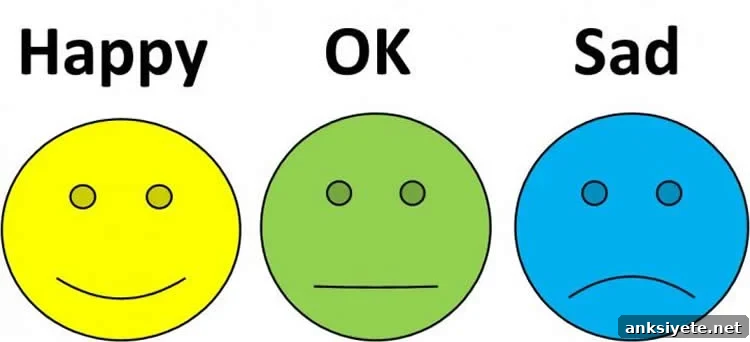
The questionnaire and its initial validation are described in a paper published in Clinical Child Psychology and Psychiatry. The study found that parents and teachers tend to rate children’s happiness slightly higher than children rate themselves. HIFAMS was developed through consultation with children to ensure the format was engaging and understandable for very young pupils. Once completed, the questionnaire is scored easily on a 14-point scale. Average scores in community samples are around 11–12, while children experiencing particular difficulties at school—such as suspension or risk of exclusion—typically score lower, often around eight or below.
HIFAMS emerged from the Supporting Teachers and Children in Schools study led by Professor Ford, which evaluates whether a course aimed at improving teachers’ classroom management skills has benefits for pupils. “We needed a simple way for children of all ages to tell us how they are feeling in relation to different areas of schooling,” Professor Ford explained. “This resource makes that possible. More than 2,000 children in Devon have now completed the questionnaire. It has proven to be a useful tool, and I hope schools will take advantage of this free resource to open up conversations with children about their feelings and to give them a voice, particularly when key decisions affecting them are being made.”
The HIFAMS questionnaire is intended for use with primary-aged children, especially those aged 4–8 years, and aims to provide a developmentally appropriate self-report measure of wellbeing at school. The design prioritises clarity and ease of use so that teachers, school staff and researchers can obtain direct feedback from very young pupils about multiple aspects of their school experience.
Source: Louise Vennells – University of Exeter
Image Source: Image credited to How I Feel About My School (HIFAMS) questionnaire.
Original Research: “‘How I Feel About My School’: The construction and validation of a measure of wellbeing at school for primary school children” by Kate Allen, Ruth Marlow, Vanessa Edwards, Claire Parker, Lauren Rodgers, Obioha C. Ukoumunne, Edward Chan Seem, Rachel Hayes, Anna Price, and Tamsin Ford. Published online January 30, 2017. DOI: 10.1177/1359104516687612.
University of Exeter, “Emoticons Help Gauge School Happiness Levels in Young Children.” NeuroscienceNews. February 4, 2017.
Abstract
‘How I Feel About My School’: The construction and validation of a measure of wellbeing at school for primary school children
There is a growing emphasis on child wellbeing and happiness in schools, yet few reliable self-report measures exist for very young children. The authors combined three samples (total N = 2,345) to evaluate the psychometric properties of HIFAMS, designed for children aged 4–8 years. Test–retest reliability was moderate (intraclass correlation coefficient = .62). HIFAMS measures a single underlying concept and showed moderate internal consistency (Cronbach’s alpha values from .62 to .67). Correlations between child self-report and parent or teacher reports were low, indicating that children’s own ratings capture aspects of wellbeing not always reflected by adults. Children identified as at risk of exclusion had significantly lower HIFAMS scores than a community sample (mean difference = 2.4; 95% CI = [1.6, 3.2]; p < .001). Only 4.5% of score variability was attributable to differences between schools, with the remaining 95.5% reflecting variation among pupils within schools. Girls scored on average 0.37 units higher than boys (95% CI = [0.16, 0.57]; p < .001), while year group and measures of deprivation did not predict HIFAMS score. The authors conclude that HIFAMS is a promising, brief measure with moderate reliability that can discriminate between groups even among very young children.