
Summary: New research points to developing treatments for chronic inflammatory pain that target cannabinoid receptors, offering pain relief while reducing the risk of addiction.
Source: OHSU
Journal of Neuroscience study explores medicinal properties of cannabis and the endocannabinoid system
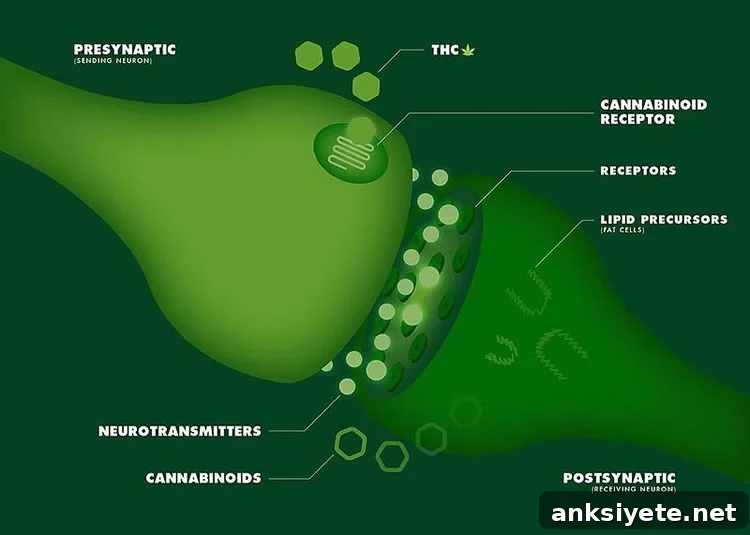
Researchers at Oregon Health & Science University (OHSU) report findings that support the development of therapies that leverage the body’s endocannabinoid system to treat chronic pain. Using a rodent model of persistent inflammatory pain, the study evaluates how two membrane-bound cannabinoid receptors—CB1 and CB2—function in neurons of the rostral ventromedial medulla (RVM), a brainstem region that plays a central role in pain modulation.
The study adds to growing evidence that drugs targeting the endocannabinoid system may provide effective analgesia with fewer side effects than opioids. Chronic pain affects an estimated 30 percent of people in the United States, and current treatments often fall short or carry significant risks. By clarifying how CB1 and CB2 receptors behave during prolonged inflammation, the research suggests a path toward new pain medications that reduce addiction potential while maintaining therapeutic benefit.
“This work points to an avenue where we may be able to develop better pain medications that are less likely to be addictive,” said senior author Susan Ingram, Ph.D., associate professor of neurosurgery at the OHSU School of Medicine.
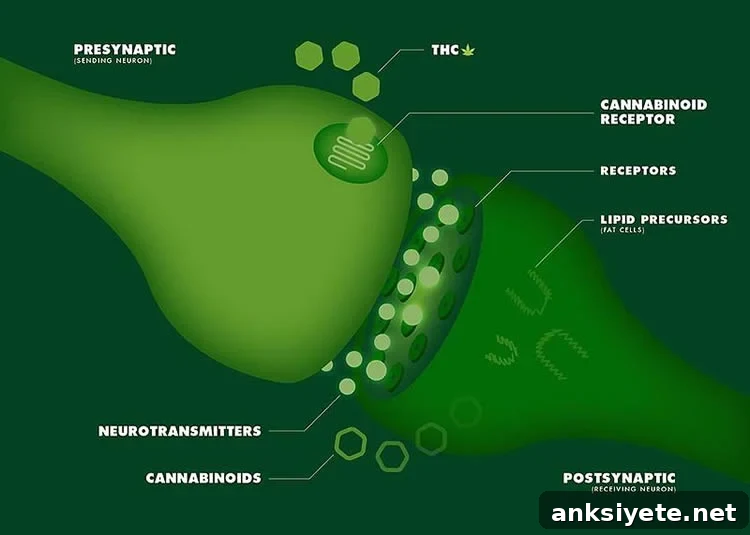
The team focused on CB1 and CB2 receptors in the RVM and is the first to examine their membrane-level function in late adolescent and adult neurons in the context of persistent inflammatory pain. Their electrophysiological experiments show that chronic inflammation alters endocannabinoid signaling in the RVM: CB1 receptor activity and protein expression decline, while CB2 receptor function increases.
Because natural cannabinoids and many cannabis-derived compounds activate both CB1 and CB2 receptors, the differential regulation of these receptors under chronic pain conditions has important therapeutic implications. CB1 activation has been associated with tolerance and withdrawal in other systems, whereas CB2 activation appears to provide analgesic effects without the same propensity for dependence. The study’s results suggest that selectively activating CB2 receptors in the RVM may preserve pain relief while minimizing addictive effects commonly linked to CB1 receptor engagement.
In electrophysiological recordings, the investigators found that endocannabinoid-mediated inhibition of presynaptic GABA release—an action typically attributed to CB1 receptors—was reduced in animals with persistent inflammation. At the same time, non-selective cannabinoid agonists still inhibited GABAergic neurotransmission in inflamed animals, but this inhibition was mediated by CB2 receptors rather than CB1. Selective CB2 agonists produced inhibition only in inflamed tissue, and CB2 antagonists increased inhibitory transmission when applied alone, indicating tonic CB2 activity in the inflamed state.
These findings show a compensatory emergence of CB2 receptor function in the RVM during persistent inflammation. They provide a mechanistic basis for pursuing CB2 receptor-selective agonists as a new class of analgesics for chronic inflammatory pain—agents that could harness cannabis-derived benefits while reducing the risks associated with CB1-driven tolerance and dependence.
Co-authors include lead author Ming-Hua Li, Ph.D., and Katherine L. Suchland, both in the Department of Neurological Surgery at the OHSU School of Medicine.
Funding: Research supported by grants from the National Institutes of Health (DA035316 and R56NS093894) and the American Heart Association (13SDG14590005).
Source: Erik Robinson, OHSU
Image credit: VICE media. Licensed CC BY SA 4.0.
Original research: Ming-Hua Li, Katherine L. Suchland and Susan L. Ingram. “Compensatory activation of cannabinoid CB2 receptor inhibition of GABA release in the rostral ventromedial medulla (RVM) in inflammatory pain.” Journal of Neuroscience. Published online December 9, 2016. DOI: 10.1523/JNEUROSCI.1310-16.2016
Abstract
Compensatory activation of cannabinoid CB2 receptor inhibition of GABA release in the rostral ventromedial medulla (RVM) in inflammatory pain
The rostral ventromedial medulla (RVM) is a key relay in the descending pain modulatory system and a critical site for endocannabinoid modulation of pain. Endocannabinoids normally inhibit presynaptic GABA release in the RVM, but it was unclear whether this mechanism persists in chronic pain. In these studies, persistent inflammation produced by complete Freund’s adjuvant (CFA) increased GABAergic miniature inhibitory postsynaptic currents (mIPSCs). Endocannabinoid activation of CB1 receptors, which typically suppress presynaptic GABA release, was significantly reduced in the RVM of CFA-treated rats compared to naïve controls. This reduction correlated with decreased CB1 receptor protein expression and functional activity in the RVM.
Paradoxically, the non-selective CB1/CB2 receptor agonist WIN55,212 inhibited GABAergic mIPSCs in both naïve and CFA-treated animals. In naïve animals, WIN55,212’s inhibition was reversed by the CB1 antagonist rimonabant, but in CFA-treated animals rimonabant did not reverse the effect. Instead, WIN55,212-mediated inhibition in CFA-treated rats was blocked by the CB2-selective antagonist SR144528, indicating increased CB2 receptor function during persistent inflammation. Supporting this, the CB2-selective agonists AM1241 and GW405833 reduced GABAergic mIPSC frequency only in CFA-treated rats, and their effects were reversed by CB2 antagonists. When administered alone, CB2 antagonists increased mIPSC frequency in the RVM of CFA-treated rats, suggesting that CB2 receptors were tonically activated by endocannabinoids in the inflamed state.
These data demonstrate that CB2 receptor function emerges in the RVM during persistent inflammation and indicate that CB2-selective agonists may be promising therapeutics for treating chronic inflammatory pain.
SIGNIFICANCE STATEMENT
Endocannabinoid signaling to CB1 and CB2 receptors in the adult RVM is altered by persistent inflammation. The emergence of CB2 receptor function in this pain-regulating brain region provides strong rationale for developing CB2-selective agonists as potential treatments for chronic inflammatory pain.