
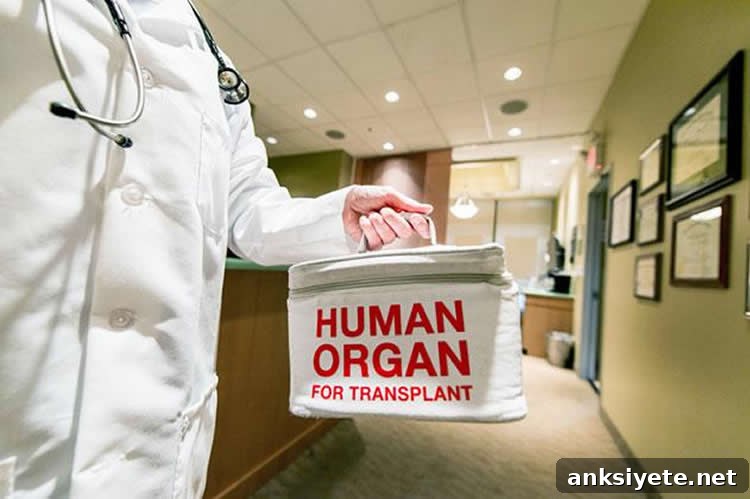
People who donate kidneys to strangers have noticeably different brain structures than those who don’t.
That is the central finding of a study from Georgetown University published in the Proceedings of the National Academy of Sciences (PNAS). The research identifies structural and functional brain differences that appear to be associated with extraordinary acts of altruism, such as donating a kidney to a stranger.
Abigail Marsh, PhD, an associate professor of psychology at Georgetown, and John VanMeter, PhD, an associate professor of neurology and director of the Center for Functional and Molecular Imaging at Georgetown University Medical Center, led the investigation. Their team scanned the brains of 19 altruistic living kidney donors and compared them with 20 control participants who had never donated an organ.
MORE SENSITIVE TO DISTRESS
The researchers used functional magnetic resonance imaging (fMRI) while study participants viewed faces showing fearful, angry, or neutral expressions. Behavioral testing accompanied the scans to assess how accurately participants recognized these emotional expressions.
Results indicate that altruistic donors, on average, show heightened sensitivity to other people’s distress. In particular, the altruists were more accurate at identifying fearful facial expressions than the control group. The fMRI data showed greater neural activity in regions involved in processing others’ emotions when altruists viewed fearful faces.
UNDERLYING NEURAL BASIS
One of the clearest differences observed was in the right amygdala, a brain region strongly involved in emotional processing, particularly fear. Altruistic donors had larger right amygdala volume and showed stronger amygdala responses to fearful expressions than non-donors. These structural and functional differences suggest that individual variation in empathy and sensitivity to distress may have a measurable neural basis.
While brain structure alone does not determine behavior, the study supports the idea that heightened responsiveness to others’ fear and distress could help explain why some people make extraordinary sacrifices for strangers.
OPPOSITE FROM PSYCHOPATHS?
These findings complement earlier work by the same research group showing that people with psychopathic traits tend to be less responsive to others’ fear and distress, often exhibiting smaller or less reactive amygdalae. By contrast, unusually altruistic individuals may show the opposite neural profile in areas tied to emotional empathy. The comparison highlights how variability in the same neural systems can relate to very different social behaviors.
To recruit participants, the researchers worked with a regional transplant organization to identify living kidney donors who had given a kidney to a stranger and were willing to participate in the study.
A DONOR’S STORY
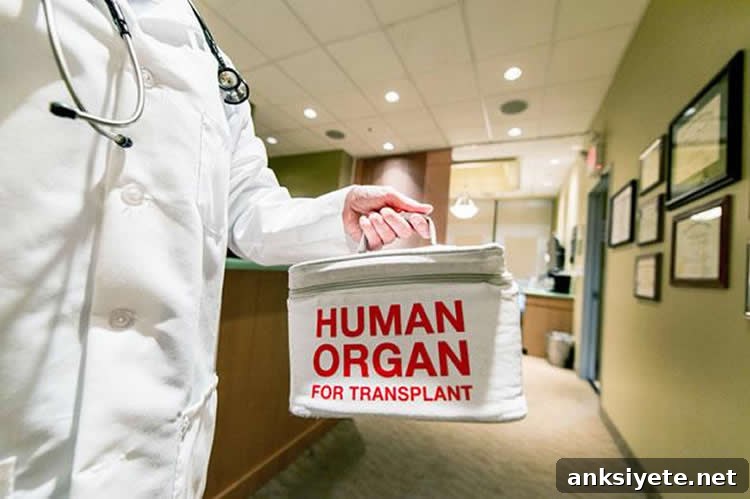
One study participant, Harold Mintz, donated a kidney in 2000 to an anonymous recipient later reported to be an Ethiopian refugee living in Washington, D.C. Mintz, who now lives in California and speaks to students about his donation, describes a series of personal experiences that motivated him to give. He cites the early loss of his father to late-diagnosed cancer and a powerful memory from 1988 when he and his wife briefly engaged with parents seeking help for their daughter’s leukemia. Although they ultimately were not a match for that child, the experience left a lasting impression on him.
Mintz says stories of medical need and loss remained with him over the years. Those memories and his response to other people’s distress contributed to his decision to become a living donor.
STORIES TAKEN TO HEART
Marsh notes that kidney disease ranks among the leading causes of death in the United States and that living kidney donations are a crucial route to restoring health for many people with kidney failure. Understanding the neural and psychological traits that underlie extreme generosity could help inform public awareness and support for living donation programs.
VanMeter adds that this work demonstrates how fMRI and behavioral measures together can reveal how differences in the brain’s response to emotion correspond with remarkable prosocial actions.
Contact: Abigail Marsh – Georgetown University Medical Center
Source: Georgetown University Medical Center press release about the study published in Proceedings of the National Academy of Sciences (PNAS).
Image source: Adapted from the Georgetown University Medical Center press release.
Original research: Study titled “Neural and cognitive characteristics of extraordinary altruists” by Abigail A. Marsh and colleagues, published in PNAS (abstract and DOI available in the PNAS records).