Summary: Researchers have built a decoder capable of translating neural signals into mood variations.
Source: USC.
Engineers and clinicians at the University of Southern California (USC) and the University of California, San Francisco (UCSF) have developed a new decoding technology that can translate human brain signals into continuous mood estimates—a capability not previously demonstrated in people.
Their study, published in Nature Biotechnology, marks an important advance toward closed-loop therapies that could use targeted brain stimulation to treat severe mood and anxiety disorders in patients who do not respond to current treatments.
Assistant Professor Maryam M. Shanechi of USC’s Ming Hsieh Department of Electrical Engineering and the Neuroscience Graduate Program led the development of the decoding framework, while Professor Edward Chang of UCSF led the clinical implantation and data collection. The work was conducted in part through support from the Defense Advanced Research Projects Agency’s (DARPA) SUBNETS program, which aims to develop new biomedical technologies for difficult neurological illnesses.
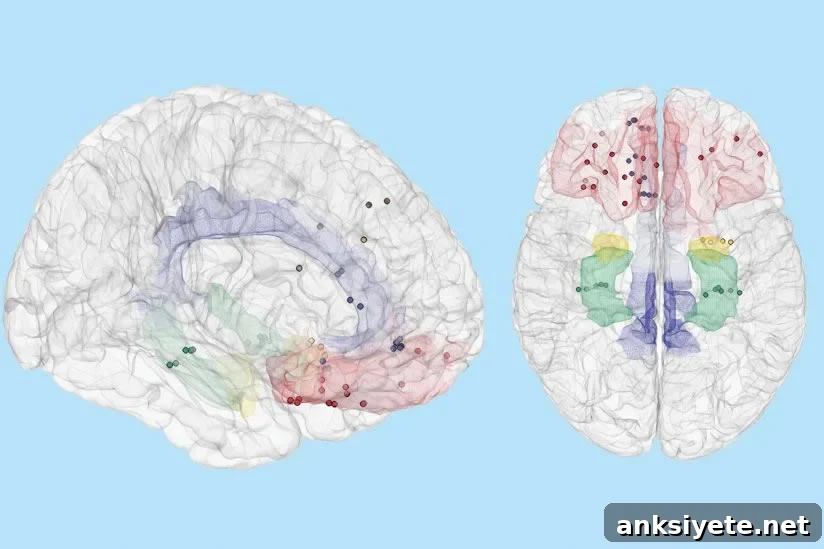
The research team recruited seven volunteers from a group of epilepsy patients who already had intracranial electrodes implanted for standard clinical monitoring to localize seizures. Over multiple days at UCSF, the investigators recorded large-scale electrical activity from those intracranial electrodes while the patients intermittently reported their mood using a tablet-based questionnaire.
Graduate students Omid Sani and Yuxiao Yang worked with Shanechi to analyze the recorded data and design a novel decoder that predicts mood fluctuations over time for each subject. Prior to this work, reliably decoding mood from distributed human brain activity had not been demonstrated.
“Mood is represented across multiple sites in the brain rather than a single localized region, so decoding mood presents a unique computational challenge,” Shanechi said. “This challenge is compounded by the fact that we do not yet fully understand how these regions coordinate to encode mood, and by the limited frequency of direct mood assessments. To address this, we developed new decoding methods that combine signals from distributed brain sites while accommodating sparse mood measurements.”
To construct the decoder, the team analyzed continuous, raw intracranial recordings from distributed brain regions together with intermittent self-reported mood scores. Each patient answered 24 questions on a tablet, and for each question they were asked to “rate how you feel now” by selecting one of seven positions along a continuum between a negative and positive descriptor (for example, “depressed” to “happy”). Higher scores indicated more positive mood states.
Using this paired data, the researchers identified patterns of spectro-spatial neural activity that correlated with the self-reported mood ratings. They then trained individualized decoders to recognize those neural patterns and used the decoders to estimate mood continuously from brain activity alone, predicting mood variations in each patient over multiple days.
A Potential Solution for Treatment-Resistant Neuropsychiatric Conditions
The USC–UCSF team suggests these findings could inform the development of closed-loop brain stimulation systems for mood and anxiety disorders. Closed-loop systems monitor objective signals that reflect a patient’s current state and dynamically adjust stimulation in response, which could provide a more precise and effective intervention than open-loop stimulation alone.
Major depressive disorder affects millions of adults in the United States, and many patients do not respond to common treatments such as selective serotonin reuptake inhibitors (SSRIs). Large clinical studies have shown that a substantial fraction of patients remain treatment-resistant, and public-health data indicate increasing concerns about suicide. For people who do not improve with conventional therapies, brain stimulation has emerged as an alternative, motivated in part by neuroimaging studies that implicate multiple brain regions in depression.
However, because mood is encoded across distributed networks and clinical mood assessments are relatively infrequent and subjective, a reliable neural decoder could provide clinicians with an objective, real-time measure of a patient’s emotional state. That information could guide when and how to deliver electrical stimulation to modulate unhealthy extremes of emotion and personalize therapy for each patient.
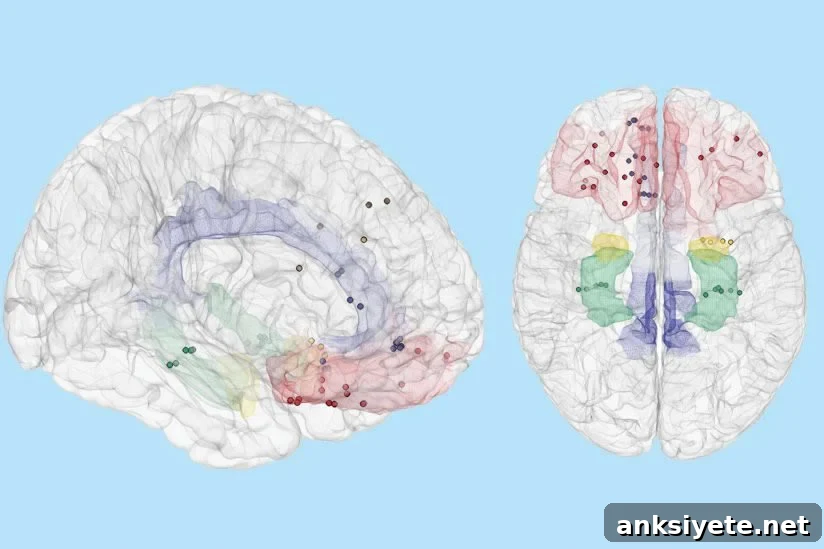
Shanechi noted that a robust decoding tool would allow clinicians to map, in real time, the brain networks that support emotional behavior for an individual patient. “Our goal is to deliver a technology that provides a clearer, time-resolved map of what is happening in a depressed brain and a principled way to interpret how brain signals relate to mood,” she said. “With this objective assessment, clinicians could tailor stimulation or other interventions to a patient’s moment-to-moment state, offering the potential for personalized therapies for depression, anxiety, and other disorders.”
Beyond depression and anxiety, the authors point out that the same approach could be applied to other neuropsychiatric conditions whose neural signatures span distributed networks and whose clinical assessments are sparse or subjective—examples include chronic pain, addiction, and post-traumatic stress disorder.
Funding: This research was partially funded by the Defense Advanced Research Projects Agency (DARPA) under Cooperative Agreement Number W911NF-14-2-0043, issued by the Army Research Office in support of DARPA’s SUBNETS program. The views and findings reported are those of the authors and do not necessarily represent the official policies of the Department of Defense or the U.S. Government.
Source: Amy Blumenthal – USC.
Publisher: Organized by NeuroscienceNews.com.
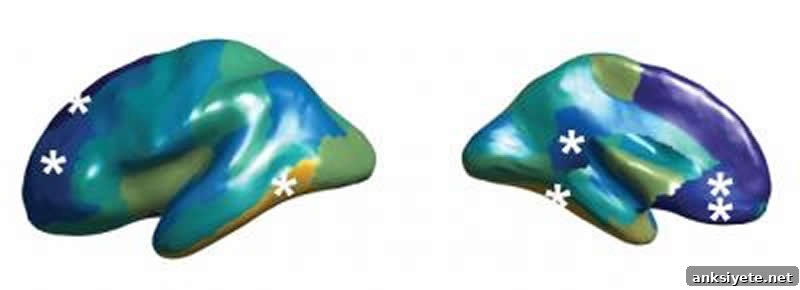
Image Source: Image credited to Sani et al., Nature Biotechnology.
Original Research: “Mood variations decoded from multi-site intracranial human brain activity” by Omid G. Sani, Yuxiao Yang, Morgan B. Lee, Heather E. Dawes, Edward F. Chang & Maryam M. Shanechi, published in Nature Biotechnology on September 10, 2018. DOI: 10.1038/nbt.4200
USC. “Decoding Mood from Human Brain Signals.” NeuroscienceNews. Published September 10, 2018.
Abstract
Mood variations decoded from multi-site intracranial human brain activity
Decoding mood state over time from neural activity could enable closed-loop systems to treat neuropsychiatric disorders. Decoding mood has remained elusive, in part because mood-related activity is distributed across networks and because mood measurements are sparse. In this study, the authors developed a modeling framework to decode mood variations from multi-site intracranial recordings in seven patients with epilepsy who intermittently self-reported mood over several days. They built dynamic neural encoding models and individualized decoders, demonstrating that mood state variations can be predicted from neural activity. Across subjects, the decoders primarily utilized signals from limbic regions, with spectro-spatial features tuned to mood. The dynamic models also enabled computation of the timescales over which mood changed. These results provide initial evidence for the feasibility of mood state decoding from distributed human brain signals.