
Summary: Researchers document not only the behavioral and cognitive effects of a single exercise session, but also the neurochemical and neurophysiological changes that occur.
Source: IOS Press.
Even a single bout of physical activity can produce measurable benefits for mood, cognition, and brain physiology, according to a comprehensive review published in Brain Plasticity.
This review synthesizes evidence on the immediate effects of acute exercise—defined as a single session of physical activity—on behavior, cognition, neurophysiology, and neurochemistry. The authors compile results from human and animal studies to show how a single exercise session can influence mood, attention, memory, stress, and underlying brain systems. Understanding these immediate effects is a key step toward explaining how repeated exercise leads to longer-term brain changes and lasting improvements in cognitive health.
The review highlights growing interest in aerobic exercise as an intervention for a wide range of brain functions and clinical conditions, including age-related cognitive decline, mild cognitive impairment (MCI), Alzheimer’s disease, motor deficits in Parkinson’s disease, and mood disturbances in depression. By tracing the pathways from acute physiological responses to cognitive and behavioral outcomes, the authors clarify mechanisms that may underlie exercise-related improvements observed in both healthy and clinical populations.
Researchers summarized findings across three complementary domains: behavioral and cognitive outcomes, neurophysiological markers, and neurochemical changes. Behavioral findings across many studies show that a single exercise session reliably enhances executive function, improves mood, and reduces stress. Neurophysiological studies using methods such as electroencephalography (EEG), functional magnetic resonance imaging (fMRI), functional near-infrared spectroscopy (fNIRS), and transcranial magnetic stimulation (TMS) reveal that acute exercise activates widespread brain regions and modulates neural activity patterns linked to attention, decision-making, and motor control.
At the neurochemical level, the review details changes in metabolic and signaling molecules following acute exercise. These include shifts in lactate and glutamate/glutamine metabolism, activation of the hypothalamic-pituitary-adrenal (HPA) axis with cortisol release, and rapid modulation of neurotrophic factors such as brain-derived neurotrophic factor (BDNF), insulin-like growth factor 1 (IGF-1), and vascular endothelial growth factor (VEGF). Acute exercise also alters neurotransmitter systems—monoamines like dopamine, serotonin, norepinephrine and epinephrine—as well as acetylcholine, glutamate, and gamma-aminobutyric acid (GABA). In addition, endogenous opioids and endocannabinoids act as neuromodulators during and after exercise, contributing to changes in pain perception, reward, and mood.
From the literature reviewed, the authors draw three principal conclusions. First, the most consistent and robust behavioral effects of a single exercise session are improvements in executive function, enhanced mood, and reduced stress. Second, acute exercise engages multiple brain systems and widespread regions, as revealed by neurophysiological and neuroimaging studies. Third, a major unresolved question is how central neurochemical changes observed in animal models relate to the behavioral effects documented in humans—bridging this translational gap is an important priority for future research.
Co-author Julia C. Basso, PhD, a postdoctoral research fellow at New York University’s Center for Neural Science, emphasizes that “the studies presented in this review clearly demonstrate that acute exercise has profound effects on brain chemistry and physiology, which has important implications for cognitive enhancement in healthy people and symptom improvement in clinical populations.” Principal investigator Wendy A. Suzuki, PhD, Professor of Neural Science and Psychology at NYU, notes that exercise interventions are already being applied across a range of disorders and that understanding the neural mechanisms helps explain why these interventions can be effective.
Source: Diana Murray, IOS Press.
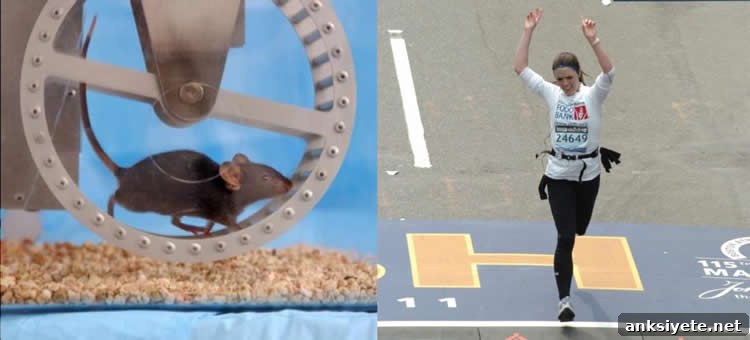
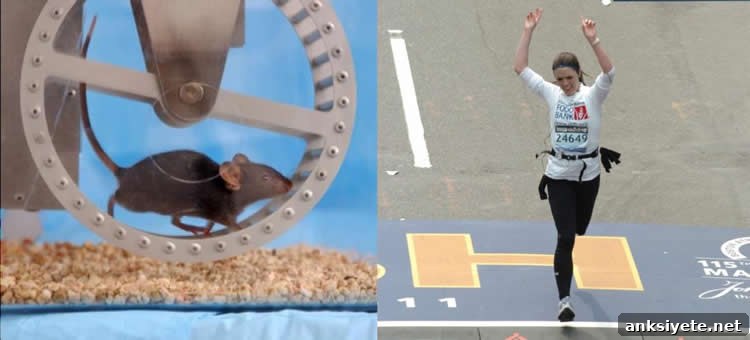
Image source: Henriette van Praag and MarathonFoto.
Original research: Basso, Julia C., and Wendy A. Suzuki. “The Effects of Acute Exercise on Mood, Cognition, Neurophysiology, and Neurochemical Pathways: A Review.” Brain Plasticity. Published online March 28, 2017. doi:10.3233/BPL-160040.
Abstract
The Effects of Acute Exercise on Mood, Cognition, Neurophysiology, and Neurochemical Pathways: A Review
Extensive research has examined how a single session of physical activity affects mood and cognitive function in humans. While behavioral outcomes are well described, the neurobiological underpinnings have received less attention. This review first summarizes the cognitive and behavioral changes associated with acute exercise in humans, then integrates findings from human and animal studies that document neurophysiological and neurochemical alterations following one bout of exercise. The review concludes by identifying strengths and gaps in the existing literature, proposing a standardization protocol for acute exercise studies, and suggesting goals for future research to better connect physiological mechanisms with behavioral outcomes.
“The Effects of Acute Exercise on Mood, Cognition, Neurophysiology, and Neurochemical Pathways: A Review” by Basso, Julia C. and Suzuki, Wendy A., Brain Plasticity, published March 28, 2017. doi:10.3233/BPL-160040