
Researchers at the University of Cincinnati and Cincinnati Children’s Hospital Medical Center have reversed severe cognitive deficits in a mouse model of an autism spectrum disorder.
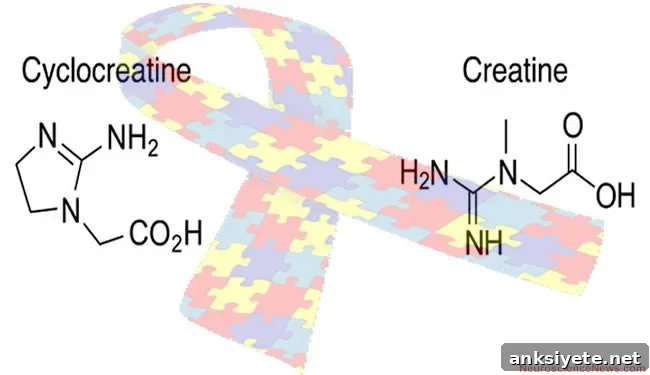
A team led by Joseph F. Clark, PhD, professor of neurology at the University of Cincinnati, reports that treatment with a creatine analogue called cyclocreatine (commercially known as CincY) restored cognitive function in mice engineered to model creatine transporter deficiency (CTD). The findings were published online July 2, 2012, in the Journal of Clinical Investigation.
Creatine transporter deficiency (CTD) is an inherited, X-linked disorder caused by mutations in the creatine transporter protein. The defect disrupts creatine transport and brain energy metabolism, producing severe developmental delays, impaired speech, seizures and profound intellectual disability. Because CTD is X-linked, boys typically experience the most severe symptoms while females more often serve as carriers. CTD is estimated to affect tens of thousands of boys in the United States and is among the most common causes of X-linked intellectual disability after Fragile X syndrome.
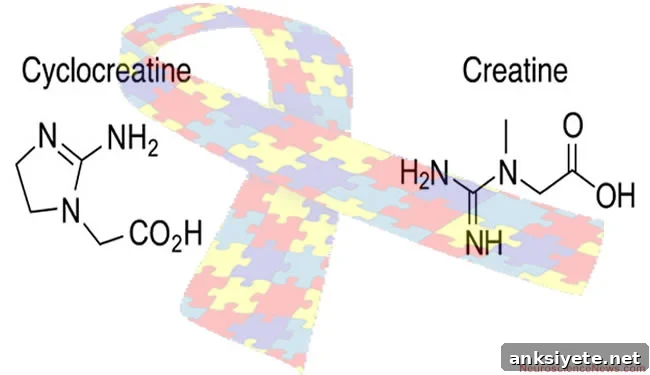
After CTD was first identified at the University of Cincinnati in 2000, Clark and collaborators investigated whether cyclocreatine—a creatine analogue originally developed as an adjunct in cancer research—could bypass the defective transporter and supply the brain with a usable energy source. In this preclinical study, genetically engineered mice with the transporter mutation received oral cyclocreatine for nine weeks.
The treated mice showed substantial improvements on a range of cognitive tests, including recognition of novel objects, spatial learning, and memory tasks. According to Clark, cyclocreatine successfully entered the brain and produced measurable cognitive gains without detectable adverse effects in the animals during the study period. These results indicate that cyclocreatine can compensate for the metabolic deficit that underlies CTD and restore cognitive function in this animal model.
Because cyclocreatine is a repurposed compound already evaluated previously in other clinical contexts, part of the regulatory groundwork was already in place. The compound is orally administered as a pill or powder, which could simplify future clinical development for patients with CTD if safety and efficacy are confirmed in human trials.
To advance development toward human studies, the University of Cincinnati’s Office of Entrepreneurial Affairs and Technology Commercialization entered into an agreement with Lumos Pharma, an Austin, Texas–based startup formed to develop therapies based on UC technology. Lumos Pharma’s leadership includes CEO Rick Hawkins and chairman Jon Saxe. The company licensed the technology from the university with the goal of moving cyclocreatine into preclinical development and eventual clinical trials.
The project gained further momentum when Lumos Pharma’s proposal, based on Clark’s work, was selected by the National Center for Advancing Translational Sciences (NCATS) Therapeutics for Rare and Neglected Diseases (TRND) program. Under TRND’s collaborative model, project teams receive in-kind support from federal drug development scientists and access to laboratory and contract resources to advance candidate therapies through preclinical stages.
Lumos Pharma plans to carry out a TRND-supported preclinical development plan aimed at preparing an Investigational New Drug (IND) application to the U.S. Food and Drug Administration. If the development pathway proceeds as expected, Clark estimates a clinical trial could begin in roughly three years from the time of the program’s advancement, assuming successful completion of the preclinical milestones and regulatory filings.
Notes about this autism spectrum disorder research and article
Key members of the study team included Yuko Kurosawa, PhD; Ton J. DeGrauw, MD, PhD; Diana M. Lindquist, PhD; Victor M. Blanco, PhD; Gail J. Pyne-Geithman, DPhil; Takiko Daikoku, PhD; James B. Chambers, PhD; Stephen C. Benoit, PhD; and Joseph F. Clark, PhD. The research was supported by funding from the National Institutes of Health. The study authors reported no conflicts of interest.
Contact: Keith Herrell – University of Cincinnati
Source: University of Cincinnati press release
Image source: Cyclocreatine, creatine and autism ribbon image created from public domain images
Original research: “Cyclocreatine treatment improves cognition in mice with creatine transporter deficiency,” Journal of Clinical Investigation (online July 2, 2012), DOI: 10.1172/JCI59373