
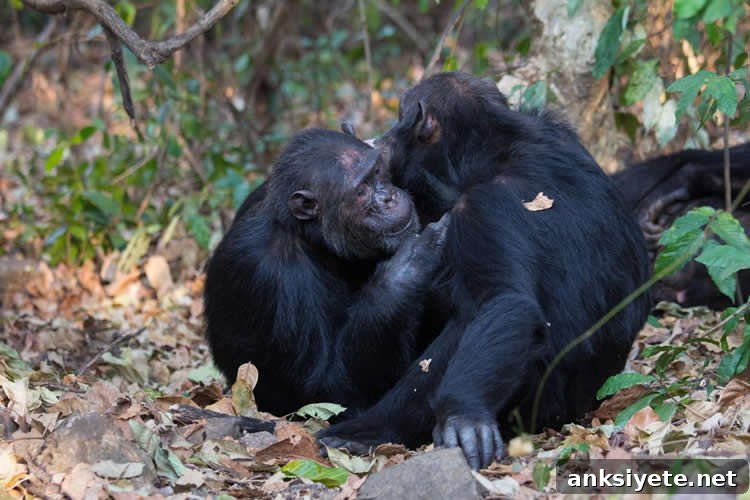
Close social contact often increases the risk of catching pathogens, but new research on wild chimpanzees shows social life can also spread beneficial gut microbes and boost microbial diversity.
Scientists from The University of Texas at Austin, Duke University, the University of California, Berkeley and other institutions analyzed gut microbiomes and social behavior in a long-studied chimpanzee population in Gombe National Park, Tanzania. Examining data collected over eight years, the team found that chimpanzees who spent more time in social groups carried a greater number of bacterial species in their gastrointestinal tracts than when they were more solitary.
The study sheds light on social and environmental factors that help maintain a healthy gut microbiome. The intestinal tract hosts hundreds of bacterial species and other microbes that assist in digesting food, producing vitamins, shaping immune responses and protecting against infections. In humans, lower gut microbial diversity has been associated with conditions such as obesity, diabetes and inflammatory bowel diseases.
Andrew Moeller, a research fellow at UC Berkeley and co-author of the study, noted that greater microbiome diversity is linked to stronger resistance to opportunistic infections. The research, published in the journal Science Advances and led by corresponding author Howard Ochman of The University of Texas at Austin, used bacterial DNA from fecal samples to track changes in gut communities across individuals and seasons.
Researchers sampled droppings from 40 chimpanzees, ranging from infants to elderly individuals, between 2000 and 2008. They identified thousands of bacterial species in the animals’ guts, including taxa commonly found in humans such as Olsenella and Prevotella. The microbial data were combined with daily behavioral records documenting diet and how much time each chimp spent alone versus in the company of others.
Field observations showed a seasonal pattern in social behavior: chimpanzees typically congregate more during the wet season when food is abundant and spend more time alone during the dry season, according to Duke research scientist Steffen Foerster, a co-author. Corresponding shifts in gut microbial composition were evident. On average, individuals carried about 20–25 percent more bacterial species during the wet, more social season than during the dry season.
Seasonal dietary changes only partially explained the differences in microbiome diversity. The team found that social interactions themselves — activities such as grooming, mating and other physical contact, and indirect contact like stepping where another chimp has defecated — appear to facilitate the exchange of microbes between individuals. Anne Pusey, chair of Duke’s department of evolutionary anthropology and a co-author, emphasized that direct and indirect contacts are likely routes for microbial transmission.
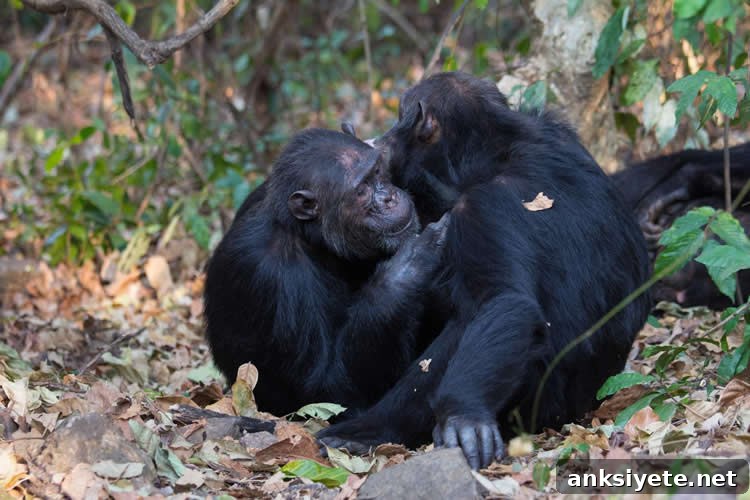
Unexpectedly, the composition of gut bacteria was no more similar between mothers and their offspring than between unrelated individuals who socialize frequently. Although infants acquire an initial microbiome from their mothers during birth and early care, the findings indicate that a lifetime of social contacts continually reshapes and enriches the gut community. Over time, social networks can be as influential as maternal transfer in determining an individual’s microbial diversity.
These results suggest that social behavior generates a broader “pan-microbiome” across a population, maintaining microbial diversity across generations and contributing to the development of host species–specific gut communities. Ochman highlighted that studying chimpanzees provides opportunities not available in humans, allowing scientists to observe how natural social dynamics influence microbiomes in a wild primate population.
While the study documents clear links between sociality and gut microbial richness, further research is needed to determine how fluctuations in diversity affect individual health and disease susceptibility in chimpanzees. Understanding those links could also inform questions about whether human social networks play a comparable role in sustaining gut microbiome diversity.
Other contributing authors include Michael Wilson of the University of Minnesota and Beatrice Hahn of the Perelman School of Medicine at the University of Pennsylvania.
Funding: This research was supported by grants from the National Institutes of Health and the National Science Foundation.
Source: Steve Franklin, UT Austin
Image Credit: Steffen Foerster, Duke University
Original Research: Abstract for “Social behavior shapes the chimpanzee pan-microbiome” by Andrew H. Moeller, Steffen Foerster, Michael L. Wilson, Anne E. Pusey, Beatrice H. Hahn and Howard Ochman, Science Advances. Published online January 15, 2016. doi:10.1126/sciadv.1500997
Abstract
Social behavior shapes the chimpanzee pan-microbiome
Animal sociality is well known to promote transmission of pathogens, but its role in spreading beneficial microbes that contribute to host health is less clear. This study provides evidence that frequent social interactions among wild chimpanzees increase species richness within individual gut microbiomes and reduce differences in microbial community membership among group members. Longitudinal sampling across multiple generations indicates that social transmission, in addition to maternal transfer at birth, plays a central role in establishing and preserving gut microbial diversity. By generating a shared pan-microbiome, social behavior helps maintain microbial diversity across evolutionary timescales and supports the emergence of host species–specific gut communities.