
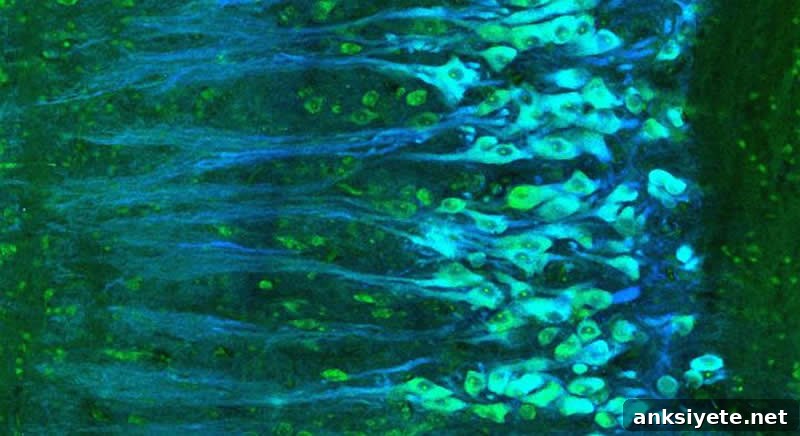
Summary: A new study from the University of Copenhagen challenges long-standing ideas about how spinal cord neurons generate rhythmic movement. The findings indicate that motor activity arises from a widely distributed, sparse network of spinal neurons in which each cell connects to only a few others, rather than from a compact, metronome-like command center.
Source: University of Copenhagen
Researchers at the University of Copenhagen have studied the nerve-to-muscle network in turtles and uncovered fresh insights into how movements are produced and sustained. This work may eventually inform therapies for conditions such as ALS and spinal cord injuries.
Background
Walking, scratching, and other rhythmic movements often feel automatic, and much of that automatic control is rooted in the spinal cord. Higher brain regions, including the cerebrum, interact with the spinal cord, but many basic reflexes and rhythmic patterns are generated locally within spinal circuits.
Associate Professor Rune W. Berg, Head of Research at the Department of Neuroscience, explains that the spinal cord itself produces many movement patterns. To better understand how these patterns arise, his group examined the organization and dynamics of the spinal network that drives rhythmic limb movement.
Turtle Crawl
The team investigated a robust, evolutionarily conserved reflex: the hind-leg scratching behavior of turtles. Using electrode recordings, they mapped activity in the spinal cord as the animal executed rhythmic “crawl” movements while scratching. Similar spinal reflexes exist in many vertebrates, including mammals, and so the turtle serves as a useful model for basic principles of motor control.
When a turtle scratches rhythmically, a rapid cascade of neural impulses in the spinal cord coordinates muscle activity. By comparing the slower rhythmic pattern of limb movement with the fast synaptic events recorded inside the spinal cord, the researchers could infer how the underlying network organizes and distributes signals.
From Metronome to Distributed Network
Traditional views often assume that a small central pattern generator (CPG) or a compact command module acts like a metronome, broadcasting synchronized input to many motor neurons. If that were true, pairs of neurons receiving input from the same source should show strong correlations both on the slow timescale of the rhythm and on the fast timescale of synaptic events.
Surprisingly, the experimental recordings showed little correspondence between slow rhythmic correlation and fast synaptic correlation across neuron pairs. In other words, neurons that shared slow rhythmic modulation did not necessarily share fast synaptic inputs.
From these observations, the team concluded that spinal motor signals are more consistent with a sparse, widely distributed network architecture. In this model, many neurons across a broad area contribute to rhythm generation, but each neuron connects strongly to only a few others. That structure produces weak pairwise correlations in fast synaptic activity even when a shared slow rhythm is present.
The researchers reinforced their interpretation by reproducing similar results in computational models of a simplified nervous system. The simulations supported the idea that sparse, convergent connectivity can produce the observed decoupling of timescales. An alternative explanation—strong recurrent inhibition within a compact network that actively decorrelates common input—was also considered, but overall the evidence points toward a distributed, sparse convergent network.
Implications for Neurological Disorders
Understanding the precise wiring and functional organization of spinal circuits is essential for developing targeted treatments. Rune W. Berg notes that without detailed knowledge of how spinal networks are built and operate, therapeutic approaches to disorders such as amyotrophic lateral sclerosis (ALS) and traumatic spinal cord injury risk missing important mechanistic targets.
Better knowledge of network distribution and the relevant cell types could guide strategies for repair, stimulation, or cell-based therapies. Insights from basic spinal cord research may also illuminate other neurological conditions that involve brainstem and spinal dysfunction—for example, disorders linked to defective brainstem control.
Next Steps
The research group plans to extend their mapping efforts using optical imaging techniques that can monitor activity across larger spinal regions simultaneously. Such approaches will allow them to track the spatial distribution and temporal dynamics of many neurons at once, providing a clearer picture of how sparse networks coordinate rhythmic movement.
Source:
University of Copenhagen
Media Contacts:
Rune W. Berg – University of Copenhagen
Image Source:
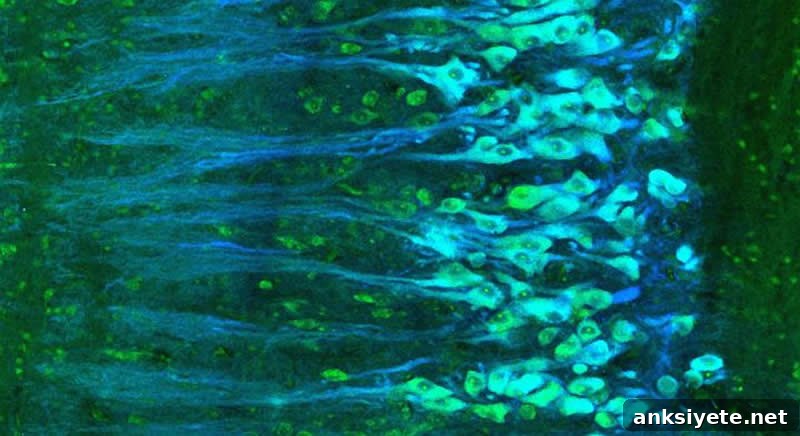
Image credited to University of Copenhagen.
Original Research (Open access):
“Decoupling of timescales reveals sparse convergent CPG network in the adult spinal cord”. Marija Radosevic, Alex Willumsen, Peter C. Petersen, Henrik Lindén, Mikkel Vestergaard & Rune W. Berg. Nature Communications. DOI: 10.1038/s41467-019-10822-9.
Abstract (summary)
During the generation of rhythmic movements, many spinal neurons receive an oscillatory synaptic drive. The network architecture that provides this drive—its size and sparseness—has been unclear. If a small central pattern generator with dense divergence were responsible, it would produce correlated inputs to most receiving neurons. By measuring pairwise synaptic correlations between spinal neurons, the study demonstrates a consistent decoupling of slow rhythmic correlation and fast synaptic correlation. This pattern indicates either sparse convergent connectivity or a CPG network with recurrent inhibition that actively decorrelates common input. The findings favor a sparse, convergent network organization for rhythm generation in the adult spinal cord.