

 In a world of accelerating change and growing complexity, influence belongs to those who take action—especially to those who act with determination and persistence.
Motivation is one of our most valuable resources. When combined with action, its power depends on how we focus our attention and effort.
Why is it that we are all born with limitless potential, yet few people fulfill those possibilities?
Abraham Maslow
What drives human behavior?
Some drivers are biological, while others arise from personal history or social context. We seek food, water, and sexual contact for biological reasons, but our actions are also shaped by social approval, belonging, achievement needs, and the desire either to pursue or avoid risk (Morsella, Bargh, & Gollwitzer, 2009).
This article explains core concepts from the science of motivation, showing how internal and external forces interact to guide behavior.
This Article Contains:
- Types of Motivation
- Motivation and Emotion
- Motivation and Personality
- Motivation for Change
- Happiness and Human Motivation
- A Take-Home Message
- References
Types of Motivation
Motivation can arise internally or from the environment. Internal drivers include biological systems rooted in the brain and nervous system, and psychological needs that reflect properties of the mind. External motivation comes from environmental factors such as incentives, rewards, or explicit goals. These internal and external forces interact to shape behavior (Deckers, 2014).
It is never too late to be what you might have been.
George Eliot
Evolutionary pressures and personal life histories both influence which motives become active and which goals feel meaningful to us.
Drive Motivation
Physiological processes can create energy for action. When the sympathetic nervous system releases epinephrine and norepinephrine, the body becomes ready to move—what psychologists often describe as a drive. Drives push us toward a desired state and motivate actions that reduce internal deficits as the system seeks homeostasis (Reeve, 2018).
Needs are internal forces that energize, direct, and sustain behavior; they fuel the strivings necessary for survival, growth, and wellbeing.
A hungry stomach will not allow its owner to forget it, whatever his cares and sorrows.
Homer, 800 B.C.
Physiological needs like hunger, thirst, and sexual drive begin as bodily events that then become psychological motives. It is important to distinguish the underlying biological need from the psychological drive that motivates behavior. Drive theory emphasizes how physiological imbalances generate internal states that prompt corrective action toward equilibrium (Reeve, 2018).
For related overviews, see discussions of motivation science and classic motivation theories in the literature.
Goal Motivation
Goals are cognitive events that spur action: they focus attention, energize effort, and direct behavior toward specific outcomes (Ames & Ames, 1984). Goals, alongside mindsets, beliefs, expectations, and self-concept, create internal motives that move us to behave differently.
Goals arise from a discrepancy between current reality and a desired state. Without a clear target—“if you don’t know where you’re going, any road will get you there”—motivation tends to be diffuse and unfocused (Locke, 1996; Locke & Latham, 1990, 2002).
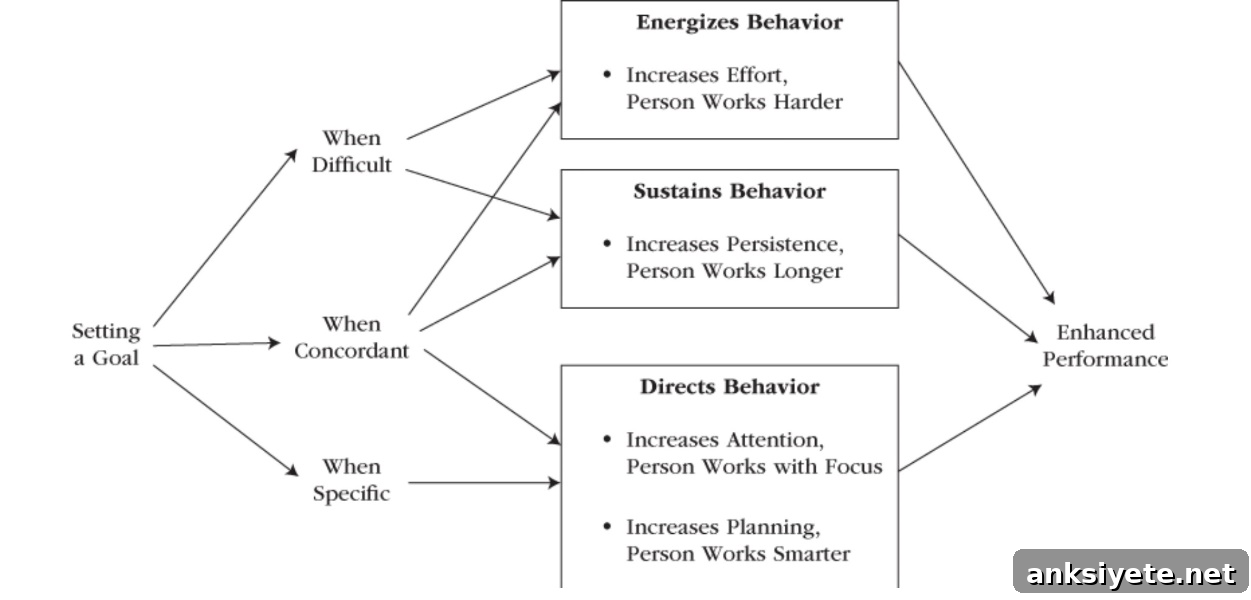
But merely stating a goal is not enough. Goals translate into performance when they are challenging, specific, and aligned with the self. Challenging goals increase effort; specific goals sharpen attention; and goals that reflect personal values provide sustained energy (Locke & Latham, 1984, 1990, 2002; Sheldon & Elliot, 1999).
Designing effective goals—clear, demanding, and self-concordant—is a central practical application of motivation science.
Motivation and Emotion
Motivation and emotion share a common root: both involve movement, derived from the Latin movere, “to move.” Emotions are motivational because they create bursts of energy, capture attention, and prompt reactions to important events (Izard, 1993).
Emotions generate impulses to cope with current circumstances and thus play a central role in initiating behavior (Keltner & Gross, 1999).
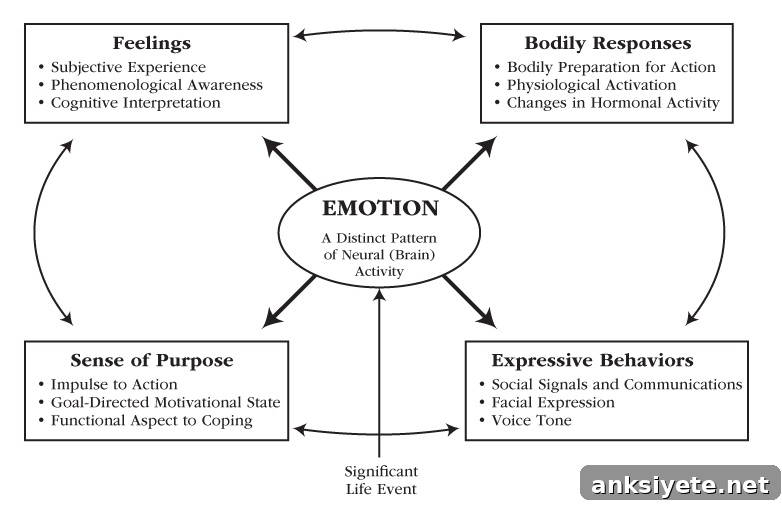
Both motivation and emotion are aspects of affect: they are experienced physiologically and subjectively, and together they influence decision making, behavior, and health. Positive and negative emotional states can therefore strongly affect our motivational trajectories and capacity to pursue goals.
Motivation and Personality
 Personality traits shape which goals and incentives appeal to us and how we behave when pursuing them. The Big Five traits—openness, conscientiousness, extraversion, agreeableness, and neuroticism—correlate with characteristic patterns of motivation and situation selection.
Trait–environment correlations show that people tend to select or shape environments that match their personality, so trait differences influence both what motivates us and the contexts we pursue (Deckers, 2014).
Sensation seeking, for example, affects willingness to take risks for novel or intense experiences. Cybernetic models link personality with goal choice and the states that follow goal pursuit, showing that traits predispose people to respond differently to rewards and challenges.
Research and theory suggest several ways traits channel motivational expression (Deckers, 2014):
- Extraverts often seek high-impact careers and social stimulation, responding strongly to rewards.
- Those high in neuroticism are more vulnerable to negative mood and interpersonal stress, which can shape coping choices.
- People high in conscientiousness plan, persist, earn higher grades, and adopt healthful behaviors.
- Agreeable individuals are more likely to help others and maintain cooperative relationships.
Other findings include links between personality composites and behavior patterns, such as internet use, openness to diversity, and overall happiness. Conscientiousness, openness, and extraversion tend to relate to intrinsic motivation, while extrinsic achievement motives show more complex ties to several traits (Hart et al., 2007).

Download 3 Free Goals Exercises (PDF)
These science-based exercises help create actionable goals and develop techniques for lasting behavior change.
Motivation for Change
People often seek change through exercise programs, therapy, or coaching—but sustainable change is rarely simple or linear. A major challenge is finding the motivation to persist in activities that are not inherently enjoyable.
Autotelic activities—those rewarding in themselves—require little extra motivation because they are intrinsically satisfying (Csikszentmihalyi, 1990). But most meaningful change involves self-control: resisting immediately pleasurable but counterproductive habits and committing to difficult, sometimes unrewarding steps that move us toward a valued outcome.
Some changes look negative on the surface but you will soon realize that space is being created in your life for something new to emerge.
Eckhart Tolle
Self-determination theory describes a spectrum from externally driven actions to fully self-endorsed behavior. Moving toward more autonomous regulation—where new behaviors are integrated with personal values—supports lasting change (Deci & Ryan, 1995).
Stage-based models, like the Transtheoretical Model of Change, conceptualize change as a gradual, sequential process, and techniques such as motivational interviewing help increase readiness by addressing willingness, confidence, and actionable steps (DiClemente & Prochaska, 1998; Zimmerman, Olsen, & Bosworth, 2000).
Happiness and Human Motivation
 Can happiness motivate us? Yes—depending on how happiness is defined and measured.
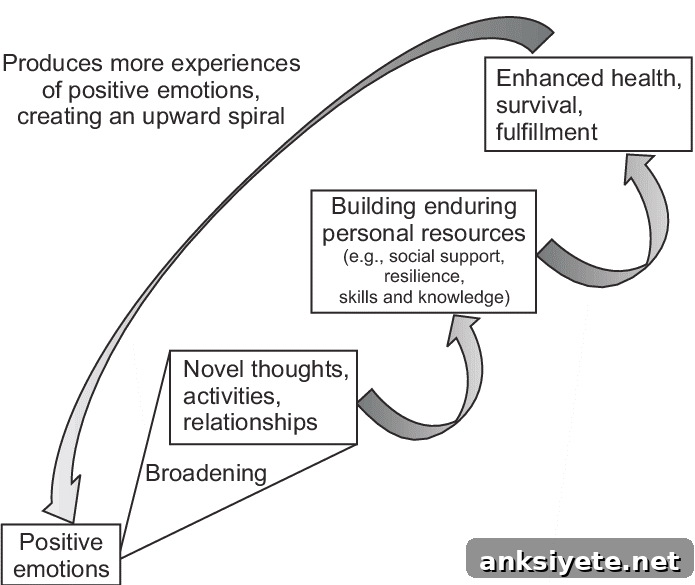
Positive psychology research shows that positive affect and wellbeing can increase creativity, persistence, prosocial behavior, efficient decision making, and intrinsic motivation (Fredrickson, 2004; Amabile & Kramer, 2011; Lyubomirsky et al., 2005).
Positive emotions broaden attention and build resources that support future motivation and success. People who experience frequent positive affect tend to fare better across relationships, work, income, and health outcomes (Lyubomirsky, King, & Diener, 2005).
The good life consists in deriving happiness by using your signature strengths every day in the main realms of living. The meaningful life adds one more component: using these same strengths to forward knowledge, power or goodness.
Martin Seligman
Beyond momentary pleasure, eudaimonic wellbeing—meaning, mastery, connection, and purpose—links closely to higher motives and sustained motivation. Developing personal strengths and character promotes self-directed behavior and fuels engagement with challenging, worthwhile goals (Seligman, 2002; Csikszentmihalyi, 1990).
A Take-Home Message
Grasping motivation principles enables practical solutions to real-world problems: motivating others to act intentionally, supporting goal attainment, fostering optimal experiences, and promoting healthy development and resilience.
Applying motivational science also helps manage impulsive urges, break harmful habits, rebound from setbacks, and build robust self-regulation. If personal mastery is a central victory, then learning how motivation works gives us tools to rise above limitations and pursue meaningful aims.
We invite you to reflect on these ideas and consider how motivation—biological, cognitive, emotional, and social—shapes the goals you choose and the actions you take.
References
- Amabile, T. M., & Kramer, S. J. (2011). The power of small wins. Harvard Business Review.
- Ames, C. (1984). Achievement attributions and self-instructions under competitive and individualistic goal structures. Journal of Educational Psychology, 76(3), 478–487.
- Csikszentmihalyi, M. (1990). Flow: The psychology of optimal experience. Harper & Row.
- David, S. A., Boniwell, I., & Ayers, A. C. (2014). The Oxford Handbook of Happiness. Oxford University Press.
- Deci, E. L., & Ryan, R. M. (1995). Human autonomy: The basis for true self-esteem. In M. H. Kernis (Ed.), Efficacy, agency, and self-esteem (pp. 31–49). Plenum Press.
- Deckers, L. (2014). Motivation: Biological, psychological, and environmental (4th ed.). Allyn & Bacon.
- DiClemente, C. C., & Prochaska, J. O. (1998). Toward a comprehensive, transtheoretical model of change. In W.R. Miller & N. Heather (Eds.), Treating Addictive Behaviors (2nd ed.). Plenum Press.
- Erez, A., & Isen, A. M. (2002). The influence of positive affect on the components of expectancy motivation. Journal of Applied Psychology, 87, 1055–1067.
- Feingold, A. (1983). Happiness, unselfishness, and popularity. Journal of Psychology, 115, 3–5.
- Fredrickson, B. L. (2004). The broaden-and-build theory of positive emotions. Philosophical Transactions of the Royal Society B, 359(1449), 1367–1377.
- Graef, R., Csikszentmihalyi, M., & Gianinno, S. M. (1983). Measuring intrinsic motivation in everyday life. Leisure Studies, 2, 155–168.
- Haidt, J. (2000). The positive emotion of elevation. Prevention & Treatment, 3(1).
- Hart, J. W., Stasson, M. F., Mahoney, J. M., & Story, P. (2007). The Big Five and Achievement Motivation. Individual Differences Research, 5(4), 267–274.
- Izard, C. E. (1993). Emotions. Irvington.
- Kavanagh, D. J. (1987). Mood, persistence, and success. Australian Journal of Psychology, 39, 307–318.
- Keltner, D., & Gross, J. J. (1999). Functional accounts of emotions. Cognition and Emotion, 13(5), 467–480.
- Locke, E. A. (1996). Motivation through conscious goal setting. Applied & Preventive Psychology, 5, 117–124.
- Locke, E., Chah, D., Harrison, S., & Lustgarten, N. (1989). Separating the effects of goal specificity from goal level. Organizational Behavior and Human Decision Processes, 43(2), 270–287.
- Locke, E. A., & Latham, G. P. (1984). Goal setting: A motivational technique that works! Prentice Hall.
- Locke, E. A., & Latham, G. P. (1990). A theory of goal setting & task performance. Prentice-Hall.
- Locke, E. A., & Latham, G. P. (2002). Building a practically useful theory of goal setting and task motivation: A 35-year odyssey. American Psychologist, 57, 705–717.
- Lyubomirsky, S., King, L., & Diener, E. (2005). The benefits of frequent positive affect: Does happiness lead to success? Psychological Bulletin, 131(6), 803–855.
- Maslow, A. H. (1973). Dominance, self-esteem, self-actualization: Germinal papers of A. H. Maslow. Brooks/Cole.
- Morsella, E., Bargh, J. A., & Gollwitzer, P. M. (2009). Oxford Handbook of Human Action. Oxford University Press.
- Reeve, J. (2015). Understanding motivation and emotion (6th ed.). Wiley.
- Schwartz, B., Ward, A., Monterosso, J., Lyubomirsky, S., White, K., & Lehman, D. (2002). Maximizing versus satisficing: Happiness is a matter of choice. Journal of Personality and Social Psychology, 83, 1178–1197.
- Seligman, M. E. (2002). Authentic Happiness: Using the new positive psychology to realize your potential for lasting fulfillment. Simon & Schuster.
- Sheldon, K. M., & Elliot, A. J. (1999). Goal striving, need satisfaction, and longitudinal well-being: The self-concordance model. Journal of Personality and Social Psychology, 76(3), 482–497.
- Vohs, K. D., & Baumeister, R. F. (Eds.). (2011). Handbook of self-regulation: Research, theory, and applications (2nd ed.). Guilford Press.
- Zimmerman, G. L., Olsen, C. G., & Bosworth, M. F. (2000). A “Stages of Change” approach to helping patients change behavior. American Family Physician, 61, 1409–1416.