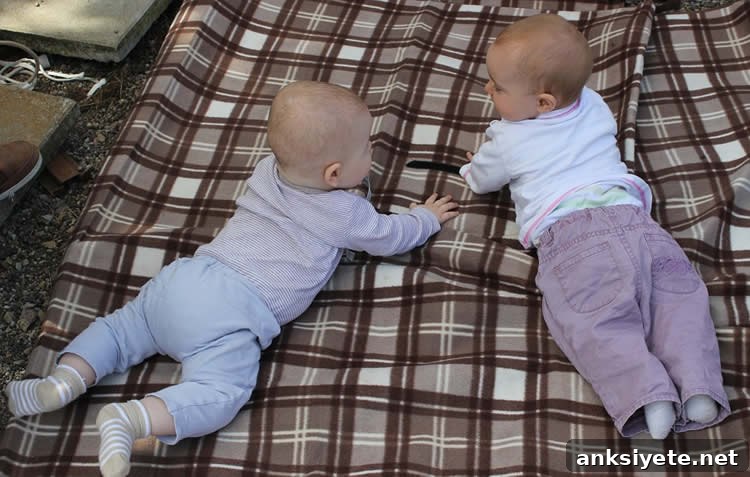
Summary: New research from the Acoustical Society of America shows that infants prefer the vocal sounds of other babies over adult voices. In laboratory tests, five-month-old infants listened about 40% longer to vowel-like sounds produced with infant vocal characteristics than to the same sounds produced with adult vocal characteristics.
Source: Acoustical Society of America.
Infants Prefer the Voices of Their Peers
New findings indicate that very young infants are naturally drawn to vocal sounds that resemble those of other babies. Even before they begin to babble or produce recognizable syllables such as “ba-ba,” infants respond differently to speech-like vowels depending on whether those sounds have the acoustic qualities typical of infant voices or adult voices.
In controlled experiments, five-month-old infants spent roughly 40 percent more time listening to vowel sounds that carried the resonance and spectral properties of infant vocalizations than to the same vowel categories rendered with adult vocal characteristics. These results suggest that infants’ attention and early auditory preferences are influenced not only by pitch but also by the specific resonance patterns created by the bodies of very small talkers.
How the Experiments Were Conducted
The research team, led by Linda Polka of McGill University in collaboration with doctoral student Matthew Masapollo and speech-production expert Lucie Ménard at the University of Quebec in Montreal, used a speech synthesizer capable of simulating movements of the mouth, tongue, vocal folds and other articulatory features. This synthesizer can produce vowel sounds that match the acoustics of different-sized talkers, from infants to adults.
Infants sat in front of a screen displaying a checkerboard pattern and could control sound presentation by looking toward or away from the visual display. This head-turn or looking-time method allowed researchers to measure how long each infant attended to different types of vowel stimuli. After confirming infants’ general preference for vowels that sounded infant-like rather than adult-like, the team examined which acoustic dimensions were most important for that preference.
Pitch Versus Resonance: What Matters Most?
A key question addressed by the researchers was whether the high pitch commonly used by adults when speaking to babies (so-called infant-directed speech) is sufficient to attract infant attention, or whether the particular resonance patterns produced by a small vocal tract are essential. Tests with seven-month-old infants—an age just before many babies begin to babble—indicated that infants prefer speech sounds that combine a high pitch with the resonance characteristics associated with very small speakers. In other words, infants seem tuned to the joint acoustic signature of small-bodied talkers: both pitch and spectral resonance.
Implications for Early Speech Development
These findings illuminate an underexplored aspect of infant speech perception and early language development: access to infant-like speech appears to affect infants’ receptive, expressive and motivational processes related to learning language. According to Linda Polka, an infant’s own vocalizations and the vocalizations of their peers may capture attention, elicit positive emotion, and encourage vocal activity that helps them practice and evaluate their own sounds. Such feedback can support the gradual transition from pre-babbling vocal play to more structured spoken language.
That said, the results do not mean caregivers should abandon infant-directed speech. Parents’ high-pitched, exaggerated expressions and gentle contours are still effective at engaging infants. The new research simply highlights that infants are especially responsive to acoustic patterns that match their own vocal qualities, suggesting a complementary role for peer-like vocal input during early development.
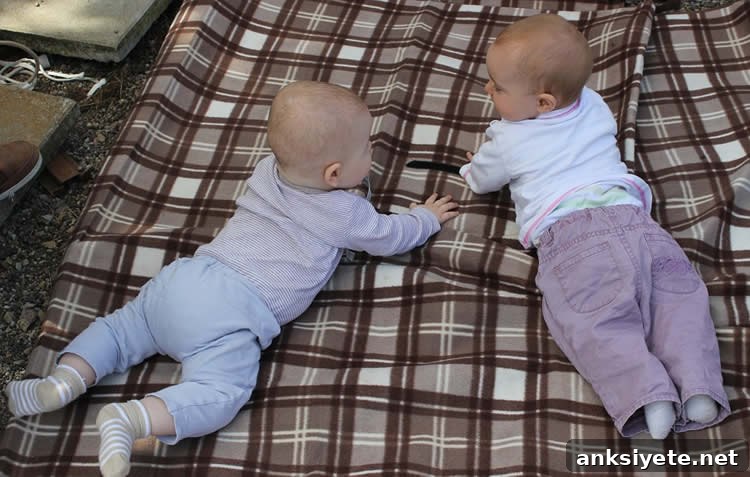
Source: Julia Majors — Acoustical Society of America
Conference: Findings presented at the 175th Meeting of the Acoustical Society of America, held May 7–11, 2018, in Minneapolis, Minnesota.
Research team: Linda Polka (McGill University), Matthew Masapollo (doctoral student), and Lucie Ménard (University of Quebec in Montreal).
Image source: Image credited as public domain.
Polka, L., Masapollo, M., & Ménard, L. — Presentation at the 175th Meeting of the Acoustical Society of America: “From the Mouths of Babes: Infants Enjoy Hearing From Their Peers.” NeuroscienceNews coverage reported the research findings in May 2018.