A highly accurate model of how neurons behave during complex movements could improve our understanding of motor control and help build robotic limbs that move more naturally.
Researchers at the University of Cambridge, together with colleagues from the University of Oxford and the Ecole Polytechnique Fédérale de Lausanne (EPFL), have developed a new neural network model that provides a precise description of how populations of neurons coordinate to generate complex movements such as reaching. Published in the 18 June edition of the journal Neuron, this work offers a fresh theoretical framework for how cortical circuits prepare and execute movement.
Simple voluntary acts—reaching for a cup, grasping an object—require the coordinated activity of millions of neurons in the motor cortex. Long before the hand moves, neurons across this region change their firing patterns to prepare and then drive the muscles that produce the movement. These signals travel across synapses, the junctions between neurons, and involve a dynamic interplay of excitation and inhibition.
Deciphering how neurons act together during movement is challenging. The Cambridge team, led by Dr Guillaume Hennequin from the Department of Engineering, drew inspiration from recent experiments at Stanford that revealed key structure in the signals emitted by large ensembles of neurons before, during and after movement. “There is a remarkable synergy in the activity recorded simultaneously in hundreds of neurons,” Dr Hennequin explains. He contrasts this with earlier models of cortical circuits that predict high redundancy and therefore fail to capture the organized dynamics seen in motor cortex during actions.
The new model emphasizes how excitatory and inhibitory synaptic inputs are balanced to produce transient, low-dimensional patterns of activity that drive movement. In everyday language, the network behaves a bit like a set of spring-loaded mechanisms: as a movement is planned the springs are progressively compressed, and when released they create coordinated bursts of activity that unfold quickly and reliably. Most of the time excitatory and inhibitory signals cancel, but carefully tuned imbalances generate the brief, structured activity needed to produce complex trajectories.
To capture these dynamics the team used tools from control theory, a branch of mathematics designed to analyze and design systems with interacting parts. By optimizing how the network responds to inputs and evolves over time, the model reproduces a wide variety of multidimensional movement patterns observed in experiments. Crucially, the work suggests that the inhibitory connections in the motor cortex may not be random but instead are tuned to stabilize the network’s transient dynamics, enabling reliable generation of movement sequences.
Beyond advancing basic neuroscience, these findings have clear translational potential. More accurate models of population activity in motor cortex could improve brain–computer interfaces and the control algorithms for prosthetic limbs. “Our theory could provide a better prediction of how neurons encode both the intention to move and the execution signals that a robotic limb would need,” says Dr Hennequin. That improved inference could lead to prosthetics that respond more fluidly and naturally to a user’s neural commands.
Looking ahead, the researchers plan to extend the model into a closed-loop framework that actively incorporates sensory feedback from the limbs. Such a system would simulate how the brain uses real-time feedback to correct movement errors and refine trajectories, allowing the theory to be tested against physiological and behavioral data. This next step aims to produce a more complete mechanistic picture of how complex, adaptive movements are generated and controlled.
This research received support from grants including the National Institute on Alcohol Abuse and Alcoholism (AA022239), the National Institute of Mental Health (MH084020), the National Multiple Sclerosis Society, and funding from the Brain Science Institute and the Science of Learning Institute at Johns Hopkins University School of Medicine.
Contact: Sarah Collins – University of Cambridge Research Communications
Source: University of Cambridge press release entitled “Modelling how neurons work together”
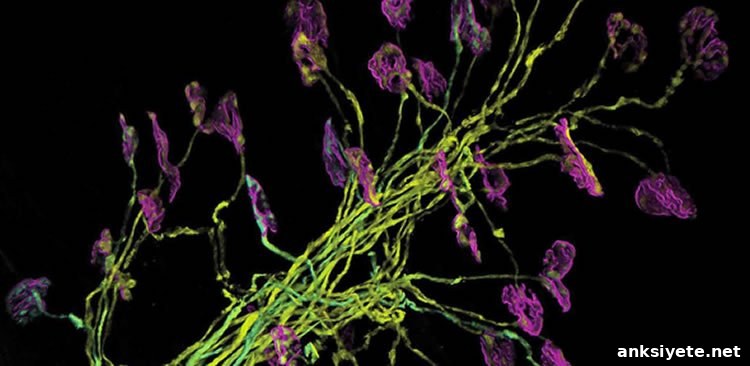
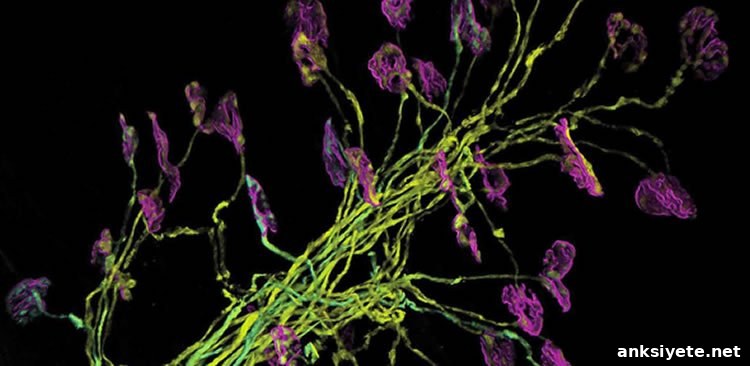
Image Source: Image credited to Zeiss Microscopy via Flickr, licensed under Creative Commons Attribution-NonCommercial-NoDerivs 2.0 Generic. Caption reproduced for attribution.
Original Research: Abstract for “Optimal Control of Transient Dynamics in Balanced Networks Supports Generation of Complex Movements” by Guillaume Hennequin, Tim P. Vogels, and Wulfram Gerstner, Neuron. DOI: 10.1016/j.neuron.2014.04.045. Published online June 18, 2014.