

Summary: Researchers have identified molecular mechanisms that shift children’s memory from general, “gist-like” recollections to precise, event-based or episodic memories. This transition typically happens between ages four and six and is driven by maturation processes in the hippocampus.
The study pinpoints the role of inhibitory neurons called parvalbumin-expressing (PV) interneurons and the surrounding dense extracellular matrix known as the perineuronal net (PNN). Together, these elements constrain engram size and enable memory specificity during development.
This new understanding of how episodic memory emerges may shed light on developmental brain conditions such as autism spectrum disorder and the cognitive effects of concussion.
Key Facts:
- As inhibitory PV interneurons in the hippocampus mature, memories shift from general to specific and engrams become appropriately sized.
- Accelerating perineuronal net development in juvenile mice can induce the formation of specific episodic memories earlier than normal.
- The findings offer potential insight into neurodevelopmental and brain injury-related conditions that affect memory and cognition.
Source: Hospital for Sick Children
How does the brain develop the capacity for specific memories? A preclinical study led by researchers at The Hospital for Sick Children (SickKids) reveals cellular and molecular changes in the developing hippocampus that underlie the emergence of precise episodic memory in youth.
Adults typically form episodic memories—detailed recollections tied to a specific time and place—while very young children tend to retain gist-like memories that capture general features without precise context. The research, published in Science and led by Drs. Paul Frankland and Sheena Josselyn of the Neurosciences & Mental Health program at SickKids, clarifies why this shift occurs and identifies the biological structures responsible.
“Researchers have studied how episodic memory develops for decades, but only recently have precise cellular interventions made it possible to examine this process at the molecular level,” says Frankland, who also holds a Canada Research Chair in Cognitive Neurobiology.
Perineuronal net growth triggers the change from gist to episodic memory
In adult animals, memory traces—sometimes called engrams—are typically composed of a sparse subset of neurons, often 10 to 20 percent of the relevant population. In contrast, juvenile engrams are larger: between 20 and 40 percent of neurons participate, producing less specific, gist-like memories.
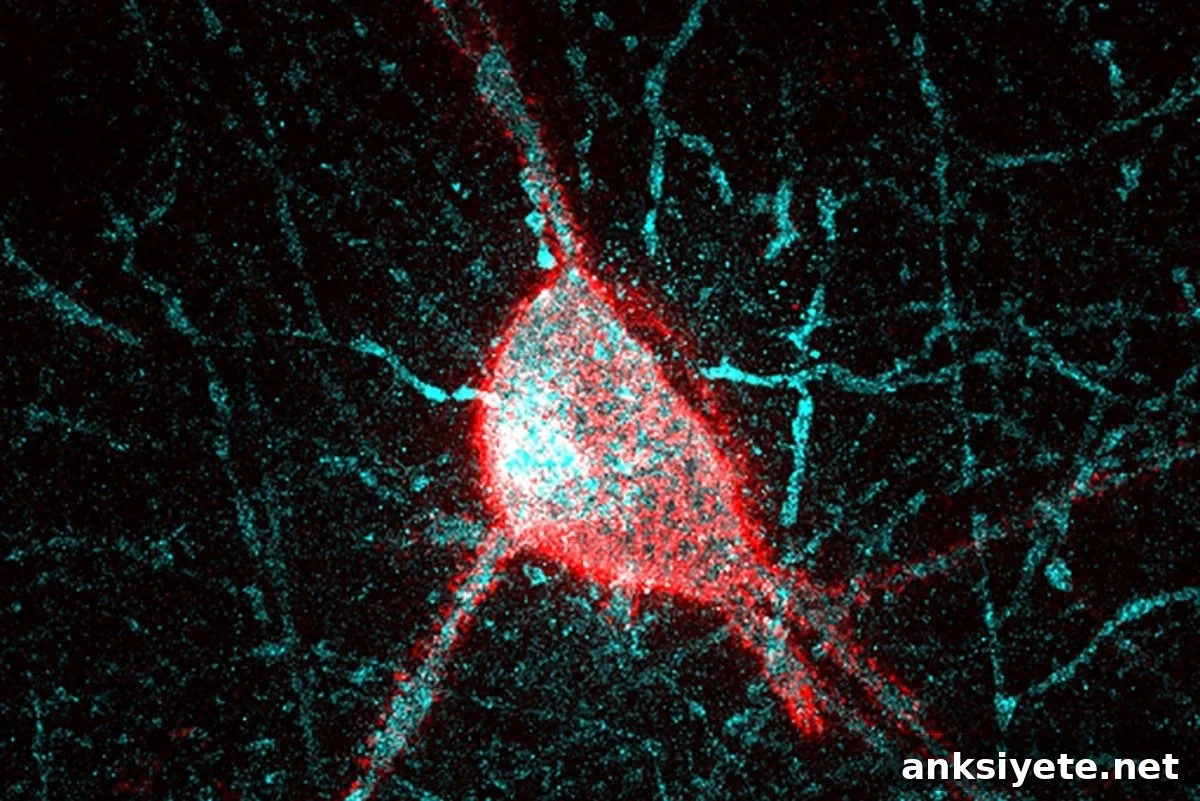
The hippocampus contains a diverse set of neurons, including parvalbumin-expressing interneurons that inhibit and sculpt network activity. These inhibitory cells limit the number of neurons allocated to an engram, which supports memory precision. The SickKids team discovered that as PV interneurons mature, the allocation process becomes competitive and engrams become sparse and specific.
Using viral gene transfer methods developed by Dr. Alexander Dityatev, the researchers explored what drives PV interneuron maturation. They identified the perineuronal net—a dense extracellular matrix that forms around PV interneurons—as a critical factor. Assembly of the PNN around these interneurons in hippocampal subfield CA1 is both necessary and sufficient for initiating competitive neuronal allocation, sparse engram formation, and precise, episodic-like memories.
“Once we identified the perineuronal net as a key factor in interneuron maturation, we were able to accelerate the net’s development and produce episodic memories in juvenile mice that normally would only form gist-like memories,” explains Josselyn, who holds a Canada Research Chair in Circuit Basis of Memory.
Implications for brain function, development, and cognition
Although the team could trigger early formation of episodic memories by accelerating PNN growth, they stress the adaptive value of age-related differences in memory style. “A child’s memory system suits their developmental needs,” says Adam Ramsaran, a PhD candidate in the Frankland Lab and first author of the study. “Gist-like memories at age three help build a broad knowledge base. Specificity becomes more important as children gain experience.”
Beyond memory development, similar maturation mechanisms appear in sensory systems and other brain regions, suggesting a general strategy the brain uses as circuits mature. The researchers also showed that environmental enrichment can speed PNN formation and promote earlier emergence of specific memories—an observation that informs ongoing child development research at SickKids and the University of Toronto.
“The same basic mechanism—maturation of inhibitory circuitry mediated by perineuronal nets—may be repurposed across brain regions to tune function during development,” Frankland adds. This insight opens new avenues for studies of neurodevelopmental disorders and recovery after brain injury.
Funding: This research received support from Brain Canada, the Canadian Institutes of Health Research (CIHR), University of Toronto, SickKids Research Institute, German Research Foundation, German Center for Neurodegenerative Diseases, National Institutes of Health (NIH), Natural Sciences and Engineering Research Council of Canada (NSERC), Ontario Graduate Scholarship and Trillium Scholarship programs, and the Vector Institute.
About this memory and neurodevelopment research news
Author: Jelena Djurkic
Source: Hospital for Sick Children
Contact: Jelena Djurkic – Hospital for Sick Children
Image credits: The header image is credited to Neuroscience News. The article image is credited to Hospital for Sick Children.
Original Research: Closed access. “A shift in the mechanisms controlling hippocampal engram formation during brain maturation” by Paul Frankland et al., published in Science.
Abstract
A shift in the mechanisms controlling hippocampal engram formation during brain maturation
The ability to form precise, episodic memories develops with age. Young individuals initially form gist-like memories that lack contextual precision. In mice, a lack of competitive neuronal engram allocation in the immature hippocampus prevents sparse engram formation and precise memories until inhibitory circuits mature in the fourth postnatal week. This developmental shift depends on the functional maturation of parvalbumin-expressing interneurons in CA1 through assembly of perineuronal nets, which is necessary and sufficient for competitive allocation, sparse engram formation, and memory precision.