
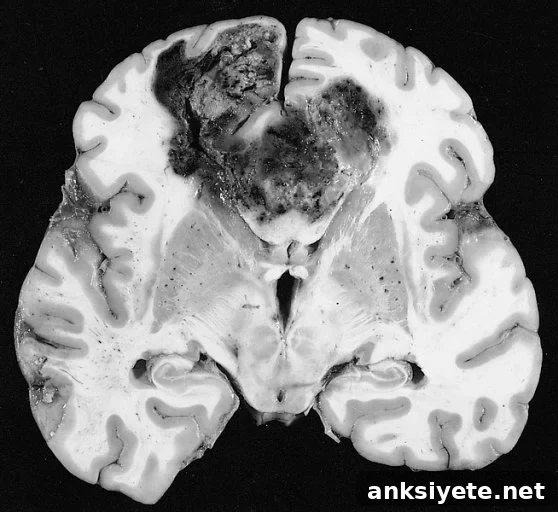
Abnormal Metabolism Drives Growth in Aggressive Mesenchymal Glioblastoma Subtype
Researchers at The Ohio State University Comprehensive Cancer Center – Arthur G. James Cancer Hospital and Richard J. Solove Research Institute (OSUCCC – James) have identified a metabolic pathway that fuels tumor growth in a specific glioblastoma subtype. The discovery points to a potential new therapeutic target for patients with aggressive mesenchymal glioblastoma.
Glioblastoma is the most common and lethal primary brain tumor. Molecular profiling classifies high-grade gliomas into subtypes commonly described as proneural, neural, classic and mesenchymal. In this study, physician-scientists focused on subtype-specific cancer stem cells to better understand the biology that drives tumor behavior and treatment resistance.
The research reveals that the mesenchymal subtype is particularly aggressive and linked to the poorest patient outcomes. Cancer stem cells isolated from mesenchymal tumors showed markedly higher expression of the enzyme ALDH1A3 compared with stem cells from the proneural subtype. Experimental evidence indicates that elevated ALDH1A3 activity supports tumor growth and contributes to therapy resistance.
ALDH1A3 as a Functional Biomarker and Therapeutic Target
Ichiro Nakano, MD, PhD, associate professor of neurosurgery at OSUCCC – James and the study’s principal investigator, explains that ALDH1A3 may serve as a functional biomarker for mesenchymal glioma stem cells. “Inhibiting this enzyme could offer a targeted approach for high-grade gliomas with a mesenchymal signature,” Nakano says. The findings underscore the need for subtype-specific, personalized therapies rather than a one-size-fits-all treatment for glioblastoma.
Glioblastoma remains difficult to treat: it represents roughly 15 percent of brain tumors, often resists current therapies, and can have survival measured in months after diagnosis. Understanding the metabolic pathways that sustain specific glioblastoma subtypes is essential to develop more effective, targeted treatments.
Study Design and Key Results
For this study, researchers analyzed tumor samples and cancer stem cells from 40 patients with high-grade gliomas. They used gene expression profiling and preclinical animal models to compare stem cells from proneural and mesenchymal tumors and to investigate how metabolic differences influence tumor behavior.
Major technical findings include:
- Genes involved in glycolysis and gluconeogenesis, notably ALDH1A3, were significantly up-regulated in mesenchymal glioma stem cells compared with proneural stem cells.
- Mesenchymal glioma stem cells displayed greater resistance to radiation and elevated expression of DNA repair genes.
- Radiation promoted conversion of proneural glioma stem cells into mesenchymal-like stem cells that are highly resistant to therapy; blocking the ALDH1 pathway reverted this resistance.
- Pharmacologic or genetic inhibition of ALDH1A3-mediated pathways slowed growth of mesenchymal glioma stem cells, identifying ALDH1A3 as a promising therapeutic target for mesenchymal-signature glioblastomas.
Collectively, the data support a model in which a distinct metabolic signaling mechanism underlies both the transformation of proneural stem cells to mesenchymal-like cells and the maintenance of mesenchymal stem-like states. These mechanistic insights may guide development of treatments that specifically target metabolic vulnerabilities in aggressive glioblastoma subtypes.
Translational Potential and Intellectual Property
The investigators note that targeting ALDH1A3 could provide a new strategy to overcome radiation resistance and curb growth of mesenchymal glioblastomas. Their discoveries are currently covered by a provisional patent application coordinated through the Technology Licensing Office at the University of Pittsburgh.
Funding, Collaborators and Research Sources
This research received support from multiple organizations, including the American Cancer Society; the NIH/National Cancer Institute; NIH/National Institute of General Medical Sciences; NIH/National Institute of Neurological Disorders and Stroke; NIH/National Institute of Environmental Health Sciences; NIH/National Library of Medicine; NIH/National Center for Research Resources; the James S. McDonnell Foundation; the Zell Family Foundation; the Northwestern Brain Tumor Institute; the National Research Foundation of Korea; and the China Scholarship Council.
Key contributors to the study included Ping Mao, Kaushal Joshi, Sung-Hak Kim, Peipei Li and Luke Smith (The Ohio State University); Lucas Santana-Santos, Soumya Luthra, Uma R. Chandran, Panayiotis V. Benos, Jianfeng Li and Robert W. Sobol (University of Pittsburgh); Maode Wang (Xi’an Jiaotong University, China); and Bo Hu and Shi-Yuan Cheng (Korea University, Republic of Korea).
Contact and Source Information
Contact: Darrell E. Ward – Ohio State University Medical Center
Source: Ohio State University Medical Center press release
Image credit: Glioblastoma multiforme image courtesy of Dr. Rodney D. McComb and credited to The Armed Forces Institute of Pathology (AFIP).
Original research: Abstract for “Mesenchymal glioma stem cells are maintained by activated glycolytic metabolism involving aldehyde dehydrogenase 1A3” published in Proceedings of the National Academy of Sciences (PNAS) by Ping Mao, Kaushal Joshi, Jianfeng Li, Sung-Hak Kim, Peipei Li, Lucas Santana-Santos, Soumya Luthra, Uma R. Chandran, Panayiotis V. Benos, Luke Smith, Maode Wang, Bo Hu, Shi-Yuan Cheng, Robert W. Sobol, and Ichiro Nakano.