
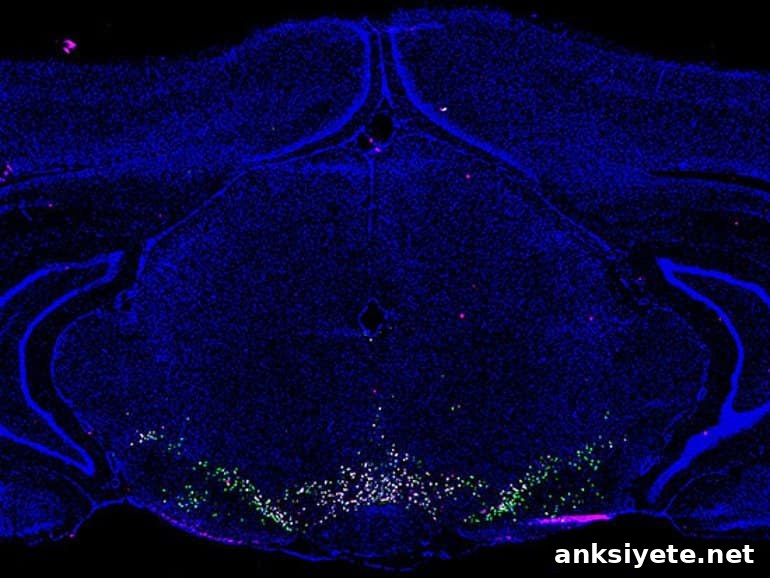
Summary: Researchers at the University of Alabama at Birmingham mapped 16 transcriptionally distinct cell populations in the ventral tegmental area (VTA), clarifying the molecular diversity of neurons and supporting cells that underlie reward-related neural circuits.
Source: University of Alabama
Researchers at the University of Alabama at Birmingham (UAB) have produced a comprehensive cellular atlas of the ventral tegmental area (VTA), identifying 16 distinct cell populations and revealing molecular signatures that refine our understanding of this midbrain region.
The VTA plays a central role in dopamine signaling and is a key node in brain circuits that govern reward, motivation and goal-directed behavior. Dysregulation of these circuits contributes to substance use disorders and other neuropsychiatric conditions, including schizophrenia and attention deficit hyperactivity disorder (ADHD). Improved knowledge of VTA cellular composition helps explain how diverse cell types shape behavior and disease vulnerability.
Beyond classic dopaminergic neurons, the VTA contains important populations of GABAergic and glutamatergic neurons, and some neurons that co-express components for multiple neurotransmitters. These “combinatorial” neurons add complexity to how the VTA integrates signals and communicates with other brain regions.
To map this complexity, the UAB team applied single-nucleus RNA sequencing (snRNA-seq) to more than 21,600 nuclei isolated from the rat VTA, generating the largest targeted single-cell transcriptomic dataset focused solely on this structure. The unbiased sampling strategy deliberately included all VTA cell types rather than preselecting subsets, providing a fuller view of regional molecular diversity. The rat model was chosen for its widespread use in reward and addiction research.
This dataset expands on prior studies in several important ways. Earlier single-cell sequencing efforts often analyzed mouse tissue, pooled midbrain regions such as the substantia nigra and VTA, or isolated fluorescently tagged dopaminergic cells. In contrast, the UAB atlas concentrates on VTA subregions and captures a broader spectrum of neuronal and non-neuronal populations.
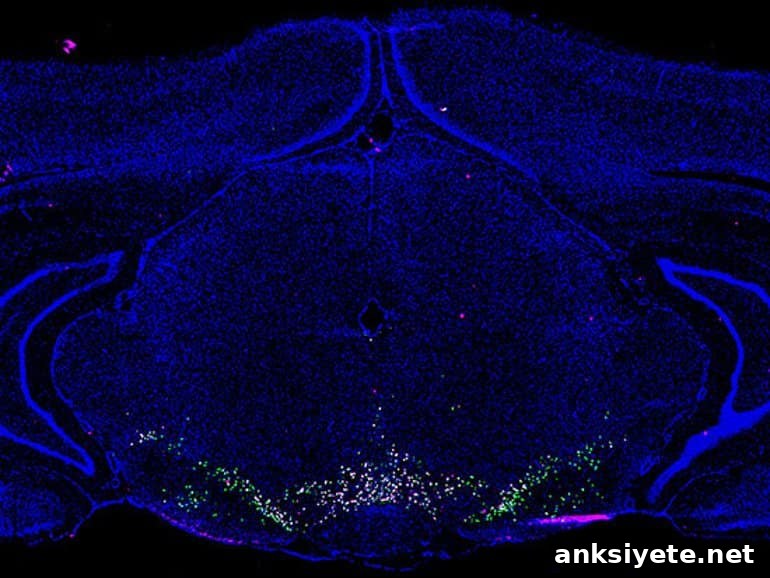
The analysis resolved 16 transcriptionally distinct populations, including canonical dopaminergic neurons, three subtypes of glutamatergic neurons, three subtypes of GABAergic neurons, and nine other cell types such as astrocytes and diverse glial cells. Further neuronal sub-clustering uncovered four sub-populations consistent with neurons capable of combinatorial neurotransmitter synthesis and release.
Importantly, the authors identified selective gene markers that distinguish classical dopamine neurons from combinatorial neurons. These markers enable precise viral targeting and functional manipulation of defined VTA subclasses in future experiments, facilitating mechanistic studies of how specific cell types contribute to behavior and disease.
The study also assessed expression of opioid neuropeptides and their receptors across cell populations, and evaluated enrichment of disease-associated gene sets. The researchers found broad neuronal expression of genes linked to schizophrenia and smoking initiation, and observed enrichment of ADHD-associated risk genes in two glutamatergic subpopulations, pointing to population-specific genetic vulnerability within the VTA.
Led by co-first authors Robert A. Phillips III and Jennifer J. Tuscher, Ph.D., and corresponding author Jeremy J. Day, Ph.D., the project includes contributions from Samantha L. Black, Emma Andraka, N. Dalton Fitzgerald, Evelyn F. McKnight Brain Institute colleagues, and Lara Ianov from the Civitan International Research Center. Day, Phillips and Tuscher are associate professor, graduate student and postdoctoral fellow, respectively, in the UAB Department of Neurobiology.
About this neuroscience and brain mapping research news
Author: Press Office
Source: University of Alabama at Birmingham
Contact: Press Office – University of Alabama at Birmingham
Image: The image is credited to Emma Andraka
Original Research: Open access.
“An atlas of transcriptionally defined cell populations in the rat ventral tegmental area” by Robert A. Phillips et al., published in Cell Reports.
Abstract
An atlas of transcriptionally defined cell populations in the rat ventral tegmental area
Highlights
- Comprehensive transcriptional atlas of the rat ventral tegmental area generated using single-nucleus RNA sequencing (snRNA-seq).
- Computational prediction and experimental validation of novel marker genes for dopamine neurons.
- Identification of population-specific enrichment for gene sets linked to psychiatric disorders and behavioral traits.
- Provision of a searchable, interactive database to query gene expression across defined VTA cell types.
Summary
The ventral tegmental area is a molecularly heterogeneous midbrain region essential for reward processing and implicated in multiple neuropsychiatric disorders. While dopaminergic neurons have long been the focus of VTA research, GABAergic and glutamatergic neurons—and neurons that combine signaling modalities—also play crucial roles.
Using snRNA-seq on 21,600 nuclei from the rat VTA, the study defines transcriptional profiles for 16 distinct cellular populations, discovers selective markers for classic and combinatorial neurons, catalogs receptor and neuropeptide expression relevant to drug action, and demonstrates selective enrichment of disorder-associated gene sets among specific populations. These findings underscore VTA heterogeneity and deliver a resource to guide future functional and translational studies into reward circuitry and neuropsychiatric disease.