
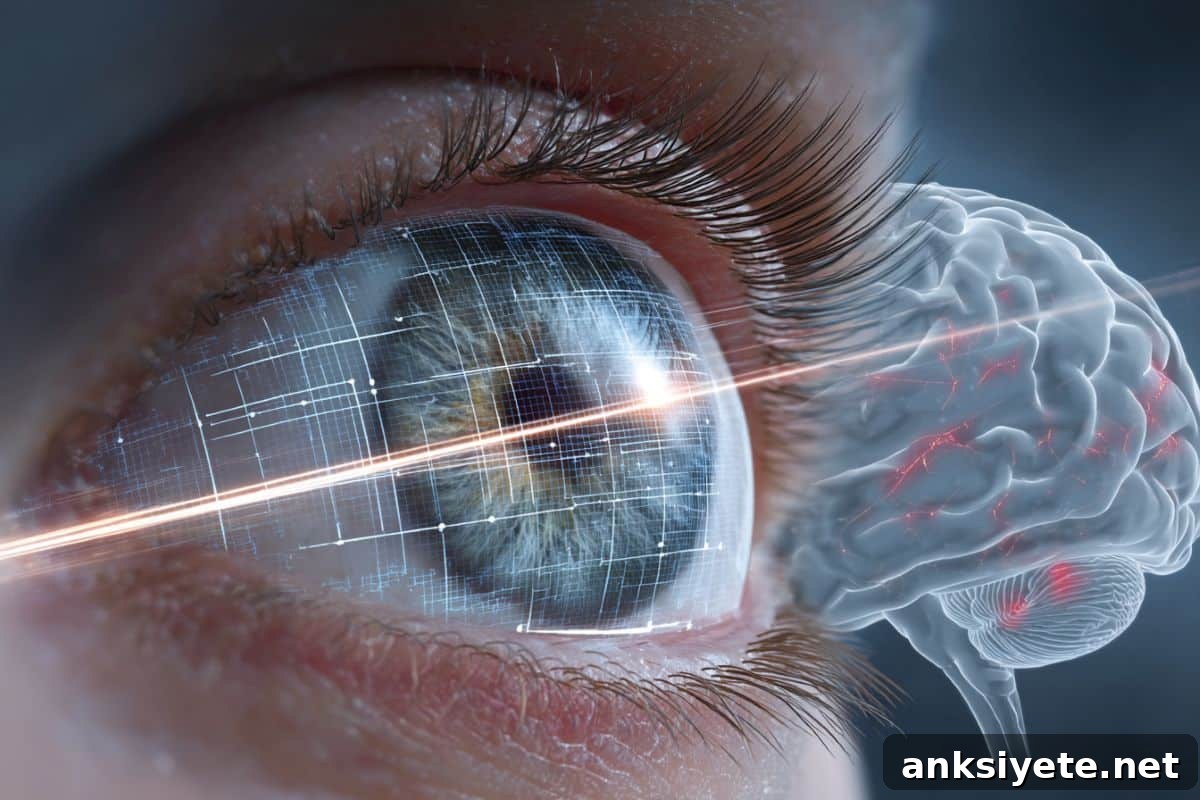
Summary: Can a single concussion from your youth still affect your brain a decade or two later? New research suggests the answer is yes.
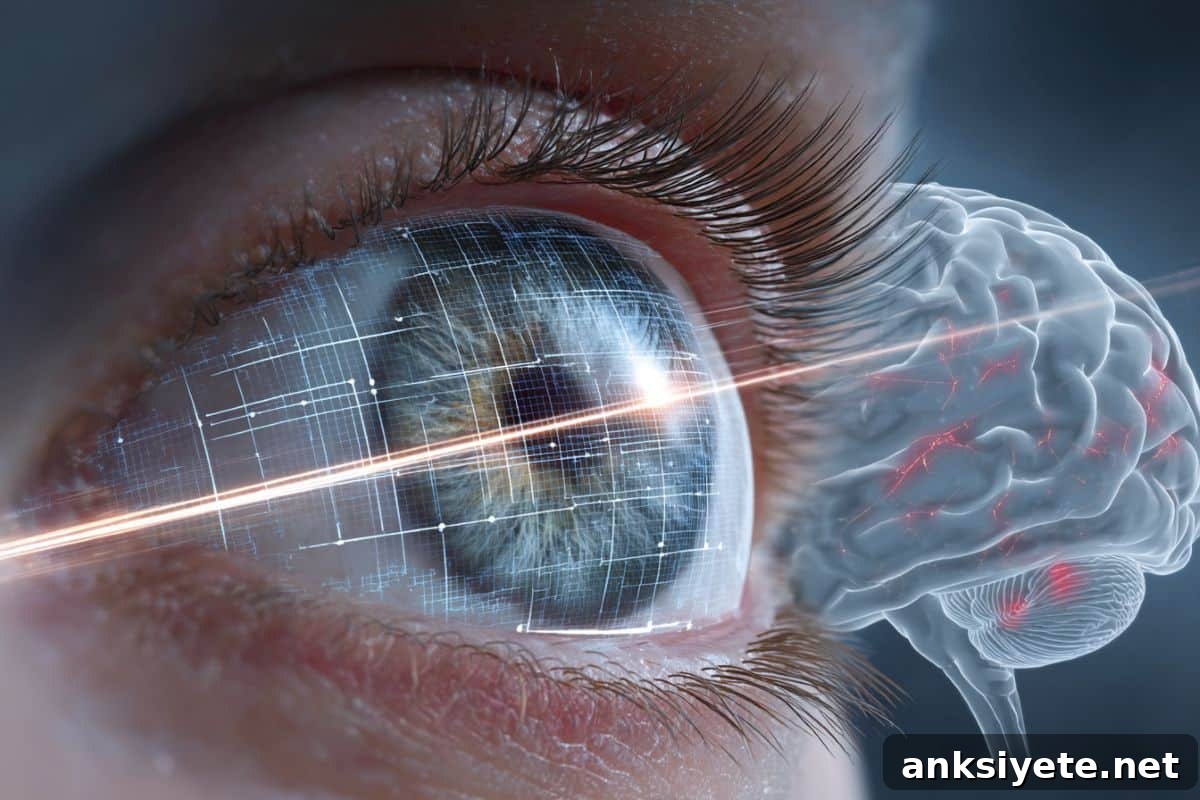
Using high-speed eye-tracking, researchers found that people who experienced mild traumatic brain injuries (mTBIs) more than ten years ago still show subtle but measurable delays in how their eyes follow moving targets. These delays — invisible on routine clinical exams and standard scans — point to long-lasting changes in the brain’s timing and motor-control networks.
Key Facts
- The “Lag” Discovery: Individuals with prior concussions demonstrated delayed pursuit eye movements — the smooth tracking of a moving object.
- Decades of Impact: The deficits were detectable in people whose last head injury occurred 10–15 years earlier, suggesting some changes may be long-term.
- Beyond Standard Tests: Many participants passed conventional cognitive and physical examinations, but high-speed eye-tracking detected micro-level stutters in brain-to-eye communication.
- Brainstem & Cerebellum Involvement: Investigators believe long-term signaling changes in the brainstem and cerebellum — areas that support fine motor control and predictive timing — contribute to these findings.
- Potential Biomarker: Eye-tracking appears to be a sensitive, non-invasive biomarker for hidden brain injury and could help identify people at higher risk for later neurodegenerative conditions.
Source: University of Colorado
Overview: Researchers at the CU Anschutz Marcus Institute for Brain Health report that military veterans with prior concussions continue to demonstrate subtle deficits in ocular motor control and cognitive function more than a decade after injury. Specialized eye movement testing revealed these persistent differences.
The results were published in the Journal of Neuro-Ophthalmology.
Mild traumatic brain injuries are common among service members, athletes and civilians exposed to falls, collisions or blasts. While many recover within weeks to months, this study highlights that some people experience persistent changes in attention, processing speed and impulse control long after symptoms seem to resolve.
Eye Movements Reveal Subtle Brain Changes
“The eyes are closely linked to brain networks that manage attention, processing and decision-making,” said lead investigator Jeffrey Hebert, PhD, PT, associate professor at the CU Anschutz School of Medicine and director of research for the Marcus Institute for Brain Health. “When we analyze eye movements during cognitively demanding tasks, we can detect changes that standard bedside exams or scans may miss.”
The study included 78 veterans: 38 with a history of mild TBI and 40 without. Participants completed computerized eye-movement tasks and cognitive tests designed to assess executive functions such as attention, processing speed and inhibitory control.
Compared with controls, veterans with prior concussions showed slower, less accurate eye movements and reduced performance on attention-based tasks. Many of these differences persisted in individuals whose most recent concussion occurred more than 10 years earlier.
Eye movement tasks in the study tested not just visual tracking but also cognitive control: for example, the ability to quickly look away from a target (antisaccade tasks) and the ability to rapidly recognize and name visual stimuli. These tasks depend on widespread neural circuits, so even mild injuries can leave lasting yet subtle effects on performance.
“Even when people feel recovered, their brains may operate differently behind the scenes — particularly during demanding visual tasks or in busy environments,” Hebert added. “Objective eye-movement testing offers a reliable way to measure these covert issues.”
Implications for Concussion Care
Because routine imaging like MRI often appears normal after mild TBI, persistent symptoms can be hard to verify objectively. Cognitively challenging eye-movement assessments could give clinicians an additional tool to better understand ongoing cognitive complaints and to tailor rehabilitation more precisely.
Although the study focused on veterans, the findings likely extend to athletes, first responders and civilians who have experienced concussions. The researchers emphasize that most people with mild TBI improve, but identifying those with lingering effects could improve long-term monitoring, follow-up care and intervention planning to support healthier brain adaptation.
Future research will evaluate whether routine inclusion of challenging eye-movement testing in concussion assessments can improve diagnosis, track recovery, and guide treatment decisions.
Funding: The study was supported by the Congressionally Directed Medical Research Programs and the U.S. Army Medical Research Acquisition Activity, Department of Defense, Vision Research Program Award.
Key Questions Answered:
A: Not necessarily. The tracking “lag” detected by high-speed testing is often imperceptible in daily life because the brain compensates. Still, it can leave a lasting signature on neural wiring, so it’s prudent to protect head health as you age and discuss concerns with a clinician if symptoms arise.
A: Tracking a moving object requires precise coordination among vision, vestibular balance systems and motor control. Small disruptions in these networks are often revealed first by sensitive eye-tracking measures that other exams might miss.
A: Yes. Current sideline assessments can be subjective. High-speed eye-tracking provides objective, quantitative metrics. With a pre-injury baseline, clinicians could detect acute changes immediately after a new head impact.
Editorial Notes:
- This article was edited by a Neuroscience News editor.
- The journal paper was reviewed in full and additional context was added by staff.
About this eye tracking and TBI research news
Author: Laura Kelley
Source: University of Colorado
Contact: Laura Kelley – University of Colorado
Image credit: Neuroscience News
Original Research: Closed access. Title: “Ocular Motor Control and Cognitive Function in Military Veterans With Chronic Mild Traumatic Brain Injury” by Jeffrey R. Hebert, PhD, PT, et al., Journal of Neuro-Ophthalmology. DOI: 10.1097/WNO.0000000000002435.
Abstract
Ocular Motor Control and Cognitive Function in Military Veterans With Chronic Mild Traumatic Brain Injury
Background:
Ocular motor control (OMC) disturbances and cognitive dysfunction are common long-term consequences after mild traumatic brain injury. Military service often exposes individuals to blast and biomechanical forces that increase mTBI risk. Problems in OMC and cognition can persist for years but are sometimes only detectable under physical or psychological stress, and validated clinical tools to assess chronic OMC–cognition relationships are limited.
Methods:
This examiner-blinded, cross-sectional study at the Marcus Institute for Brain Health enrolled veterans with chronic mTBI (n = 38) and control veterans without TBI (n = 40). Measures included the King-Devick rapid number naming test, computerized antisaccade eye-tracking paradigms, the Conners’ Continuous Performance Test (CPT) for attention and impulsivity, the FAS verbal fluency test, and the PTSD Checklist for DSM-5 (PCL-5).
Results:
Veterans with chronic mTBI had a median of two prior mTBIs occurring about 11 years before enrollment. They made more errors and took longer on the King-Devick test than controls. The experimental group showed longer antisaccade latencies and higher error rates on several antisaccade paradigms. They also scored worse on measures of PTSD symptoms, verbal fluency, and CPT omissions/commissions. Time since most recent TBI correlated with some antisaccade error rates. Regression models identified verbal fluency and cognitive measures as significant contributors to test performance, and group status was associated with certain antisaccade latency outcomes.
Conclusions:
The findings support that OMC disturbances and cognitive deficits can co-occur and persist in veterans with chronic mTBI, even after as few as two injuries occurring approximately 11 years earlier. The study highlights an OMC–cognition axis of chronic mTBI sequelae and identifies cognitive correlates that can aid clinical interpretation of eye-movement testing in long-term care of concussion patients.