
Heidelberg scientist coordinates new EU project “KoroiBot”.
The international research project KoroiBot brings together scientists from seven institutions across Germany, France, Israel, Italy and the Netherlands to teach two‑legged robots a stable, robust, and human‑like way of walking. Coordinated by Prof. Dr. Katja Mombaur at Heidelberg University, the three‑year project began in October 2013 and is funded by the European Union with approximately EUR 4.16 million. The multidisciplinary team includes experts in robotics, mathematics and cognitive sciences who will study human locomotion in detail and translate those findings into new mathematical models, optimization techniques and learning algorithms for humanoid robots.
Humanoid robots have the potential to serve in many roles—search and rescue in disaster zones, domestic assistance, or collaborative workplace partners—but a fundamental limitation remains: reliable bipedal locomotion in varied, unpredictable environments. “One of the major challenges is enabling robots to walk on two legs safely in a wide range of situations, despite unknown terrain and external disturbances,” explains Prof. Mombaur, who leads the “Optimisation in Robotics and Biomechanics” group at Heidelberg University’s Interdisciplinary Center for Scientific Computing (IWR).
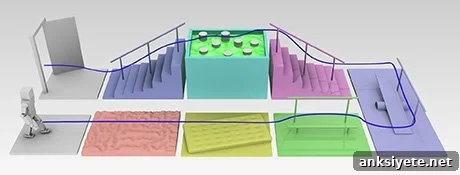
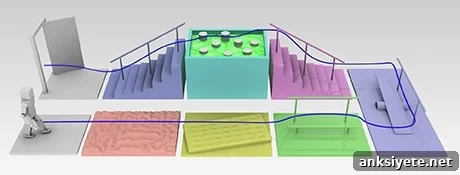
The KoroiBot consortium will examine how humans negotiate complex walking scenarios—such as ascending and descending stairs, walking on slopes, moving across soft or slippery ground, and balancing on narrow beams or seesaws—and will derive mathematical descriptions of these behaviors. Those models will be the basis for new optimization and learning methods that generate stable, energy‑efficient gaits. The project emphasizes model‑based control strategies so that synthesized motions can be transferred to real humanoid platforms and tested in practice.
At Heidelberg, two research groups contribute core expertise: the “Optimisation in Robotics and Biomechanics” team, led by Prof. Mombaur, and the IWR’s “Simulation and Optimisation” group. Together the teams will convert human and robot motion data into mathematical models, compute optimized walking patterns for diverse tasks and environments, and develop advanced control algorithms that allow robots to react robustly to perturbations. Heidelberg’s portion of the EU grant is just under EUR 900,000.
The international consortium combines leading robotics laboratories and cognitive science groups. Partners include the Karlsruhe Institute of Technology (KIT), multiple laboratories of the Centre National de la Recherche Scientifique (CNRS) in France, the Istituto Italiano di Tecnologia (IIT), and Delft University of Technology in the Netherlands. Contributions from the University of Tübingen and the Weizmann Institute of Science bring cognitive science perspectives to understanding human motor control and perception, which inform the design of robot controllers and learning systems.
Beyond immediate robotics applications, KoroiBot’s research is expected to benefit several related fields. Improved models and control concepts can inform the design and regulation of powered exoskeletons and intelligent prosthetic limbs, enhancing mobility assistance and rehabilitation. The algorithms and motion models developed by the project also have practical value in computer animation and game design, where realistic and adaptable bipedal motion is increasingly important.
KoroiBot’s integrated approach—combining detailed biomechanical study, mathematical modeling, optimization, learning, and hardware implementation—aims to close the gap between human walking capabilities and robotic performance. By grounding controllers in empirical human behavior and validating them on actual platforms, the project seeks to deliver robust solutions for bipedal locomotion that are adaptable to real‑world conditions and ready to inform the next generation of humanoid robots.
Notes about this research
Contact: Prof. Dr. Katja Mombaur – Heidelberg University
Funding: European Union, approx. EUR 4.16 million for the three‑year project (start October 2013); Heidelberg allocation just under EUR 900,000.
Source: Heidelberg University press release
Image credit: Martin Felis / Heidelberg University
Keywords: KoroiBot, humanoid robots, bipedal walking, gait optimization, locomotion, model‑based control, robotics, exoskeletons, prosthetics, cognitive science