

This gene family consists of six related genes that influence mitochondrial movement and positioning in neurons and may be involved in neurological disorders such as Parkinson’s disease and Charcot–Marie–Tooth disease.
Researchers led by Eduardo Soriano at the Institute for Research in Biomedicine (IRB Barcelona) report the discovery of a previously undescribed family of six genes that play a key role in regulating mitochondrial transport within neurons. The findings, published in Nature Communications, link these genes to the cellular machinery that moves and positions mitochondria—an essential process for meeting local energy demands in nerve cells. Disruption of mitochondrial trafficking is implicated in a range of neurological disorders, including Parkinson’s disease and multiple forms of Charcot–Marie–Tooth disease.
“We have identified a group of genes that are strongly expressed in the nervous system and serve a specific role in a biological process that is vital for neuronal function and survival,” explains Eduardo Soriano, head of the Neurobiology and Cell Regeneration group at IRB Barcelona and full professor at the University of Barcelona.
Through comparative genomic analyses, the team discovered that this cluster of genes is restricted to eutherian (placental) mammals. This evolutionary pattern suggests that as mammalian brains increased in size and complexity, additional regulatory elements were recruited to fine-tune mitochondrial biology and trafficking. “When the brain expanded in size and complexity, mitochondrial transport also demanded more sophisticated regulation,” Soriano says. Jordi Garcia-Fernàndez, coauthor and full professor at the University of Barcelona, notes that the emergence of this gene cluster during the transition from more primitive mammals to placental mammals is consistent with its possible contribution to the increased cortical complexity seen in the lineage that led to humans.
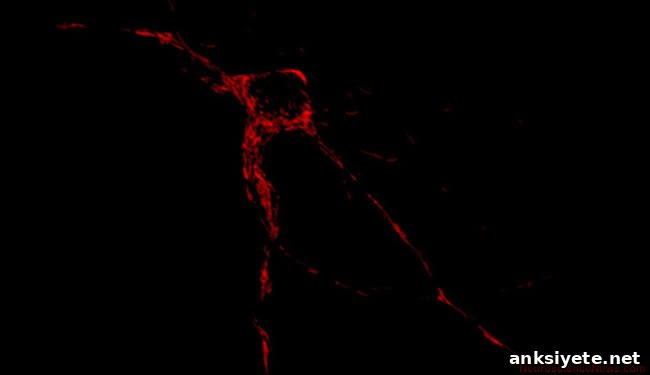
Proper brain function depends on a precise spatial and temporal distribution of energy. Mitochondria provide ATP where it is needed, and neurons present a particular logistical challenge because some neuronal processes can extend for many centimeters from the cell body. The newly identified gene cluster appears to form part of the molecular “machinery” that controls mitochondrial movement and anchoring. According to Soriano, “these genes act as an additional layer of control over mitochondrial trafficking and physically interact with known regulators of mitochondrial transport.”
One notable feature of the newly described proteins is their dual cellular localization. The proteins are present on mitochondria—consistent with a direct role in organelle trafficking—but they are also detected in the cell nucleus, where their function remains unclear. “Their nuclear localization raises the possibility that they could influence gene expression or other nuclear processes, a hypothesis we are currently investigating,” Soriano adds. Beyond neurodegenerative disease, the authors raise the possibility that these genes could be relevant to metabolic disorders and cancer, given the central role of mitochondria in cellular metabolism and proliferation.
The study involved collaborators from multiple research groups: Jordi Garcia-Fernàndez (University of Barcelona), Ramón Trullás and Javier García‑Sancho (CSIC), and Antoni L. Andreu (Hospital de la Vall d’Hebron), working together with the Soriano laboratory at IRB Barcelona.
Notes about this brain research article
Contacts: Sònia Armengou, Media Relations – IRB Barcelona
Eduardo Soriano lab – Institute for Research in Biomedicine (IRB Barcelona)
Source: Institute for Research in Biomedicine press release
Original research: “The Eutherian Armcx genes regulate mitochondrial trafficking in neurons and interact with Miro and Trak2” by G. López‑Doménech et al., Nature Communications (2012). DOI: 10.1038/ncomms1829