
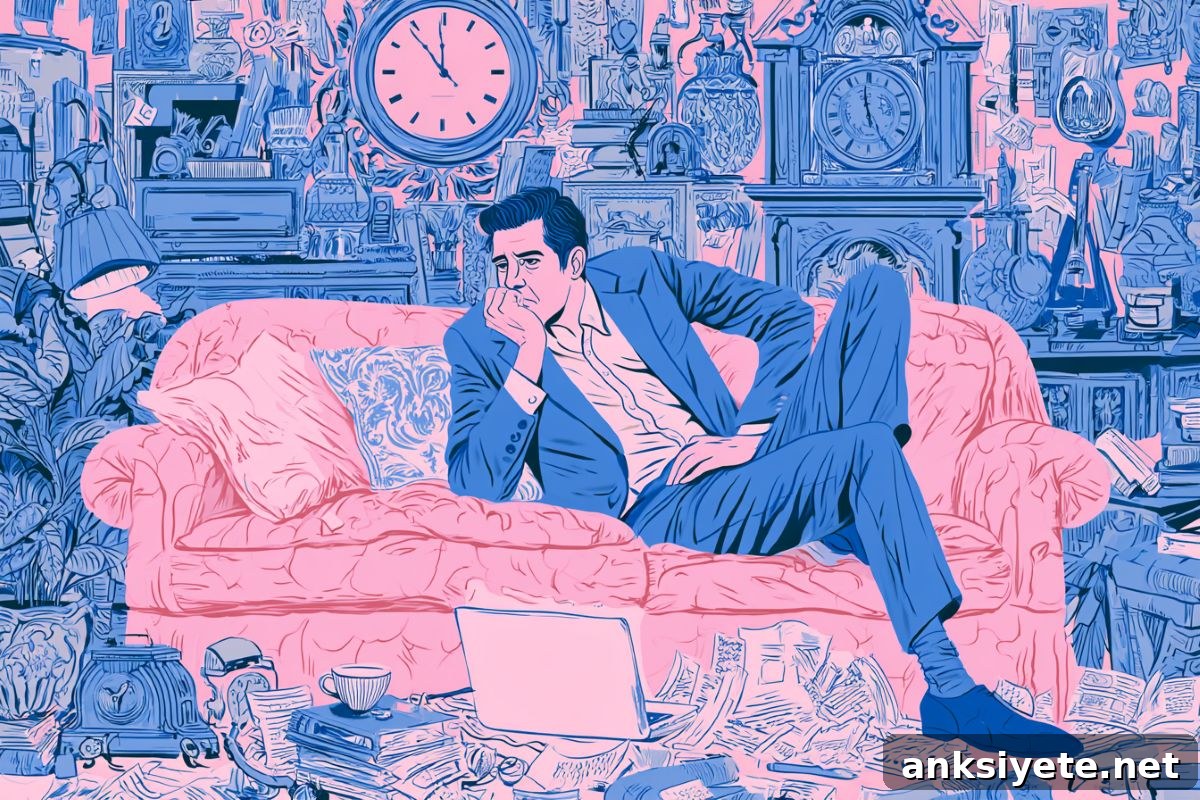
Summary: Drawing on hundreds of studies in psychology, behavioral economics and neuroscience, researchers show that procrastination is a complex psychological struggle rooted in an evolutionary mismatch in the brain. Rather than a single habit, procrastination takes multiple forms. The research identifies nine distinct procrastinator profiles and presents a practical toolkit to address the specific mental triggers behind each type.
Key Facts
- The Dual Psychological Principle: Procrastination arises from the interaction of two fundamental, biologically based tendencies:
- The Hedonic Principle: a basic mammalian drive to seek immediate pleasure and avoid pain or discomfort.
- The Immediacy Principle: an evolved bias to prioritize what is directly in front of us over abstract future outcomes.
- Evolutionary Mismatch: Tasks crucial for ancestral survival produced immediate, visceral consequences. Modern knowledge work often requires effort on nebulous tasks whose benefits are distant and abstract, so these tasks fail to trigger our primitive action drives.
- Nine Archetypes: Dr. Itamar Shatz classifies procrastinators into nine psychological archetypes. People may display more than one type depending on the situation.
- Wide-Ranging Harm: Chronic procrastination damages relationships, finances, health and organizational performance. It fuels resentment in partnerships and teams, increases financial penalties through late payments, and leads to postponed medical checks, poor sleep and other unhealthy behaviors.
- The High-Functioning Myth: Some high-achieving figures have historically managed to succeed despite persistent delaying habits. But this “high-functioning” form of procrastination produces a false confidence that can leave people vulnerable when circumstances change.
- AI and Productivity: As artificial intelligence automates routine tasks, personal productivity and self-regulation will become essential baseline skills for effectively using and managing AI tools.
Source: University of Cambridge
Procrastination is rising in prevalence, driven in part by digital distractions and modern work demands. Identifying which type of procrastinator you are is a key step to overcoming a problem that harms finances, health and relationships.
Worrier, Pessimist, Perfectionist, Dreamer, Zigzagger, Rebel, Thrill seeker, Hedonist, Burnout — these are the nine procrastinator types described by Dr. Itamar Shatz in Solving Procrastination: The Science of Why We Put Things Off and How to (Finally!) Stop, published in August.
Rebel procrastinators often delay tasks to reclaim a sense of control or to push back against perceived authority. Shatz recommends they identify personal reasons to act, set their own standards rather than trying to meet others’ perfectionistic expectations, care for their wellbeing, and alter their environment so authority figures feel less dominant.
Zigzagger procrastinators flit from one attention-grabbing activity to another. For them, Shatz advises adding structure and concreteness: define clear goals, break tasks into steps, reduce temptations, align work with natural productivity cycles and enlist an accountability partner.
Whether it’s delaying a tax return, sprinting through an essay at the last minute, or avoiding a difficult email, most people procrastinate without understanding why or how to change. Dr. Shatz explains the mechanisms behind procrastination, documents the harm it causes, and offers targeted strategies to help different procrastinator types act more reliably.
An old problem in a fast-changing world
“Procrastination isn’t simply poor motivation or bad time management,” Dr. Shatz warns. “Those are misleading simplifications. Procrastination reflects a contest between parts of our psychology that encourage action and parts that drive delay.”
Shatz synthesizes evidence across disciplines and highlights that people from all backgrounds can procrastinate in different ways. He notes that the flood of digital content—apps, platforms and games designed to hold attention—exacerbates the tendency to postpone important tasks.
Modern work often demands attention to tasks that feel psychologically remote. In ancestral environments, actions usually had immediate, tangible consequences—fail to hunt, and you don’t eat. Today’s responsibilities often yield benefits far in the future or benefits that are abstract, which reduces their ability to trigger our action impulses.
Harm caused by procrastination
Shatz shows that procrastination damages individual lives and broader systems. In education, chronic procrastination lowers grades and increases failure rates. Among adults, persistent delay correlates with poorer employment outcomes and lower wages. Large studies link higher procrastination scores to measurable income declines.
For organizations, employee procrastination translates into substantial productivity losses. On average, employees spend hours per day on distractions, imposing significant costs on employers. Financial consequences also arise from delayed bills and inadequate retirement savings.
Interpersonally, procrastination breeds friction: colleagues who must cover for delayed work, household conflicts over undone chores, and missed opportunities to build friendships or romantic connections. Emotionally and physically, chronic delay increases stress, shame and guilt, and contributes to unhealthy habits such as poor sleep, limited exercise and skipped medical care.
Psychological mechanism
Shatz identifies the core mechanism behind procrastination: we are wired to seek pleasure and avoid pain (the hedonic principle), but we are also wired to prioritize what is immediate (the immediacy principle). When these tendencies combine, we favor actions that feel better right now over actions that yield greater benefits in the future. The postponed task then lingers in the background, draining energy and reducing enjoyment.
Solving procrastination
Shatz’s practical toolkit includes: challenging catastrophizing thoughts; planning for obstacles; removing distractions; adding friction between you and temptations; shaping your environment to support desired behaviors; breaking large tasks into manageable steps; starting with easy wins; rejecting perfectionism in favor of “good enough”; and aligning work with natural productivity rhythms.
Perfectionists are urged to abandon all-or-nothing thinking and to remember that imperfect progress beats paralysis. They should also ignore unrealistic external comparisons—often amplified by curated social media highlights—that fuel fear of being imperfect.
The book provides tailored recommendations for people with ADHD, noting that some may work better with background noise or by retaining certain stimulating elements that help focus. It also includes guidance on how to support friends, colleagues and family who struggle with procrastination.
Shatz acknowledges occasional successes by high-functioning procrastinators but cautions that relying on last-minute adrenaline is a risky strategy that degrades work quality and harms long-term wellbeing. His overarching message: solving procrastination is about reclaiming the freedom to do what matters without guilt or stress, not about squeezing every last drop of productivity from each day.
Key Questions Answered:
A: Dr. Shatz explains this as an evolutionary mismatch. Human biology evolved in contexts where actions had immediate, tangible consequences. Today’s tasks often have abstract, delayed outcomes that fail to trigger our survival-driven action impulses. As a result, the brain’s drive for immediate comfort often overrides long-term interests.
A: Some individuals experience a spike of focus under last-minute pressure, but this is a risky illusion. The adrenaline-driven rush can produce work under duress, yet it increases stress, undermines consistent quality, and creates vulnerability to unexpected disruptions. It is not a reliable long-term strategy.
A: The difference often appears in how you spend downtime and how depleted you feel. If you avoid a task but still have energy to seek distractions, you are likely delaying for hedonic reasons. If you feel exhausted across most activities, with little energy even for enjoyable pursuits, your postponement may reflect burnout and a need for rest and recovery.
Editorial Notes:
- This article was edited by a Neuroscience News editor.
- Journal paper reviewed in full.
- Additional context added by staff.
About this neuroscience research news
Author: Thomas Almeroth-Williams
Source: University of Cambridge
Contact: Thomas Almeroth-Williams – University of Cambridge
Image: Image credit: Neuroscience News
Original Research: Solving Procrastination: The Science of Why We Put Things Off and How to (Finally!) Stop — book by Itamar Shatz (published by Tarcher / Penguin Random House)