
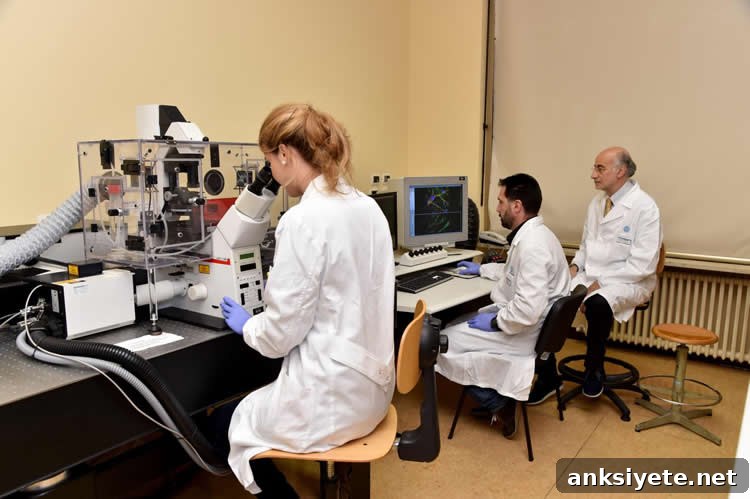
Researchers at the Catholic University Medical School in Rome have demonstrated that a single session of transcranial direct current stimulation (tDCS) can significantly enhance memory and cognitive performance in laboratory mice, offering promising insights for improving learning and treating cognitive disorders.
Sponsored by the Office of Naval Research (ONR) Global, the study used tDCS — a noninvasive brain stimulation method that applies very low-intensity electrical currents through electrodes placed on the scalp — to explore its effects on memory, synaptic plasticity and underlying molecular mechanisms.
“In addition to potentially enhancing task performance for Sailors and Marines,” said ONR Global Commanding Officer Capt. Clark Troyer, “understanding how this technique works biochemically may lead to advances in the treatment of conditions like post-traumatic stress disorder, depression and anxiety — all of which can impair learning and memory even in otherwise healthy individuals.”
The experimental results indicate that tDCS has potential not only for acute cognitive enhancement but also for supporting recovery or slowing decline in people with cognitive deficits, including those associated with Alzheimer’s disease.
“We already have promising results in animal models of Alzheimer’s disease,” said Dr. Claudio Grassi, leader of the research team. “In the near future, we will continue this research and extend analyses of tDCS to other brain areas and functions.”
In the study, mice received a single anodal tDCS session lasting 20 minutes. The animals showed improved memory performance and increased brain plasticity that persisted for at least one week. Behavioral improvements were evident in tasks such as navigating a water maze and distinguishing between familiar and novel objects, demonstrating enhanced learning and memory retention after stimulation.
Electrophysiological and molecular analyses revealed that tDCS increased synaptic plasticity in the hippocampus — the brain region key to learning and memory. The researchers observed enhanced long-term potentiation (LTP), a physiological marker of strengthened synaptic connections, which correlated with better behavioral outcomes on memory tasks.
Although tDCS has been used clinically for some neurological and psychiatric conditions for years, direct evidence linking it to improved synaptic plasticity and the molecular pathways involved has been limited. This study is notable for identifying a specific molecular mechanism: increased production of brain-derived neurotrophic factor (BDNF), a protein essential for neuronal growth, differentiation and synaptic function.
BDNF — brain-derived neurotrophic factor — is synthesized by neurons and plays a crucial role in neuroplasticity, supporting the formation and stabilization of synaptic connections. Grassi’s team found that anodal tDCS enhanced BDNF expression at the level of gene regulation, including increased acetylation of Bdnf promoter regions and elevated expression of Bdnf exons, leading to higher BDNF protein levels in the hippocampus.
“While the technique and behavioral effects of tDCS are not new,” said ONR Global Associate Director Dr. Monique Beaudoin, “Dr. Grassi’s work is the first to describe BDNF as a mechanism for the behavioral changes that occur after tDCS treatment. This represents an important step in understanding how noninvasive stimulation can produce lasting biological changes relevant to learning and memory.”
Beaudoin noted the potential operational benefits of tDCS for military personnel: faster or more robust learning under stressful and variable conditions, mitigation of cognitive impairments related to disrupted sleep or extreme environmental demands, and possible therapeutic applications for stress-related disorders that affect memory and performance.
“Our warfighters face tremendous challenges that are both physically and cognitively taxing,” she said. “They perform their duties in stressful environments where there are often suddenly and randomly varying levels of environmental stimulation, disrupted sleep cycles and a constant need to stay alert and vigilant. We want to explore all interventions that could help them stay healthy and perform optimally in these environments — especially when treatments are potentially noninvasive, effective and lead to long-lasting changes.”
Source: Bob Freeman – Office of Naval Research
Image Source: The image is credited to Dr. Claudio Grassi.
Original Research: Full open-access research: “Anodal transcranial direct current stimulation boosts synaptic plasticity and memory in mice via epigenetic regulation of Bdnf expression” by Maria Vittoria Podda, Sara Cocco, Alessia Mastrodonato, Salvatore Fusco, Lucia Leone, Saviana Antonella Barbati, Claudia Colussi, Cristian Ripoli and Claudio Grassi in Scientific Reports. Published online February 24, 2016. DOI: 10.1038/srep22180.
Abstract
Anodal transcranial direct current stimulation boosts synaptic plasticity and memory in mice via epigenetic regulation of Bdnf expression
The effects of transcranial direct current stimulation (tDCS) on brain function and the underlying molecular mechanisms are not yet fully understood. This study reports that mice subjected to a single 20-minute anodal tDCS session exhibited increases in hippocampal long-term potentiation (LTP), learning and memory that lasted at least one week. These effects were associated with enhanced acetylation of the brain-derived neurotrophic factor (Bdnf) promoter I, increased expression of Bdnf exons I and IX, and elevated BDNF protein levels. Stimulated hippocampi also showed increased CREB phosphorylation, stronger pCREB binding to Bdnf promoter I, and recruitment of the transcriptional coactivator CBP to the same regulatory sequence. Pharmacological inhibition of acetylation and blockade of TrkB receptors reduced the molecular, electrophysiological and behavioral effects induced by tDCS. Collectively, the findings suggest that anodal tDCS enhances hippocampal LTP and memory through chromatin remodeling of Bdnf regulatory regions that increase expression of this gene, supporting the therapeutic potential of tDCS for brain disorders associated with impaired neuroplasticity.
“Anodal transcranial direct current stimulation boosts synaptic plasticity and memory in mice via epigenetic regulation of Bdnf expression” by Maria Vittoria Podda et al., Scientific Reports. Published online February 24, 2016. DOI: 10.1038/srep22180.