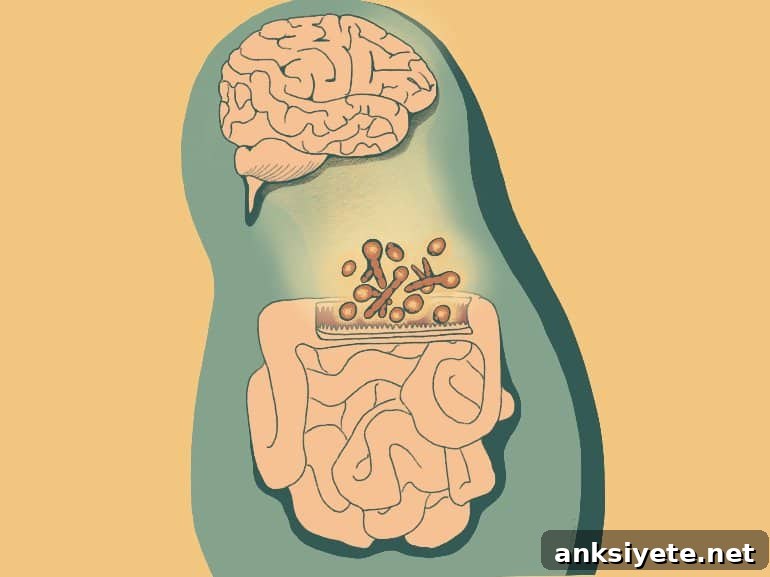
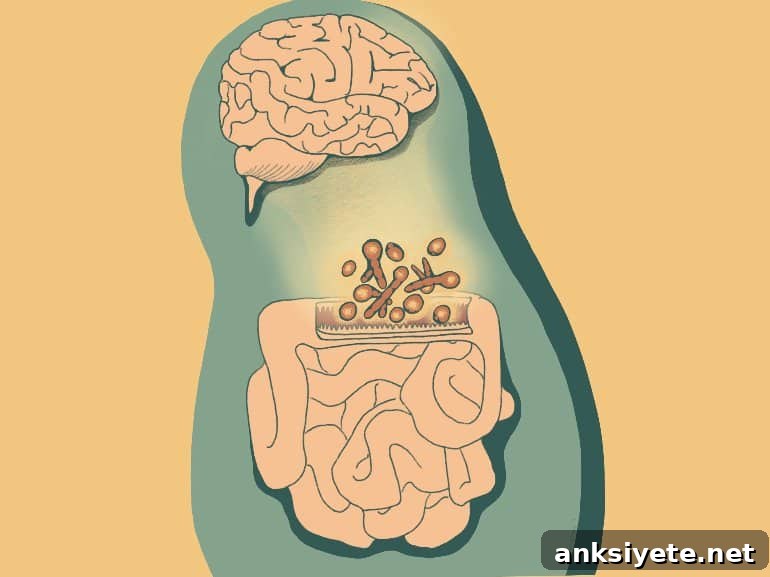
Summary: A distinct group of fungi living in the intestine can help protect the gut lining from damage and influence social behavior in animals.
Source: Weill Cornell Medicine
Researchers at Weill Cornell Medicine report that a specific community of fungi inhabiting the intestinal mucosa can both reinforce the gut barrier and alter social behavior in preclinical models.
These results expand an emerging picture of a “gut–immunity–brain axis,” a network of signals linking gut microbes, the immune system, and the nervous system. The new study identifies molecular pathways by which fungi that live close to the intestinal lining communicate with immune cells and neurons throughout the body.
Published on Feb. 16 in Cell, the study maps where different fungal species reside along the gastrointestinal tract and reveals how mucosa-associated fungi interact with host cells to shape both local and systemic physiology.
“We established a direct connection between a major immune pathway triggered by fungi at the intestinal surface and nervous-system signals that change animal behavior,” said senior author Dr. Iliyan Iliev, associate professor of immunology in medicine in the Division of Gastroenterology and Hepatology and a member of the Jill Roberts Institute for Research in Inflammatory Bowel Disease at Weill Cornell Medicine.
Co-authors on the study include Drs. Dilek Colak, Melanie Johncilla, Megan Allen and Rhonda K. Yantiss from Weill Cornell Medicine and NewYork-Presbyterian, among others.
The intestinal lining performs two essential and competing roles: it absorbs water and nutrients while serving as a barrier that prevents gut microbes from entering the bloodstream. To understand how fungi influence these functions, the research team used a mouse model to chart the distribution of fungal species along the gut and to identify those that preferentially localize near the epithelium.
These mucosa-associated fungi (MAF) form a distinct consortium that sits close to epithelial cells, suggesting tight ecological and functional interactions. When mice were colonized with this defined fungal community, their intestinal barrier was strengthened, and they were better protected from insults such as chemically induced intestinal injury and bacterial infection.
Beyond local protection, colonization with the same fungal consortium produced a behavioral change: mice carrying these mucosal fungi exhibited increased social behavior compared with mice that did not host these species.
Mechanistically, both the protective effects on the gut lining and the social behavior changes appear to depend on the host’s T cells. Fungal colonization stimulates T helper cells to produce two cytokines: IL-22 and IL-17. IL-22 acts locally on epithelial cells to fortify barrier integrity, while IL-17 can enter circulation and signal to neurons that express IL-17 receptors. In mice lacking the neuronal IL-17 receptor, the social behavior changes were not observed, underscoring a causal role for IL-17–dependent neuronal signaling.
“This study highlights a coordinated form of communication between different organisms and tissues—a microbial signal that engages immune cells and then reaches the nervous system,” Dr. Iliev said.
The authors are now pursuing the neuronal pathways and brain regions that respond to fungal-driven immune signals. Lead author Dr. Irina Leonardi, an instructor of immunology in medicine in Dr. Iliev’s laboratory at the Jill Roberts Institute for Research in IBD, explained that the team aims to characterize the downstream neuronal circuits and molecular players responsible for the observed behavioral effects.
One intriguing implication is that different gut microbial communities—including distinct bacterial and fungal assemblages—might engage separate immune and neural pathways, producing varied effects on host physiology and behavior. The findings open new directions for research into how the composition and spatial organization of the gut mycobiota contribute to health and disease.
“These results create a foundation for exploring how targeted manipulation of mucosa-associated fungi could influence both gut health and neuroimmune interactions,” Dr. Iliev added.
About this microbiome and behavioral neuroscience research news
Author: Press Office
Source: Weill Cornell Medicine
Contact: Press Office – Weill Cornell Medicine
Image: The image is credited to Katarina Liberatore.
Original Research: Closed access.
“Mucosal fungi promote gut barrier function and social behavior via Type 17 immunity” by Iliyan Iliev et al. Cell
Abstract
Mucosal fungi promote gut barrier function and social behavior via Type 17 immunity
Highlights
- A distinct community of fungi is present in the intestinal mucosa of humans and mice.
- Mucosa-associated fungi (MAF) trigger Type 17 immune responses through CD4+ T helper cells.
- MAF enhance epithelial barrier function and protect mice from intestinal injury and infection via IL-22–dependent mechanisms.
- MAF influence social behavior in mice through IL-17–mediated signaling affecting neurons.
Summary
Fungal communities—collectively known as the mycobiota—are an essential part of the gut microbiota. Disruption of these fungal communities has been implicated in both local intestinal disorders and conditions beyond the gut. However, the mechanisms by which intestinal fungi support host homeostasis and influence distant systems have been incompletely understood.
In this study, the researchers mapped the biogeography of the mycobiota along the gastrointestinal tract and identified a subset of fungi that associate closely with the intestinal mucosa in mice and humans. These mucosa-associated fungi strengthen epithelial function and protect animals against intestinal injury and bacterial challenge.
Importantly, colonization with a defined consortium of mucosa-associated fungi also promoted social behavior in mice. The protective effects on the gut barrier relied on IL-22 produced by CD4+ T helper cells, while the behavioral effects were mediated by IL-17 signaling through neuronal IL-17 receptors. Together, these findings indicate that the spatial arrangement of the gut mycobiota is linked to host-protective immunity and may drive neuroimmune modulation of behavior via complementary Type 17 immune mechanisms.