
Summary: Newly discovered chemical modifications and a high-resolution map of the SARS-CoV-2 RNA provide fresh clues for fighting COVID-19 and improve understanding of the virus’s lifecycle.
Source: Institute for Basic Science
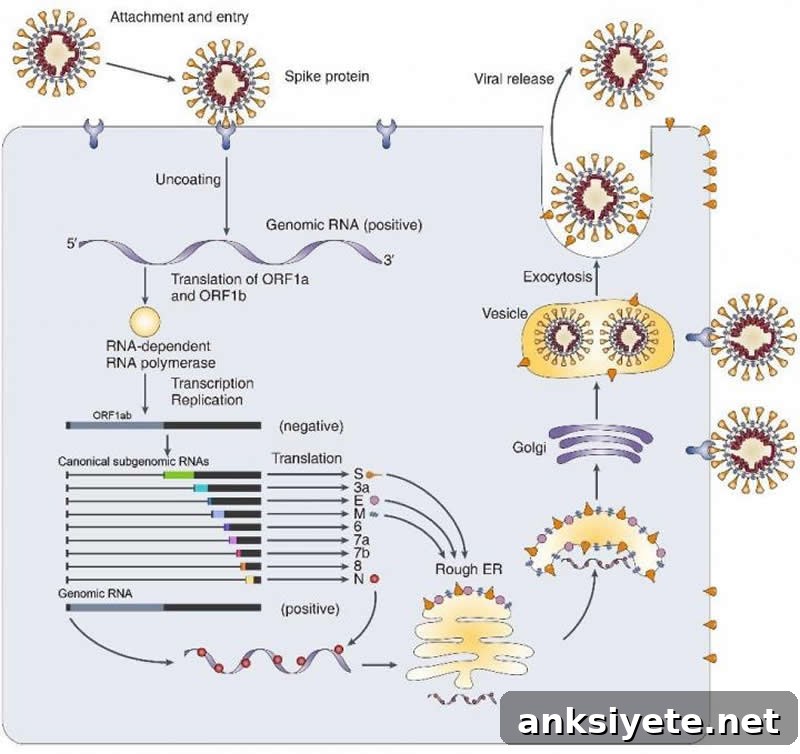
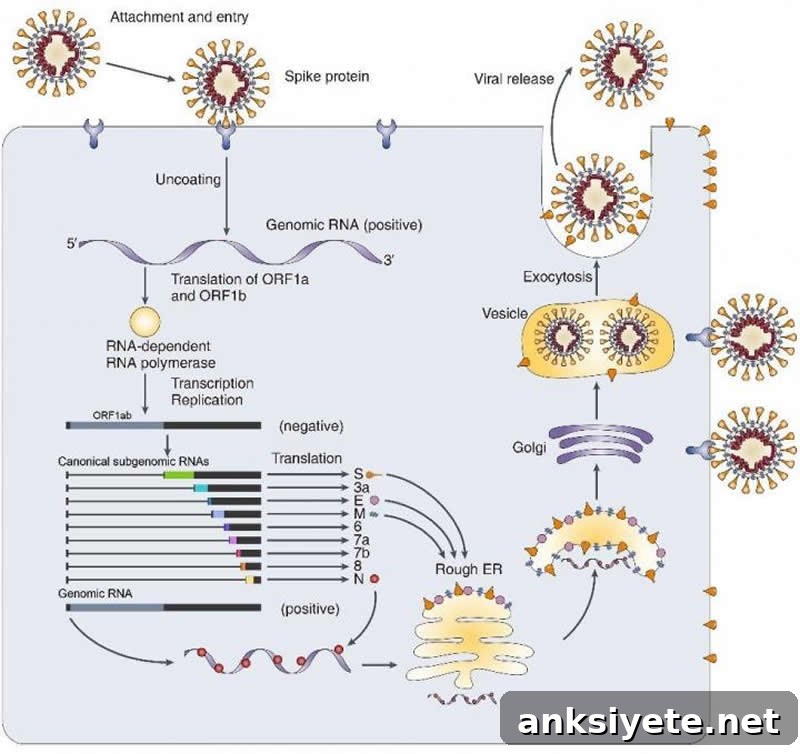
Jean and Peter Medawar described a virus as “simply a piece of bad news wrapped up in proteins.” For SARS-CoV-2, that “bad news” is encoded in a long ribonucleic acid (RNA) molecule. As an RNA virus, SARS-CoV-2 invades host cells and produces a full-length genomic RNA plus numerous shorter subgenomic RNAs. These subgenomic RNAs direct production of structural and accessory proteins—such as spike, envelope, membrane and nucleocapsid proteins—that are essential to the virus’s assembly and infectivity. Although the viral RNA sequence was reported early in the pandemic, identifying the precise architecture, gene locations and chemical modifications of those RNAs has remained incomplete.
Researchers at the Center for RNA Research within the Institute for Basic Science (IBS) in South Korea, led by Professors KIM V. Narry and CHANG Hyeshik in collaboration with the Korea National Institute of Health (KNIH), have now experimentally mapped the SARS-CoV-2 transcriptome and epitranscriptome at high resolution. Their work confirms which predicted subgenomic RNAs are present, refines the exact positions of viral genes along the genomic RNA, and reveals previously unknown RNAs and chemical modifications on the viral transcripts.
“Not only did we detail the structure of SARS-CoV-2 RNA, we also discovered numerous new RNAs and multiple unknown chemical modifications,” says Professor KIM V. Narry, the corresponding author. “This high-resolution map will help explain how the virus replicates and how it evades the human immune system.”
Prior reports suggested the virus contains ten canonical subgenomic RNAs. The IBS team experimentally verified that nine canonical subgenomic RNAs exist and showed that one of the previously predicted subgenomic RNAs is not present. Beyond these canonical species, the researchers detected dozens of additional, atypical subgenomic RNAs created by RNA fusion and deletion events. These rearrangements may contribute to the virus’s capacity for rapid evolution, although further study is required to determine their biological impact.
The team also identified multiple chemical modifications on viral RNAs—changes that do not alter the RNA base sequence but can change RNA behavior. The functional consequences of these modifications are not yet clear, but they could influence RNA stability, translation, or the ability of viral RNA to avoid host immune detection. The researchers emphasize that understanding these modifications, collectively known as the viral epitranscriptome, offers a promising direction for developing novel diagnostics and antiviral strategies.
To generate their detailed map, the researchers combined two complementary sequencing technologies: nanopore direct RNA sequencing and DNA nanoball sequencing. Nanopore direct RNA sequencing reads long, intact RNA molecules directly, preserving full-length transcript information and native RNA modifications. DNA nanoball sequencing reads many short fragments with very high accuracy, providing deep coverage and precise sequence confirmation. Together, the two methods provided both long-range structural context and high-confidence sequence data, enabling robust identification of subgenomic RNAs, fusion events, deletion variants, and chemical modifications.
“We now have a comprehensive gene map of SARS-CoV-2 that pinpoints genes across all viral RNAs (the transcriptome) and reveals chemical marks on those RNAs (the epitranscriptome),” Professor KIM notes. “The next steps are to investigate the functions of newly discovered RNAs, clarify the mechanisms behind RNA fusion, and determine whether RNA modifications affect viral replication or host immune responses. We believe these findings will support the development of improved diagnostics and therapeutics for COVID-19.”
The discovery strengthens our molecular-level understanding of SARS‑CoV‑2 and highlights new research priorities. Key areas for follow-up include functional studies of the atypical subgenomic RNAs, experiments to test whether specific RNA modifications alter replication efficiency or immune recognition, and efforts to exploit any vulnerabilities revealed by the viral epitranscriptome for therapeutic intervention.
About this research
Source:
Institute for Basic Science
Media contacts:
V. Narry Kim – Institute for Basic Science
Image credit:
Institute for Basic Science
Original research: The study will appear in Cell.
Feel free to share this COVID-19 research news.