
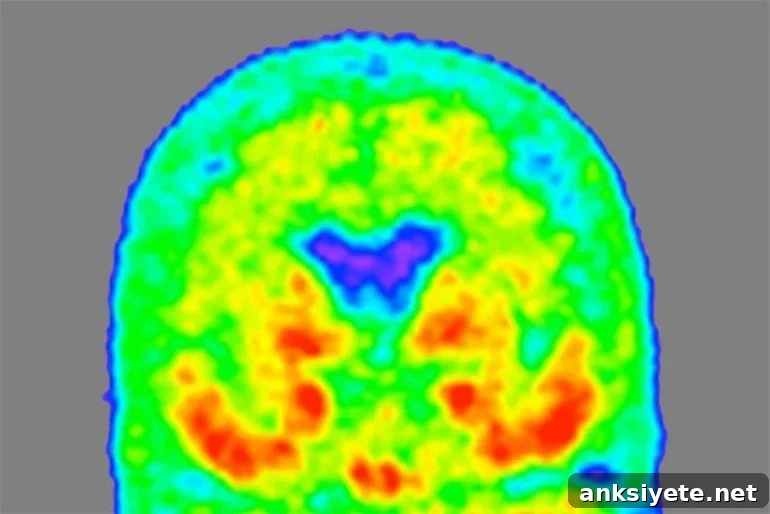
Summary: MTBR tau detected in cerebrospinal fluid may help clinicians determine the stage and progression of Alzheimer’s disease.
Source: WUSTL
Researchers at Washington University School of Medicine in St. Louis report that a specific form of the tau protein found in cerebrospinal fluid (CSF) reflects the presence and stage of Alzheimer’s disease. This microtubule binding region tau (MTBR tau) correlates with tau tangles in the brain—the hallmark pathology linked to neuronal damage and cognitive decline—and may provide a fluid biomarker to identify disease stage and monitor progression.
Alzheimer’s disease typically begins with amyloid plaque accumulation in the brain, a stage that can last for many years without noticeable symptoms. The transition to symptomatic disease is associated with the spread of tau tangles through neurons. These tangles are thought to drive progressive loss of brain tissue and cognitive function. Until now, measuring the burden of tau tangles in living patients generally required PET brain scans, which are costly, time-consuming, and not universally available.
The Washington University team, led by senior author Randall J. Bateman, MD, and first author Kanta Horie, PhD, identified MTBR tau in the cerebrospinal fluid as a potential indicator of how extensively tau pathology has accumulated. MTBR tau represents an insoluble segment of the tau protein that comprises the core of pathological tangles. Prior antibody-based approaches failed to detect MTBR tau in CSF, so the investigators developed a chemical purification method followed by mass spectrometry to isolate and quantify specific MTBR tau species.
Using this technique, the researchers analyzed CSF samples from 100 participants in their 70s. The cohort included people with no cognitive impairment and no signs of Alzheimer’s, individuals with amyloid plaques but either no symptoms or mild-to-moderate Alzheimer’s dementia, and participants with cognitive impairment due to other causes. The study found that levels of a particular species, referred to as MTBR tau 243, were elevated in people with Alzheimer’s disease and increased progressively with greater cognitive impairment.
To validate these cross-sectional findings, the team followed 28 participants from the original group for two to nine years. Among those who had Alzheimer’s at the start, MTBR tau 243 levels rose over time in parallel with declines in cognitive test scores, supporting the marker’s potential to track disease progression.
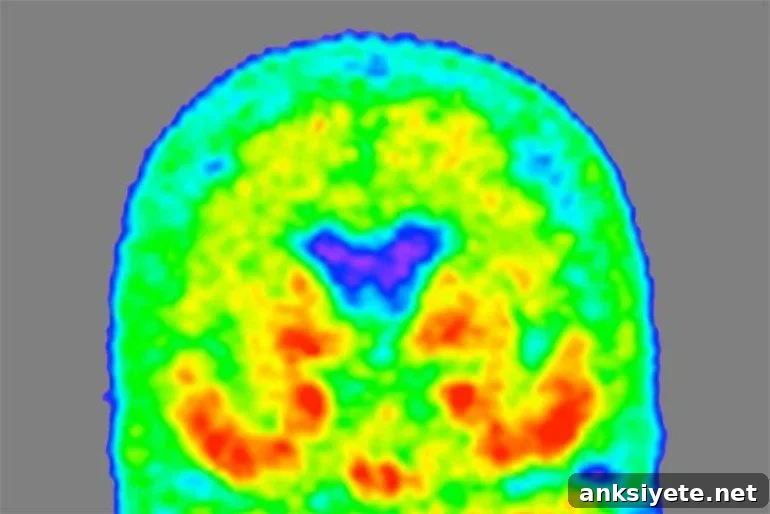
The investigators compared MTBR tau 243 levels in CSF with tau-PET brain scans—the current gold standard for visualizing tau pathology—in a subset of 35 people (20 with Alzheimer’s and 15 without). MTBR tau 243 concentrations correlated strongly with the amount of tau detected by PET, suggesting that this CSF measure accurately reflects brain tau burden and associated damage.
“This MTBR tau fluid biomarker measures tau that makes up tangles and can confirm the stage of Alzheimer’s disease by indicating how much tau pathology is in the brains of Alzheimer’s disease patients,” said Randall J. Bateman, MD, the Charles F. and Joanne Knight Distinguished Professor of Neurology, who treats patients with Alzheimer’s on the Washington University Medical Campus. “If we can translate this into the clinic, we’d have a way of knowing whether a person’s symptoms are due to tau pathology in Alzheimer’s disease and where they are in the disease course, without needing to do a brain scan. As a physician, this information is invaluable in informing patient care, and in the future, to guide treatment decisions.”
Kanta Horie, PhD, noted the potential therapeutic implications: “We found that a novel form of tau, MTBR tau 243, increases continuously as tau pathology progresses. This could be a way for us to not only diagnose Alzheimer’s disease but tell where people are in the disease. We also found some specific MTBR tau species in the space between neurons in the brain, which suggests that they may be involved in spreading tau tangles from one neuron to another. That finding opens up new windows for novel therapeutics for Alzheimer’s disease based on targeting MTBR tau to stop the spread of tangles.”
Beyond diagnostic value, a CSF biomarker that reflects tangle burden could accelerate clinical trials of tau-directed therapies by providing a straightforward measure of whether an experimental drug slows or halts tangle formation or spread. The research team is also developing blood-based diagnostics for other Alzheimer’s markers (amyloid and distinct tau species), but MTBR tau in CSF appears uniquely suited to indicate the degree of established tau aggregation and its clinical consequences.
About this Alzheimer’s disease research news
Source: WUSTL
Contact: Judy Martin Finch – WUSTL
Image: Credit: Tammie Benzinger/Knight ADRC
Original Research: Open access. “CSF tau microtubule binding region identifies tau tangle and clinical stages of Alzheimer’s disease” by Randall J. Bateman et al., published in Brain.
Abstract
CSF tau microtubule binding region identifies tau tangle and clinical stages of Alzheimer’s disease
Tau is a microtubule-associated protein that aggregates into pathological tangles and neurites in Alzheimer’s disease. Insoluble tau aggregates composed of the microtubule binding region (MTBR) are strongly linked to cognitive impairment and clinical symptoms. Soluble tau measures in CSF, such as total tau and phosphorylated tau species, tend to rise before aggregation but do not specifically measure the MTBR. Using sequential immunoprecipitation, chemical extraction, and mass spectrometry, the study quantified MTBR-containing tau species in CSF. Species beginning at residue 243 correlated most highly with tau PET and cognitive measures, suggesting that CSF MTBR-tau levels reflect changes in tau pathology and could serve as biomarkers to stage disease and to monitor the effects of tau-targeted treatments.