
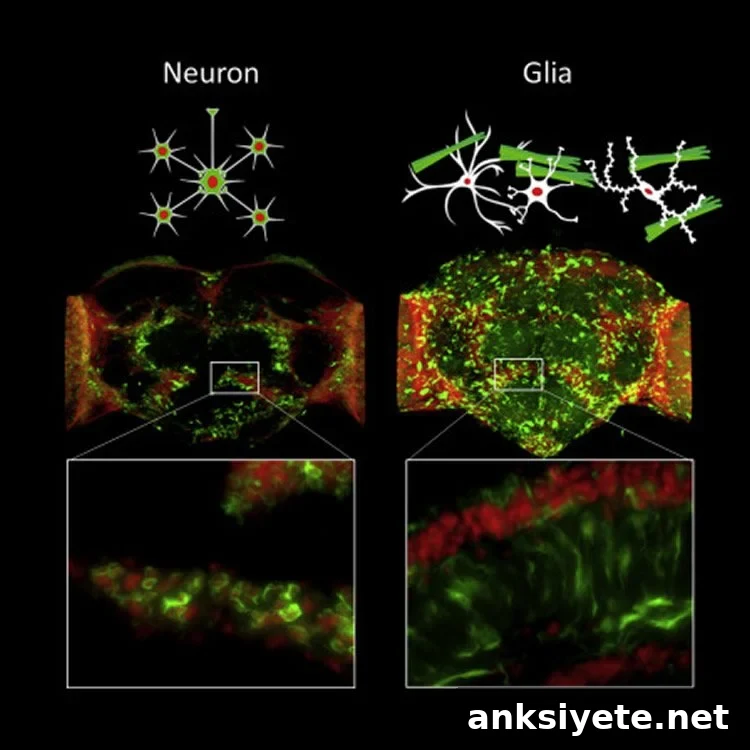
Summary: New research suggests that the Alzheimer’s-associated protein amyloid beta causes severe harm to neurons but produces far less damage to glial cells, at least in fruit fly models.
Source: Linköping University.
Amyloid beta, a protein closely linked to Alzheimer’s disease, behaves very differently depending on the brain cell type in which it accumulates. Researchers at Linköping University report that while aggregated amyloid beta is highly toxic to neurons in fruit flies, glial cells tolerate large amyloid loads with much less damage.
Researchers from Linköping University investigated how different brain cell types respond to misfolded amyloid beta. In advanced Alzheimer’s disease, many neurons die and research has focused on how aberrant forms of amyloid beta fold, accumulate and form plaques that contribute to neuronal loss. However, misfolded amyloid beta does not appear exclusively in neurons: deposits are also found in brain blood vessels, the retina, and in glial cells. Glial cells provide vital support functions in the brain, but their role in disease progression has been unclear. To clarify whether amyloid beta accumulates differently and whether its toxicity varies across cell types, the team examined how the protein behaves when produced specifically in different cells.
The researchers used genetically modified fruit flies (Drosophila melanogaster) that express human amyloid beta 1-42, a variant known to be particularly harmful. The fly model allows precise control of which cell types produce the human protein, enabling direct comparison of outcomes when amyloid is expressed in neurons versus glial cells. Previous work by the group had shown a correlation between the amount of amyloid aggregates in neurons and the severity of neurodegeneration and reduced lifespan in flies.
“When we directed expression of Aβ1-42 to glial cells, we observed very large amounts of aggregated amyloid surrounding those cells. Despite the heavy amyloid burden the flies showed only mild symptoms compared with flies that produced amyloid in neurons,” says Maria Jonson, research student in the Department of Physics, Chemistry and Biology and first author of the study. “The contrast in outcome was striking and unexpected.”
To understand why glial cells survived despite extensive amyloid accumulation, the team examined the structural properties of the aggregates. Misfolded amyloid beta can adopt different morphologies that range from immature, tangled assemblies to mature, tightly packed fibrils. Under the microscope, mature fibrils appear as thin, well-ordered strands, while immature aggregates form looser, tangled structures.
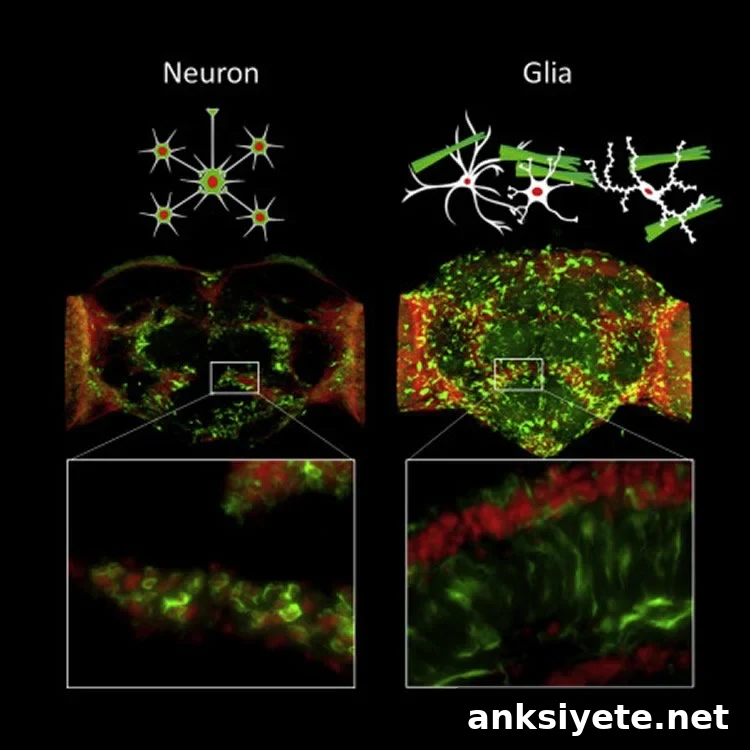
Per Hammarström, professor in the Department of Physics, Chemistry and Biology and leader of the study, explains: “Our results indicate that glial cells tend to produce more mature, fibrillar amyloid assemblies that are largely extracellular and appear less harmful in the fly model. Neurons, by contrast, develop immature, intracellular aggregates that correlate with cell death. This raises important questions about the molecular mechanisms that make neurons especially vulnerable to certain amyloid morphologies while glial cells remain relatively resilient.”
Using the Drosophila model offers experimental advantages. High levels of amyloid beta in these flies reproduce key features of human neurodegeneration, including shortened lifespan and neuronal loss, enabling a clear readout of disease severity. The fly lines used in the study were developed by Stefan Thor’s research group in the Department of Clinical and Experimental Medicine.
Funding: The research received support from the Swedish Brain Foundation (Hjärnfonden), the Swedish Research Council, the Swedish Alzheimer’s Foundation, and Göran Gustafsson’s Foundation.
Source: Leah Russell – Linköping University
Publisher: Organized by Neuroscience News
Image source: Jonson et al., Cell Chemical Biology
Original research: Abstract for “Aggregated Aβ1-42 is selectively toxic for neurons, whereas glial cells produce mature fibrils with low toxicity in Drosophila” by Maria Jonson and colleagues in Cell Chemical Biology. Published April 12, 2018.
DOI: 10.1016/j.chembiol.2018.03.006
Aggregated Aβ1-42 is selectively toxic for neurons, whereas glial cells produce mature fibrils with low toxicity in Drosophila
Highlights:
- Aβ1-42 aggregates form extensively across multiple Drosophila cell types when expressed experimentally.
- When expressed in glial cells, Aβ1-42 accumulates primarily as extracellular, mature fibrils.
- Expression of Aβ1-42 in neurons causes marked neurodegeneration and reduced lifespan in a concentration-dependent manner.
- Immature, intracellular Aβ1-42 aggregates correlate with greater toxicity than mature fibrillar forms.
Summary: The selective vulnerability of certain cell types to misfolded proteins is a central question in neurodegenerative disease research. By expressing human Aβ1-42 in specific cell populations in Drosophila, the authors show that neuronal expression leads to severe, concentration-dependent neurodegeneration associated with immature, intraneuronal aggregates. In contrast, pan-glial expression produces a much milder phenotype despite an even larger overall amyloid load. Glial aggregates were morphologically distinct—more mature and fibrous and primarily extracellular—suggesting that both cell type and aggregate morphology influence Aβ1-42 cytotoxicity.
The study provides important insight into how the same misfolded protein can have different effects depending on cell type and aggregate structure. These findings may help guide future research into therapeutic strategies that target specific aggregate forms or protect particularly vulnerable cell types such as neurons.