Summary: A new study finds that oxytocin strengthens social bonds among chimpanzees and helps group members support one another during violent encounters with rival groups.
Source: Max Planck Institute
Oxytocin boosts in-group affiliation during violent intergroup conflicts in chimpanzees.
Why individuals accept the risks and costs of fighting for their group has long puzzled researchers. In many species, including humans, people will endure personal danger to help their group through coordinated cooperation and by opposing outsiders. These fierce intergroup clashes can also strengthen the sense of belonging within the group and increase social cohesion—key elements for successful collective defense and competition.
Scientists at the Max Planck Institute for Evolutionary Anthropology in Leipzig, Germany, have tracked urinary oxytocin levels in wild chimpanzees before and during encounters with rival groups. Their data indicate that, like humans, chimpanzees show hormonal responses tied to group cohesion when facing external threats, suggesting oxytocin plays a role in enabling individuals to stand together against common foes.
The idea that oxytocin might underpin strong cooperative behavior in wartime follows observations in humans where the hormone is linked to trust, bonding, and in-group favoritism. Oxytocin is a conserved mammalian hormone best known for promoting mother-infant bonding and maternal protection, but it also influences broader social behaviors such as affiliation, trust, and cooperation. While experimental studies in humans have suggested oxytocin can increase support for in-group members during competitive situations, until now its role in naturally occurring, high-risk intergroup conflict had not been examined in wild animals.
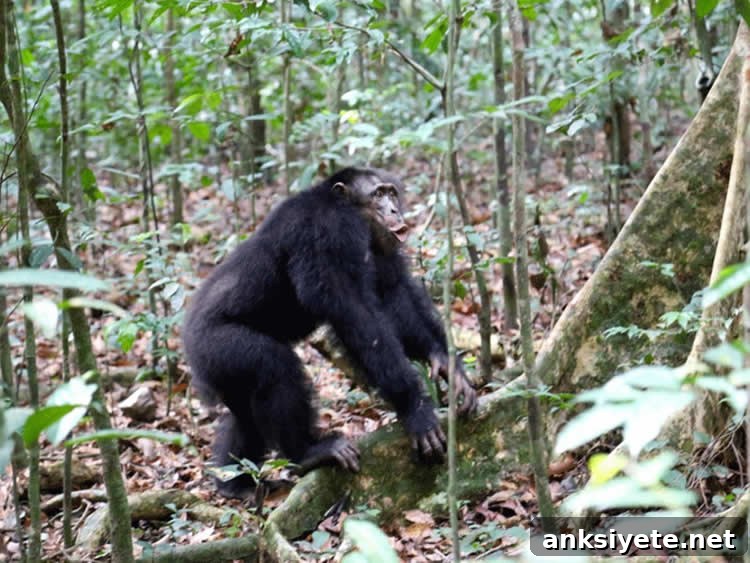
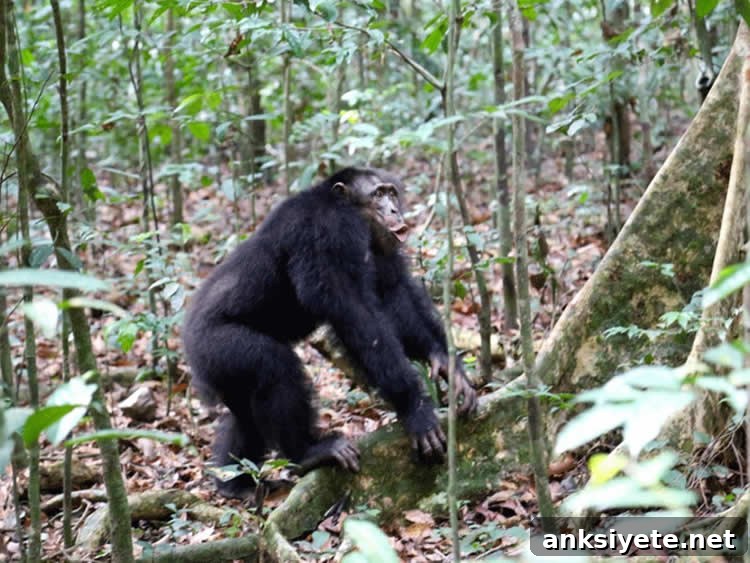
To investigate natural oxytocin responses in a real-world setting, Liran Samuni and colleagues studied two communities of wild chimpanzees in Taï National Park, Côte d’Ivoire. Using a validated noninvasive method for collecting urine tied to specific social events, the researchers measured urinary oxytocin in 10 males and 10 females. They compared hormone levels across several contexts: immediately before and during intergroup conflicts, during coordinated group hunts, during multi-partner grooming sessions, and in periods without notable affiliative interactions.
The team recorded behavioral data for each individual and collected all available urine samples associated with those events. In their analyses they tested whether urinary oxytocin concentrations varied by event type and whether factors such as sex, dominance rank, group identity, or proximity to the territory border (used as an indicator of potential risk) influenced hormone levels.
Results showed that urinary oxytocin was elevated both during group hunts and around intergroup conflicts—situations requiring tight group coordination. However, the rise in oxytocin was strongest and most pronounced in the context of intergroup conflict. The researchers report that the hormone increase was associated with greater cohesion among group members during confrontations with rivals, rather than being driven primarily by the level of external threat, simple affiliative interactions within the group, or coordinated activity on its own.
“We observed significantly higher oxytocin levels in contexts that involve coordinated group activity, and intergroup conflict produced the largest increases,” says Liran Samuni, the study’s lead author. “This pattern suggests oxytocin is particularly sensitive to situations that activate an ‘us versus them’ perception and appears to promote solidarity among group members when facing outsiders.”
Roman Wittig, a senior author on the study, notes the striking parallel to human behavior: “Chimpanzees appear to form tight social bonds in the face of rivals—much like the ‘band of brothers’ sentiment captured in Shakespeare’s famous speech. Finding this hormonal response in wild chimpanzees indicates that in-group favoritism and the neuroendocrine mechanisms that foster cohesion under threat may have deep evolutionary roots.”
Source: Sandra Jacob – Max Planck Institute
Image credit: Liran Samuni, Max Planck Institute
Original research: Samuni, L., Preis, A., Mundry, R., Deschner, T., Crockford, C., & Wittig, R. M. “Oxytocin reactivity during intergroup conflict in wild chimpanzees.” PNAS. Published online December 27, 2016. DOI: 10.1073/pnas.1616812114
MLA: Max Planck Institute. “Oxytocin Enhances Social Affiliation in Chimps.” NeuroscienceNews. 27 December 2016.
APA: Max Planck Institute (2016, December 27). Oxytocin Enhances Social Affiliation in Chimps. NeuroscienceNews.
Chicago: Max Planck Institute. “Oxytocin Enhances Social Affiliation in Chimps.” NeuroscienceNews. Accessed December 27, 2016.
Abstract
Oxytocin reactivity during intergroup conflict in wild chimpanzees
Intergroup conflict is pervasive across human societies and has been proposed as a driver behind humans’ capacity for large-scale cooperation. Chimpanzees also display coordinated group activity and coalitionary support during violent encounters with other groups. Cooperation among group members is essential for individuals to reap the benefits of engaging in these risky conflicts. Previous work suggests oxytocin influences trust, coordination, and social cognition in humans, yet evidence from natural settings was lacking. Using a noninvasive urinary assay, the authors measured oxytocin responses in wild chimpanzees and found elevated levels immediately before and during intergroup conflicts compared with control periods. Elevated oxytocin correlated with increased cohesion during conflicts rather than with indicators of threat level, affiliative interactions outside conflict, or coordination alone. The findings suggest the oxytocinergic system may foster cooperation and cohesion in the face of out-group threats and that this mechanism predates the human-chimpanzee split, potentially facilitating fitness benefits during intergroup conflict.
Study: Samuni, L., Preis, A., Mundry, R., Deschner, T., Crockford, C., & Wittig, R. M. “Oxytocin reactivity during intergroup conflict in wild chimpanzees.” PNAS. December 27, 2016. DOI: 10.1073/pnas.1616812114