
NIH-funded research offers new imaging hope for patients with limited treatment options
Epilepsy can cause uncontrollable seizures that significantly reduce quality of life, limit everyday activities, and lead to social stigma and isolation. For many patients, standard antiepileptic medications control seizures effectively, but about one third of people with epilepsy do not respond to drug therapy. When medications fail, surgery to remove the seizure-generating region of the brain can be an option—provided clinicians can accurately locate that region with imaging. Researchers at the University of Pennsylvania, funded by the National Institute of Biomedical Imaging and Bioengineering (NIBIB), have developed a non-invasive magnetic resonance imaging (MRI) technique that may identify seizure foci in patients whose epilepsy is not visible with conventional imaging and who would otherwise be poor surgical candidates.
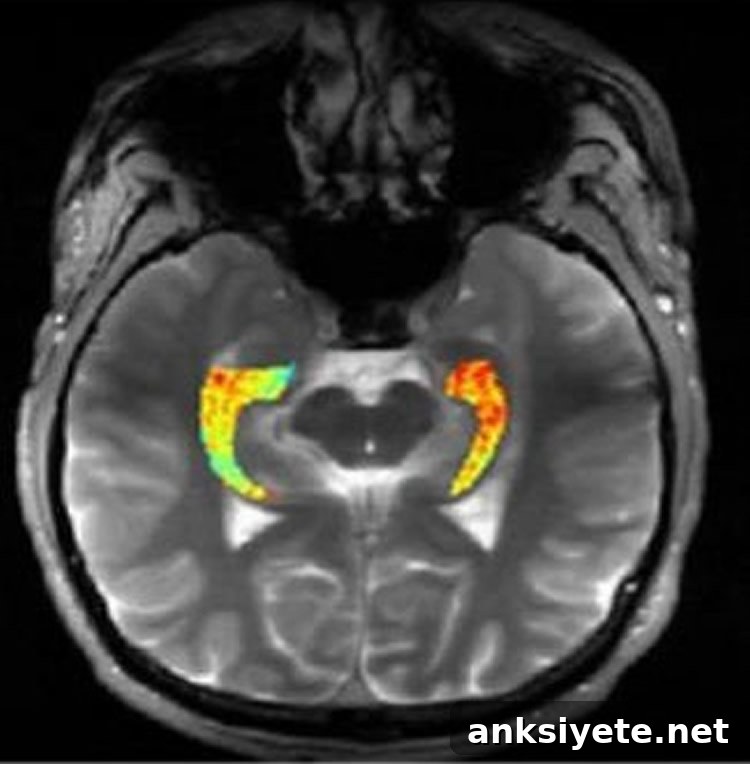
Conventional imaging methods such as MRI and positron emission tomography (PET) can reveal structural lesions or metabolic abnormalities that point to where seizures originate. However, roughly one third of patients with drug-resistant epilepsy show no detectable lesion on standard scans. These “nonlesional” cases present a major diagnostic challenge and limit treatment options. The new imaging approach, called glutamate chemical exchange saturation transfer (GluCEST), provides a way to map glutamate concentrations in the brain with high spatial resolution and may reveal the location of abnormal neuronal activity even when anatomy looks normal on standard scans.
GluCEST was developed in the laboratory of Ravinder Reddy, Ph.D., professor of radiology and director of the University of Pennsylvania’s Center for Magnetic Resonance and Optical Imaging, and the work is reported in Science Translational Medicine. The technique exploits specific chemical exchange properties of the amino acid glutamate. Because glutamate participates in fast chemical exchanges with surrounding water molecules, saturation of glutamate’s resonances produces measurable changes in the water signal on MRI. Those water-signal changes can be detected and mapped, yielding a high-resolution image that reflects relative glutamate levels across brain tissue.
Glutamate is the brain’s primary excitatory neurotransmitter and plays a central role in normal signal transmission. In epilepsy, however, pathological increases in glutamate can lead to prolonged neuronal excitation and trigger seizures. Previous research in animal models and in humans has shown that glutamate can fail to clear properly in epileptic tissue, creating a biochemical environment prone to overexcitation. By imaging glutamate directly, GluCEST aims to localize regions of abnormal excitation that may act as seizure generators.
In the study, investigators focused on the hippocampus, a bilateral structure within the temporal lobes that is critical for memory and spatial navigation and a common origin for temporal lobe seizures. Four patients with drug-resistant temporal lobe epilepsy underwent GluCEST imaging, and the results consistently showed elevated glutamate signals on the same side of the hippocampus where seizures originated, as later confirmed by electroencephalography (EEG). For comparison, GluCEST scans from 11 healthy control participants showed symmetrical glutamate signals between the left and right hippocampus, consistent with expected normal physiology.
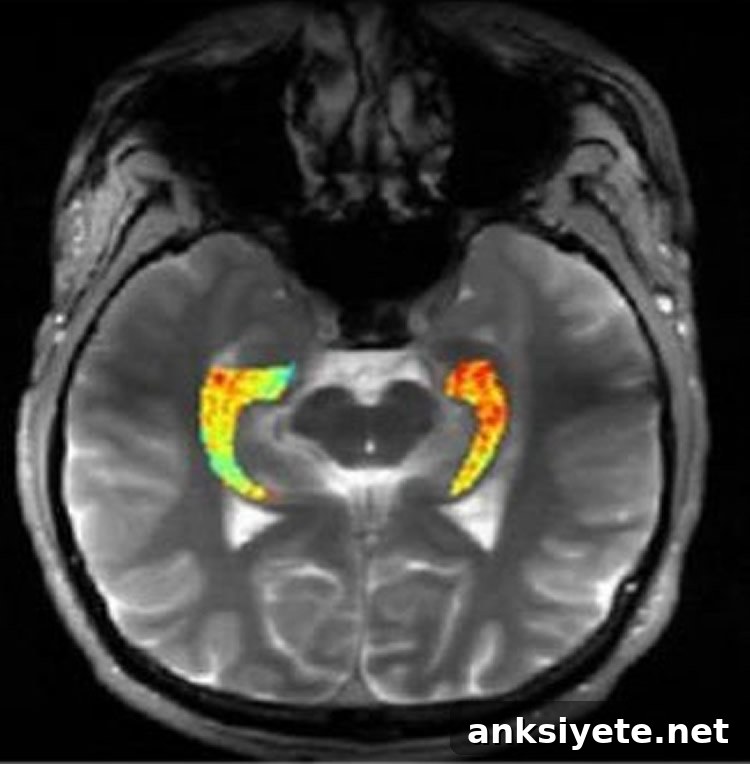
Lead author Kathryn Davis, M.D., assistant professor of neurology at the Perelman School of Medicine at the University of Pennsylvania, notes that the ability of GluCEST to localize “hot spots” of elevated glutamate is a promising advance for clinical decision-making. Identifying the epileptic focus within a specific brain region provides essential information for planning targeted therapies—such as surgical resection, laser ablation, or neurostimulation—that may reduce or eliminate seizures in patients who currently lack effective options.
Beyond surgical planning, non-invasive glutamate mapping could support more personalized treatment strategies by identifying candidates for alternative interventions and helping to monitor biochemical changes over time. Techniques that reveal metabolic or neurochemical abnormalities complement structural imaging and EEG, offering a more complete picture of disease activity in drug-resistant epilepsy.
Funding: This research was supported by the National Institutes of Health through a grant (EB015893) from NIBIB and a grant from the National Institute of Neurological Disorders and Stroke. Additional support came from a McCabe Pilot Award and a University of Pennsylvania Center for Biomedical Image Computing and Analytics Seed Award.
Source: Thomas Johnson – NIH/NIBIB
Image Credit: AAAS/Davis et al./Sci Trans Med. Oct, 2015
Original Research: Study titled “Glutamate imaging (GluCEST) lateralizes epileptic foci in nonlesional temporal lobe epilepsy” by Kathryn Adamiak Davis, Ravi Prakash Reddy Nanga, Sandhitsu Das, Stephanie H. Chen, Peter N. Hadar, John R. Pollard, Timothy H. Lucas, Russell T. Shinohara, Brian Litt, Hari Hariharan, Mark A. Elliott, John A. Detre and Ravinder Reddy, published in Science Translational Medicine. Published online October 14, 2015.