
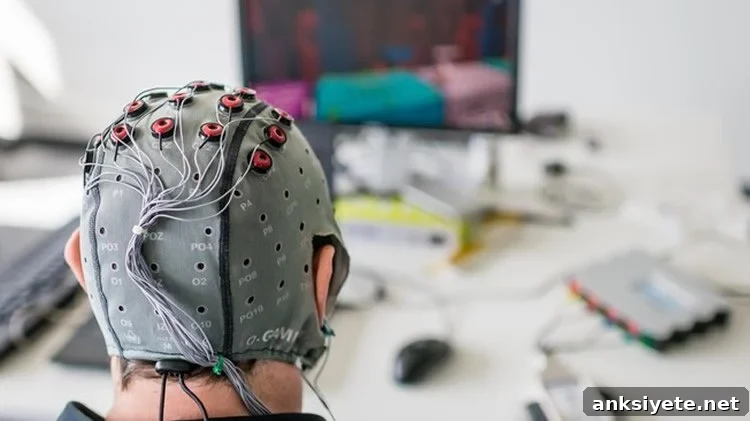
Summary: EPFL researchers report that the most dramatic improvements in brain-computer interface (BCI) performance occur when both the human user and the machine are allowed to learn. In a study training tetraplegic participants to control an avatar for an online competition, joint adaptation produced the best results.
Source: EPFL
Humans and Machines Learn Together to Improve BCI Performance
People using brain-computer interfaces achieve better results when both the user and the decoding system adapt over time. Researchers at École Polytechnique Fédérale de Lausanne (EPFL) trained two adults with tetraplegia to compete in the Cybathlon BCI race, in which competitors control an on-screen avatar using brain activity. The study found that allowing both human and machine learning during training produced the strongest improvements in computer-augmented performance, validating the hypothesis that mutual learning is central to effective BCI use.
What is a brain-computer interface?
Brain-computer interfaces (BCIs) translate electrical signals from the brain into commands for external devices. Non-invasive BCIs typically record electrical activity from the scalp using electroencephalography (EEG). These signals are then processed by software that decodes patterns associated with the user’s intentions. BCIs are a promising option for people with severe motor impairments, enabling tasks such as communication via virtual keyboards, wheelchair control, or manipulation of robotic arms. However, achieving reliable and practical control remains a complex challenge.
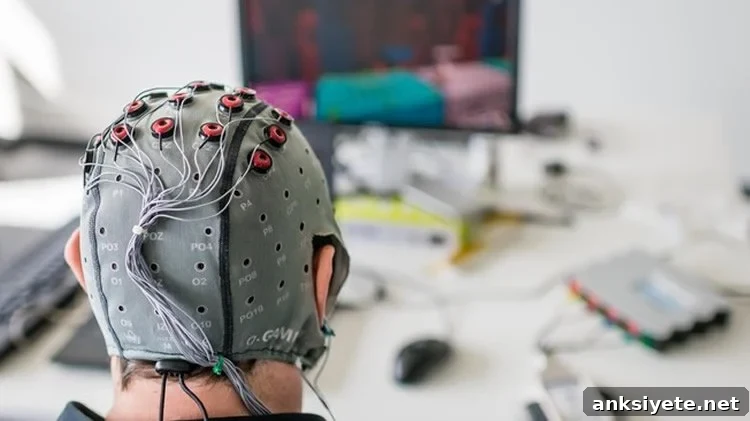
Why mutual learning matters
As machine-learning methods for decoding EEG have advanced, much research has prioritized optimizing algorithms to improve accuracy. But human operators can also change their neural activity to better match what the decoder expects. The EPFL team proposed that optimal performance emerges when training emphasizes three complementary learning pillars: adjustments at the machine level (decoder adaptation), changes in the subject’s brain signals through practice (subject learning), and refinement of the application or task environment. Despite being suggested previously, empirical evidence demonstrating the full benefits of mutual learning in real-world conditions had been limited and scattered.
Training for the Cybathlon BCI race
To test their approach, the researchers trained two men with chronic spinal cord injury over several months using a BCI system designed to detect multiple brainwave patterns. The training culminated in the Cybathlon BCI race, an international event where teams compete by controlling a virtual avatar through a multi-stage course. The race requires distinct commands—spin, jump, slide, and walk—each produced by different imagined movements mapped to specific sensorimotor rhythms in the EEG.
Both participants steadily improved throughout the training period. Their EEG recordings showed that sensorimotor rhythms associated with imagined movements became stronger and more consistent, indicating that the users were learning to modulate their brain activity more effectively to control the avatar. The EPFL pilots achieved the fastest overall times: one athlete won the gold medal and the other set the competition record, highlighting the effectiveness of their mutual learning strategy.
Training strategy and practical implications
A key element of the EPFL approach was to limit frequent recalibration of the decoder. By avoiding constant machine-side adjustments, the researchers allowed time for the human users to adapt and refine their neural strategies to consistently evoke the desired outcomes. The focused, competition-oriented training environment also may have accelerated learning compared with standard laboratory sessions.
The authors emphasize that their study provides multi-faceted evidence of subject learning during BCI training. They observed learning correlates across the application level (improved race performance), the BCI output (more accurate decoding), and the EEG neuroimaging level (stronger, more distinct sensorimotor rhythms). These converging lines of evidence support a comprehensive, mutual learning methodology rather than an exclusive focus on machine optimization.
“Contrary to the popular trend of focusing on machine learning alone, a comprehensive mutual learning methodology that emphasizes subject, machine, and application learning can strongly promote acquisition of practical BCI skills,” the authors state.
Source: EPFL
Publisher: Organized by NeuroscienceNews.com
Image source: Erik Tham
Original research: Open access research article titled “The Cybathlon BCI race: Successful longitudinal mutual learning with two tetraplegic users” by Serafeim Perdikis, Luca Tonin, Sareh Saeedi, Christoph Schneider, and José del R. Millán, published in PLOS Biology on May 10, 2018.
DOI: 10.1371/journal.pbio.2003787
Abstract (summary)
This study evaluates the role and effectiveness of mutual learning in motor imagery (MI) brain–computer interface training using insights gained from participation in the Cybathlon BCI race. The researchers hypothesized that reinstating the three learning pillars—machine, subject, and application—as equally important could produce a symbiotic user–BCI system capable of succeeding in real-world scenarios. Two participants with chronic spinal cord injury underwent longitudinal training following this mutual learning approach to control an avatar in a virtual BCI race. Competition outcomes and longitudinal EEG, BCI output, and application-level measures substantiate the effectiveness of this training. The results provide robust evidence that subject learning, when supported by appropriate machine-side strategies and task design, contributes substantially to BCI skill acquisition even under real-world and adverse conditions.