
Summary: New discoveries about neural activity in the sensorimotor cortex improve understanding of how this brain region organizes movement and could accelerate advances in neuroprosthetics designed to compensate for neuronal dysfunction.
Source: University of Freiburg
An interdisciplinary team at the University of Freiburg has uncovered important insights into how the sensorimotor cortex represents and organizes movement.
Their findings on neuronal activity patterns in this brain region may inform the design and training of neuroprosthetic systems—devices that interface with the nervous system to restore or compensate for impaired function.
“Our results will contribute to improving neuroprosthetic approaches while shortening the training period for patients using prosthetic devices,” says neurobiologist Prof. Dr. Ilka Diester from the Faculty of Biology at the University of Freiburg.
The study has been published in the journal Nature Communications.
Studying the brain in more natural, unconstrained behavior
The project was carried out in collaboration with computer scientist Prof. Dr. Thomas Brox from the University of Freiburg and neuroscientist Prof. Dr. Daniel Durstewitz from the Central Institute of Mental Health in Mannheim. Together, the groups sought to examine sensorimotor cortical activity in conditions that better reflect natural behavior.
Using bilateral electrophysiological recordings across the full sensorimotor cortex of freely moving rats, combined with precise 3D paw tracking, the researchers characterized how neuronal activity relates to a variety of self-initiated movements. These recordings made it possible to separate and compare contributions from premotor, motor and sensory regions across the anterior–posterior axis.
A clear anterior-to-posterior gradient emerged in the data: neurons showed a pronounced contralateral bias, meaning they preferentially represented movements of the opposite side of the body, with that bias varying systematically from frontal premotor areas to more posterior somatosensory regions.
Most previous knowledge of the sensorimotor cortex has come from experiments using highly constrained, stereotyped tasks in laboratory settings. This study addresses whether those findings extend to freely moving behavior and whether a conserved neural organization exists when animals behave naturally—an essential question for translating basic neuroscience into practical neuroprosthetic applications.
Identifying behavioral categories and conserved neural patterns across individuals
To make sense of the high-dimensional neuronal data, the team applied dimensionality reduction and neural data alignment techniques. By projecting complex spike activity into a lower-dimensional space based on pattern similarities, distinct geometric structures emerged that visually and statistically captured recurring neural population states associated with behavior.
These geometric representations from different recording sessions and different animals were then aligned automatically, analogous to how small iron filings orient similarly when exposed to a magnetic field. After alignment, the researchers could reliably identify matching behavioral categories across sessions and across individual animals.
Remarkably, the structure of population activity patterns remained conserved across animals despite inevitable under-sampling of the total neuronal population and differences in electrode placement between subjects. This conservation allowed the team to perform cross-session and cross-subject decoding: low-dimensional neural manifolds could be aligned well enough to generalize decoding models from one animal to another.
These results provide compelling evidence for a shared organizational code in the sensorimotor cortex that persists in freely moving conditions—an important step toward neuroprosthetic systems that can generalize across individuals and require less extensive training.
Funding: This research is part of the BrainLinks-BrainTools center at the University of Freiburg, funded by the Ministry of Economics, Science and the Arts of Baden-Württemberg through the sustainability program for projects of the Excellence Initiative II.
About this electrophysiology and neuroprosthetics research news
Author: Rimma Gerenstein
Source: University of Freiburg
Contact: Rimma Gerenstein – University of Freiburg
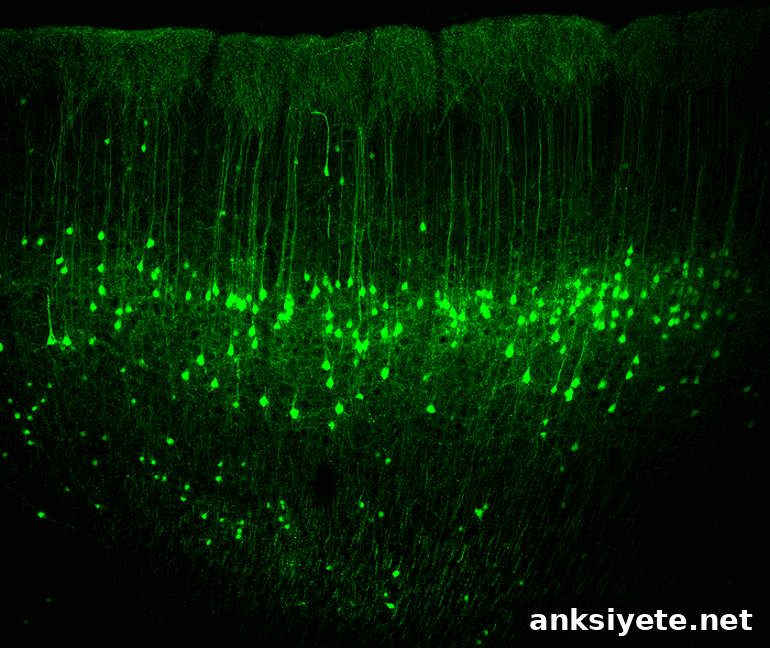
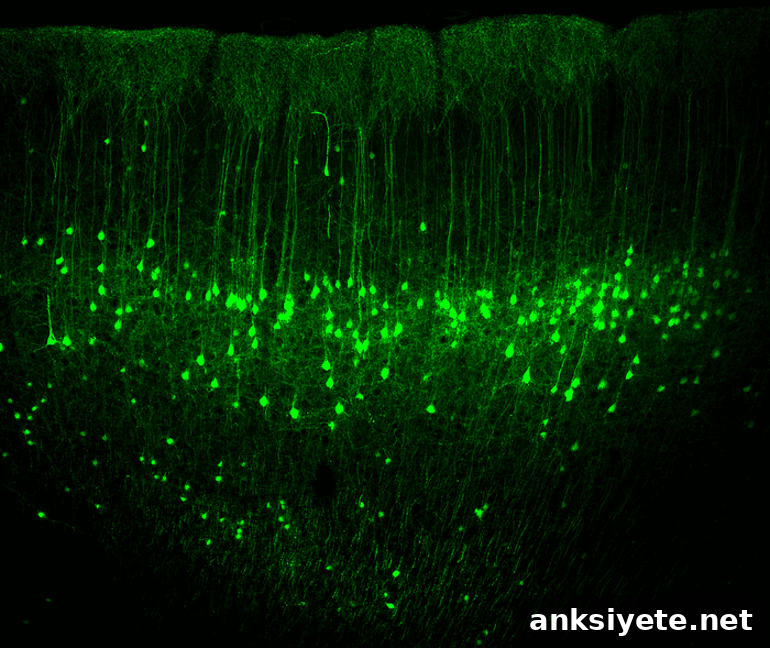
Image: The image is credited to lka Diester
Original Research: Open access.
“Conserved structures of neural activity in sensorimotor cortex of freely moving rats allow cross-subject decoding” by Ilka Diester et al. Nature Communications
Abstract
Conserved structures of neural activity in sensorimotor cortex of freely moving rats allow cross-subject decoding
Our understanding of neuronal activity in the sensorimotor cortex has largely been built on experiments that use strictly controlled, stereotyped movements. It has remained unclear how well those findings generalize to unconstrained behavior such as that of freely moving animals. To address this, the authors developed a self-paced behavioral paradigm that promoted varied movement types in rats.
Using bilateral electrophysiological recordings from the entire sensorimotor cortex together with simultaneous paw tracking, they identified neurons whose activity was coupled to behavior with clear lateralization and an anterior–posterior gradient from premotor to primary sensory cortex. Despite the severe under-sampling of the total neuronal population and variability in electrode placement across animals, the structure of population activity patterns was conserved across subjects.
By aligning low-dimensional neural manifolds, the researchers demonstrated cross-session and cross-subject generalization in decoding tasks, providing evidence for a conserved neuronal code in the sensorimotor cortex that supports decoding and could guide the development of more robust, generalizable neuroprosthetic systems.