
A team at the University of Texas at Arlington investigating ways to control neuron growth in the laboratory — and potentially in the human body — has published new findings in Scientific Reports showing that fluid flow can strongly influence axon direction.
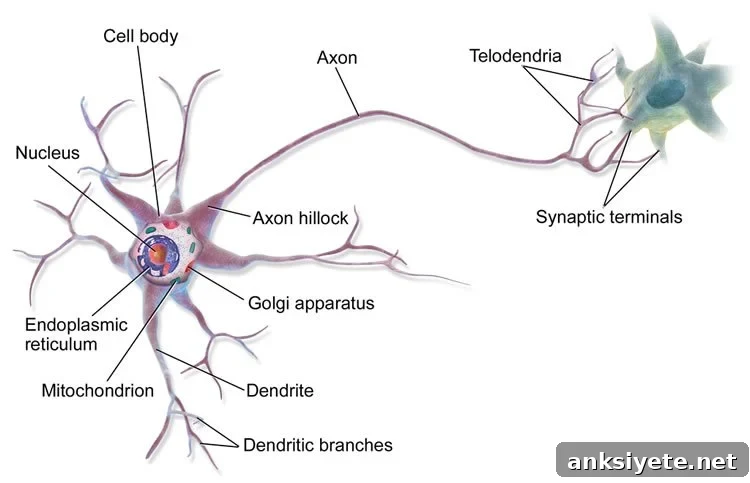
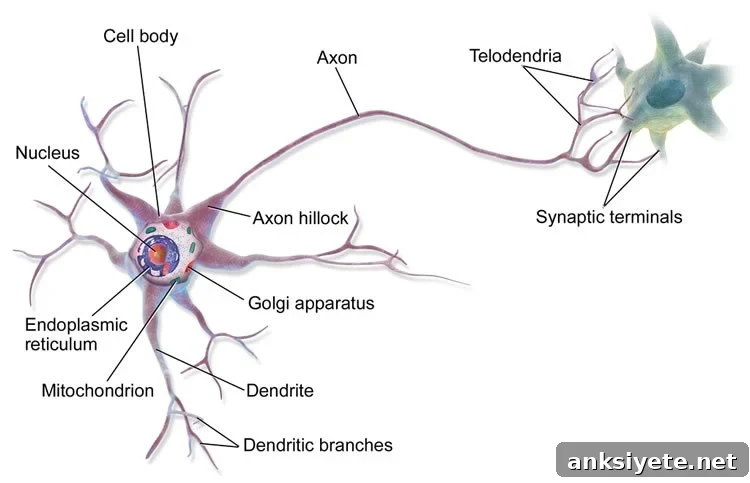
In research led by Samarendra Mohanty, who directs the Biophysics and Physiology Lab in UT Arlington’s College of Science, investigators used microfluidic stimulation to redirect axons by angles up to 90 degrees. Axons are the elongated projections of neurons that transmit signals and form connections with other neurons or target cells. These results highlight a physical cue — directed fluid flow — as an important factor in axonal pathfinding alongside the well-known chemical signals.
The paper, titled “Microfluidic control of axonal guidance,” lists co-authors Ling Gu, Bryan Black, Simon Ordonez and Argha Mondal — all members of Mohanty’s lab during the work — and Ankur Jain of UT Arlington’s College of Engineering. Their experiments provide new evidence that mechanical stimuli such as flow, along with force and temperature, can guide neuronal growth. This expands the conventional view that chemical gradients are the primary drivers of axonal navigation during development and regeneration.
Understanding how to guide neuron growth without invasive methods is critical for both basic neuroscience and therapeutic development. Controlled guidance techniques could help researchers map neural circuitry, build simplified neuronal networks on lab-on-a-chip platforms, and evaluate candidate drugs in microengineered environments that mimic tissue-level conditions. Lab-on-a-chip devices integrate multiple laboratory functions on microfabricated chips, enabling precise control of cellular microenvironments.
Mohanty emphasized the broader significance: “It is well known that fluid flow is involved in various processes during organ development. However, there was no direct evidence confirming the influence of microfluidic flow on axonal migration. Our work shows that, in addition to chemical cues, physical cues such as force, heat and flow must be considered to understand and control neuronal guidance both in vitro and in vivo.” This study builds on earlier work from Mohanty’s team and collaborators, including a 2012 paper in Nature Photonics demonstrating axon steering using a micromotor driven by a near-infrared laser and recent PLOS One results on guiding axons with heat generated by near-infrared light.
To isolate the effect of flow from other physical influences such as light-induced heating or mechanical forces, the new study applied direct fluid flow through a microtube. The researchers used retinal ganglion cells from common goldfish as a model system. In laboratory tests, approximately 35 percent of the growth cones exposed to the microtube flow responded, and of those responders, 78 percent turned toward the direction of the flow. These findings indicate a robust tendency for axons to align with directed microfluidic currents under the experimental conditions reported.
Interim Dean Jim Grover of UT Arlington’s College of Science praised the translational potential of the work: “Dr. Mohanty’s team is translating basic science into approaches that could significantly improve health outcomes. Continued support from major funders underscores the field’s recognition of the lab’s valuable contributions.”
Co-author Bryan Black noted that additional development is required before the method can be widely applied. The team’s next priorities include defining safe and effective parameter ranges for flow-based guidance — thresholds that steer growth without causing cellular damage or detachment — and developing microfluidic platforms capable of creating complex flow patterns and schedules. Those advances would clarify whether flow-induced turning is reversible and could enable the construction of simple engineered neuronal circuits.
Contact: Traci Peterson – UT Arlington
Source: UT Arlington press release
Image Source: Diagram credited to BruceBlaus, licensed Creative Commons Attribution 3.0 Unported
Original Research: “Microfluidic control of axonal guidance” by Ling Gu, Bryan Black, Simon Ordonez, Argha Mondal, Ankur Jain and Samarendra Mohanty, published in Scientific Reports. Published online October 6, 2014. doi:10.1038/srep06457