
Motor Cortex Shows Plasticity During Motor Learning, UC San Diego Study
Complex, skilled movements—like a tennis serve or a pianist’s concerto passage—depend on precise interactions between the motor cortex and other brain regions. For years neuroscientists compared the motor cortex to a piano keyboard: each specific movement corresponded to activity in a specific set of cortical cells.
“The prevailing view held that every time you wanted a specific movement, the motor cortex would simply activate a fixed group of cells, like pressing a key,” says Andrew Peters, a neurobiologist at UC San Diego’s Center for Neural Circuits and Behavior. “The motor cortex was thought to follow instructions from other cortical areas rather than actively shaping the learning process.”
New research from UC San Diego challenges that keyboard analogy. In a paper published in Nature, Peters and colleagues demonstrate that the motor cortex actively reorganizes during learning, generating new and reproducible patterns of activity as animals acquire a skilled movement. Their experiments, conducted in mice, trace how neuronal activity in the motor cortex evolves over the course of learning.
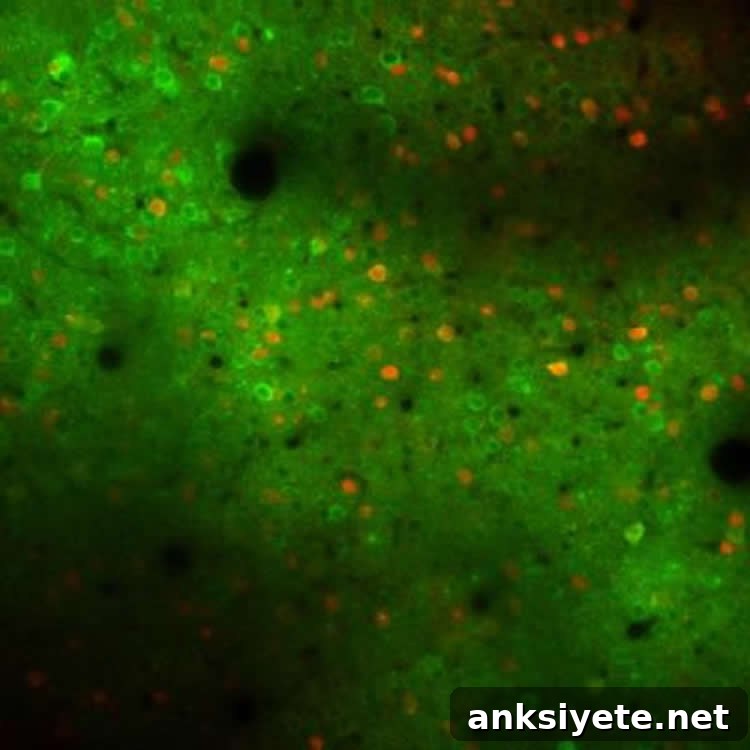
The research team, led by Takaki Komiyama, an assistant professor of biology at UC San Diego, tracked neuronal activity in the motor cortex while mice learned a precise forelimb movement: pressing a lever in a specific way to obtain a reward. Working with Simon Chen and other colleagues, the team recorded neural signals across the motor cortex over two weeks of training.
“During learning, we observed dramatic changes in which neurons were active and when,” Peters explains. “Different patterns of cortical activity emerged as the animals progressed from initial attempts to expert performance. Importantly, movements that looked similar early and late in training were accompanied by completely different patterns of motor-cortex activity.”
In practical terms, the results mean that an animal may produce a movement that resembles the final skilled action long before learning is complete, but that early movement is driven by one set of cortical patterns while the learned movement relies on a newly formed and reproducible set of patterns. “It’s like playing a note first on one piano key, then later producing that same note on a different key,” Peters says. The motor cortex is not merely following directions; it changes the neural implementation of movement as learning proceeds.
These findings reveal a fundamental property of motor learning: cortical plasticity. The motor cortex reorganizes its spatiotemporal activity—both which neurons fire and the timing of their firing—to create robust, repeatable patterns that underlie skilled performance. That plasticity has important implications for understanding how the brain acquires motor skills and for devising interventions to restore or improve movement.
“By showing how motor-cortex representations change during learning, our work offers a clearer picture of the neural mechanisms that support skill acquisition,” Komiyama says. “Understanding these mechanisms is a necessary step toward developing therapies for movement and learning disorders, including conditions such as Parkinson’s disease, where motor control and learning are impaired.”
The study received funding from several organizations, including the Japan Science and Technology Agency, Pew Charitable Trusts, the Alfred P. Sloan Foundation, the David & Lucile Packard Foundation, the Human Frontier Science Program, and the New York Stem Cell Foundation.
Contact: Kim McDonald – UCSD
Source: UCSD press release
Image Source: Adapted from the UCSD press release
Original Research: “Emergence of reproducible spatiotemporal activity during motor learning” by Andrew J. Peters, Simon X. Chen, and Takaki Komiyama, published online in Nature on May 4, 2014 (doi:10.1038/nature13235).