
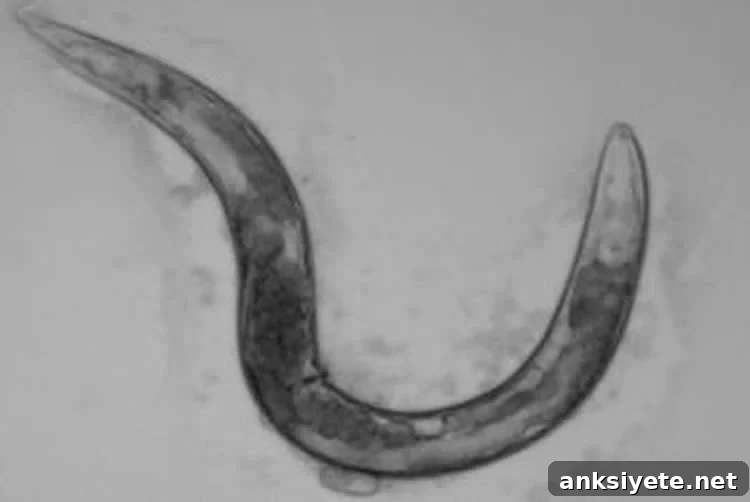
When it comes to the core molecular biology of aging, mammals and the tiny worm Caenorhabditis elegans share many similarities. Researchers often favor these worms because they are simple and easy to study, but one important difference — their ability to reproduce asexually and generate genetically identical offspring — has unintentionally introduced conflicting results across aging studies. A new study led by Brown University shows that a common laboratory chemical used to prevent reproduction in these worms, the chemotherapy drug 5′-fluorodeoxyuridine (FUdR), has effects well beyond sterilization: it activates stress responses and DNA-repair pathways that can significantly extend worm lifespan under stressful conditions.
Published in Mechanisms of Ageing and Development, the study by Professor Anne Hart, lead author Edward Anderson, and colleagues demonstrates that FUdR does more than stop reproduction. Their experiments reveal that FUdR can increase resistance to environmental stresses such as elevated salt, heat, and low oxygen by inducing protective cellular programs shared across species, including mammals.
“We can explain a lot of the disagreement in the C. elegans aging field by realizing that FUdR can dramatically change the answer,” said Anne Hart. Edward Anderson, who conducted much of the experimental work, discovered through a literature review that inconsistent use of FUdR across studies was a recurring source of conflicting results.
Anderson noted that studies with different doses or protocols involving FUdR often reported very different effects on worm lifespan. In some cases, papers examining the same genetic models reached opposite conclusions, and the presence or absence of FUdR in the experimental methods frequently accounted for those disparities. In other instances, incomplete documentation of methods made it difficult to determine whether FUdR was a factor.
An instructive laboratory surprise
One early catalyst for this investigation was an unexpected result from within Hart’s own lab. When the team used FUdR in a typical aging assay, the outcomes did not match previously published findings. Rather than dismissing the discrepancy, the researchers set out to test whether FUdR itself was altering longevity results.
The experimental series that followed showed that FUdR does not change normal worm lifespan under non-stressful conditions. However, when worms encountered modest osmotic stress — for example, increased salt in their environment — animals that were not treated with FUdR lived only about half as long as those that were treated. Increasing the concentration of FUdR further extended lifespan under salt stress, with a tenfold increase in FUdR producing an approximately threefold lifespan extension in the conditions tested. Parallel experiments showed enhanced survival after heat stress and in low-oxygen conditions, indicating a broad role for FUdR in boosting stress resistance.
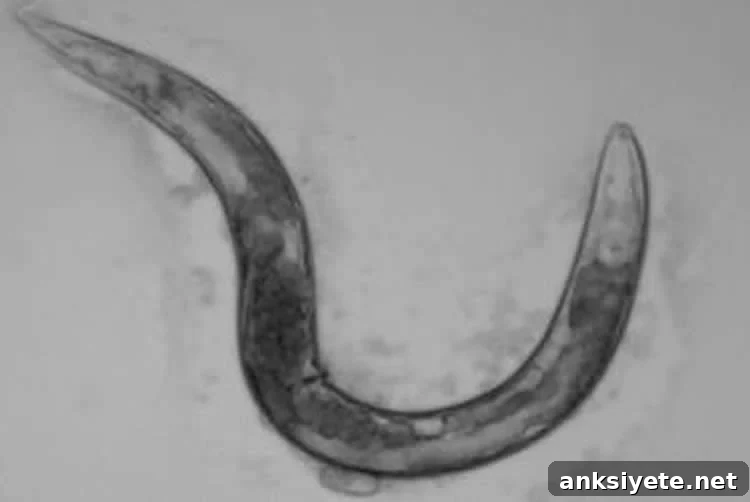
The team explored molecular mechanisms and found that FUdR triggers increased expression of DAF-16, the worm homolog of the FOXO family of transcription factors, which are central regulators of stress resistance and longevity in many organisms. Additionally, FUdR exposure induces DNA lesions that activate base excision repair (BER) pathways. Activation of these DNA-repair mechanisms improves the worms’ ability to repair damage caused by environmental stressors, including severe lesions such as double-strand breaks.
FUdR’s primary biochemical target is thymidylate synthase (TYMS-1) in worms. The researchers showed that blocking TYMS-1 by genetic or pharmacological means mimics many of FUdR’s effects, supporting the idea that inhibition of nucleotide metabolism can engage hormetic stress-response pathways. They also found partial dependence on sirtuins, a conserved class of enzymes linked to metabolic regulation and lifespan across species.
Implications for aging research
These findings have important implications for the design and interpretation of C. elegans aging studies. Because FUdR can activate stress-response and DNA-repair pathways that alter survival under stress, its use has the potential to confound experiments that aim to measure intrinsic effects of genetic or environmental interventions on lifespan. The authors recommend clearly reporting whether FUdR was used, along with the strain background and experimental conditions. Given the drug’s capacity to change results, many researchers may wish to avoid using FUdR in longevity assays altogether unless its effects are explicitly part of the experimental question.
The study’s authors include Edward N. Anderson, Mark E. Corkins, Jia‑Cheng Li, Komudi Singh, Sadé Parsons, Tim M. Tucey, Altar Sorkaç, Huiyan Huang, Maria Dimitriadi, David A. Sinclair, and Anne C. Hart.
Funding: The work was supported by the Ellison Medical Foundation and the National Institutes of Health (grants R01GM78171, R01NS055813, P01NS66888).
Source: Brown University. Image credit: Anne Hart/Brown University.
Abstract
C. elegans lifespan extension by osmotic stress requires FUdR, base excision repair, FOXO, and sirtuins
Low to moderate stress can promote longevity through hormesis by activating protective stress-response pathways. In aging experiments, 5′-fluorodeoxyuridine (FUdR) is commonly used to prevent reproduction in C. elegans. This study shows that FUdR alters lifespan in certain genotypes and confers resistance to thermal and proteotoxic stress. When combined with hypertonic (osmotic) stress or inhibition of the FUdR target thymidylate synthase (TYMS‑1), FUdR extends worm lifespan by up to 30%, whereas hypertonic stress alone shortens lifespan. Adaptation to osmotic stress required reduced Notch signaling; loss of Notch co-ligands extended lifespan only in combination with FUdR. Both FUdR treatment and TYMS‑1 loss promoted resistance to acute osmotic stress, anoxia, and heat. FUdR increased expression of DAF‑16/FOXO and the osmolyte biosynthesis enzyme GPDH‑1. The protective effects of FUdR depended in part on sirtuins and base excision repair (BER) pathways, and lifespan extension under osmotic stress required DAF‑16, BER, and sirtuin function. These results indicate that FUdR, by inhibiting TYMS‑1, activates somatic stress responses that confer hormetic resistance to acute and chronic stress. Studies of C. elegans lifespan that used FUdR may therefore need to be reinterpreted in light of these findings.
Paper: “C. elegans lifespan extension by osmotic stress requires FUdR, base excision repair, FOXO, and sirtuins” by Edward N. Anderson et al., Mechanisms of Ageing and Development, Published online February 2016. doi:10.1016/j.mad.2016.01.004