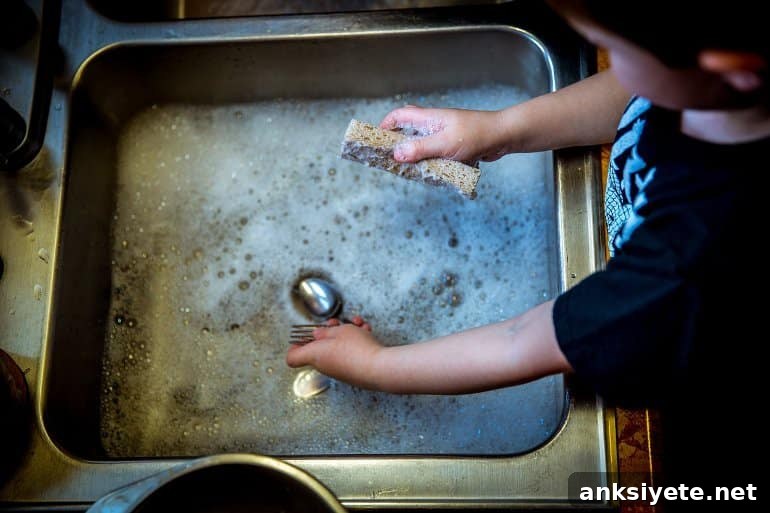
Summary: Children who regularly take part in household chores tend to show stronger executive functioning, which may relate to better academic performance and problem-solving ability.
Source: La Trobe University
New research from La Trobe University suggests that expecting children to complete age-appropriate chores on a routine basis is associated with improved cognitive skills that support learning and everyday problem-solving.
The study, led by Ph.D. candidate Deanna Tepper and published in Australian Occupational Therapy Journal, examined links between regular chore engagement and executive functions—skills such as planning, self-regulation, task switching and remembering instructions.
Tepper and her team propose that everyday activities like cooking, tidying or gardening contain built-in demands on attention, planning and self-control, which may help children develop the executive skills needed for school and wider life tasks.
“Using chores that match a child’s age and abilities could be a practical way for parents to support the development of executive functions,” Tepper commented. Children who routinely prepare a meal for themselves or help with family tasks may gain experience that transfers to better performance in schoolwork and creative problem-solving.
The research surveyed parents and guardians of 207 children aged 5 to 13. In mid-2020, caregivers completed questionnaires reporting how often their child participated in daily chores and providing assessments of the child’s executive functioning.
After accounting for age, gender and the presence of disability, the analysis showed that involvement in self-care chores (for example, making one’s own meal) and family-care chores (for instance, preparing a meal for others) significantly predicted stronger working memory and inhibition—the ability to pause and think before acting.
The study did not find a significant relationship between pet-care chores and executive function among families who owned pets, suggesting that not all chore types have the same cognitive demands or developmental impact.
Previous studies have linked age-appropriate chores to increased autonomy, prosocial behavior and greater life satisfaction. This La Trobe study is the first to specifically investigate how habitual chore engagement relates to children’s cognitive development, particularly executive functioning.
Executive functions are commonly defined as three core cognitive skills: working memory (holding and manipulating information briefly), inhibition (suppressing impulsive responses and ignoring distractions), and cognitive flexibility or shifting (moving attention between tasks or rules). These abilities typically begin to develop in early childhood and continue refining into adolescence and early adulthood.
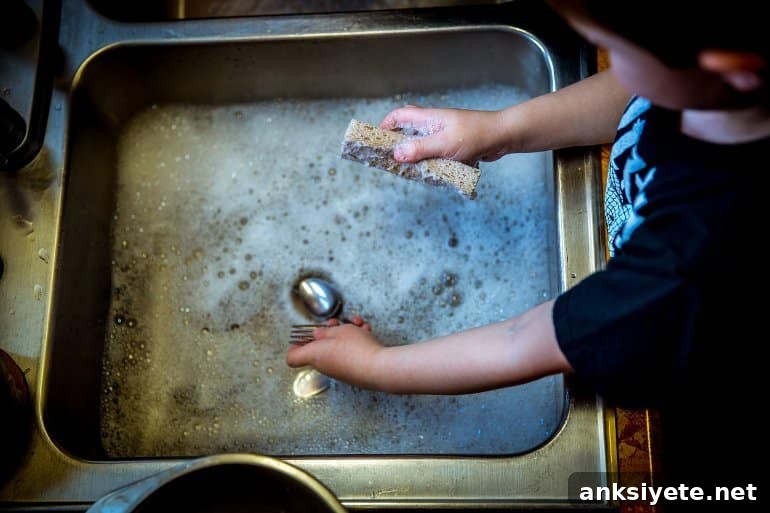
“These foundational skills develop across childhood and, when impaired, can make planning, self-regulation and problem-solving more difficult later in life,” Tepper noted. Difficulties in executive functioning can have long-term consequences, influencing reading and math performance and predicting overall academic achievement.
Early development of executive skills has also been associated with higher rates of tertiary education completion, better physical health outcomes and improved financial stability in adulthood. Because executive functions are amenable to training, routines and targeted activities, chore-based tasks may offer a low-cost, practical approach to support children’s cognitive growth.
The researchers hypothesized that children who engage in more regular household chores would show better inhibition and working memory. Their findings align with this hypothesis, likely reflecting that many chores require planning, sustained attention, self-control and the ability to switch between actions—core elements of executive functioning.
About this neurodevelopment research news
Author: Press Office
Source: La Trobe University
Contact: Press Office – La Trobe University
Image: The image is in the public domain
Original Research: Open access. “Executive functions and household chores: Does engagement in chores predict children’s cognition?” by Deanna L. Tepper et al., Australian Occupational Therapy Journal
Abstract
Executive functions and household chores: Does engagement in chores predict children’s cognition?
Introduction
Completing household chores appears to offer benefits beyond practical life skills. Chore participation may support the development of executive functions because chores commonly require planning steps, maintaining focus, regulating behavior and switching between subtasks. Despite these plausible links, few studies have examined how routine chores relate to executive functioning in children, an age when these cognitive skills are rapidly developing.
Methods
Caregivers (N = 207) of children aged 5–13 years (M = 9.38, SD = 2.15) completed parent-report questionnaires detailing their child’s frequency of engagement in household chores and providing assessments of the child’s executive functioning skills.
Results
Regression analyses showed that participation in self-care chores (e.g., preparing one’s own meal) and family-care chores (e.g., preparing meals for others) significantly predicted better working memory and inhibition after controlling for age, gender and disability status. No significant association was found between pet-care chores and executive function measures among families with pets.
Conclusion
The authors recommend further research to explore causal links and mechanisms. The findings suggest parents might foster children’s executive function development through consistent, age-appropriate chores, and that chore-based interventions (for example, structured cooking programs) could be explored as practical tools to support children who show deficits in these cognitive abilities.