
San Antonio’s Cancer Therapy & Research Center led Phase 2 testing of new agent.
An experimental gene therapy has nearly doubled overall survival for patients with recurrent glioblastoma compared with the current standard of care, according to results presented Oct. 1 at the Cancer Therapy & Research Center (CTRC) at The University of Texas Health Science Center at San Antonio. Glioblastoma is an aggressive primary brain tumor that carries a poor prognosis; roughly two-thirds of patients die within five years of diagnosis, and when the tumor recurs after initial treatment a patient’s expected survival often shrinks to months.
Andrew J. Brenner, M.D., Ph.D., a medical oncologist at CTRC and associate professor of medicine, neurology and neurosurgery at the UT Health Science Center School of Medicine, presented final results from a Phase 2 clinical research program evaluating the gene therapy VB-111. The study compared continuous and intermittent VB-111 dosing and assessed outcomes against the current standard therapy, the chemotherapy Avastin™. Across the study population, patients who received VB-111 had a median overall survival of 15 months, compared with a median of 8 months for patients treated with Avastin alone. The CTRC and three collaborating centers enrolled 62 patients with recurrent glioblastoma into the Phase 2 studies.
“These patients represent some of the most challenging cases — glioblastoma that has recurred after surgery and other treatments, with a very limited life expectancy,” Dr. Brenner explained. “The survival improvement observed with VB-111 is clinically meaningful and compares favorably to any current benchmark in recurrent glioblastoma.”
Dr. Brenner, the principal investigator for the studies, delivered the findings this week at the European Cancer Congress meeting in Vienna, Austria. He reported that VB-111 was generally safe and well tolerated, showing activity both as a single agent for recurrent disease and in combination with Avastin. The most common adverse event observed in the trial was transient fever lasting one to two days after infusion, which the investigators interpret as an immune system response that may contribute to the therapy’s effectiveness.
VB-111 is a gene-based therapy that targets the tumor’s blood supply. The drug is designed to block the tumor’s ability to form new blood vessels, effectively starving the tumor of nutrients and oxygen required for growth. According to the trial investigators, VB-111 is activated by factors secreted within the tumor microenvironment, allowing it to act selectively where the cancer is driving vessel growth. The drug is administered by intravenous infusion approximately once every two months, a schedule that is intended to be convenient for patients and families. VB-111 holds orphan drug designation in both the United States and Europe.
Ian Thompson Jr., M.D., director of the CTRC, praised the team’s work: “I am very proud of Dr. Brenner and his group for advancing promising approaches to treat brain cancer. Their leadership contributes to the growing effort at our center to develop next‑generation cancer therapies.”
Phase 2 trials are a crucial step after first‑in‑human studies, providing more detailed information about efficacy and safety that helps determine whether a therapy should proceed to large-scale testing. Following the Phase 2 results, VBL Therapeutics launched a Phase 3 study of VB-111 to provide additional data on outcomes for patients with recurrent glioblastoma. The CTRC in San Antonio is currently the only active site open for the Phase 3 trial and enrolled the first patients there. The company plans to add approximately 50 more sites across North America, Israel and Canada.
Source: Will Sansom – UT San Antonio
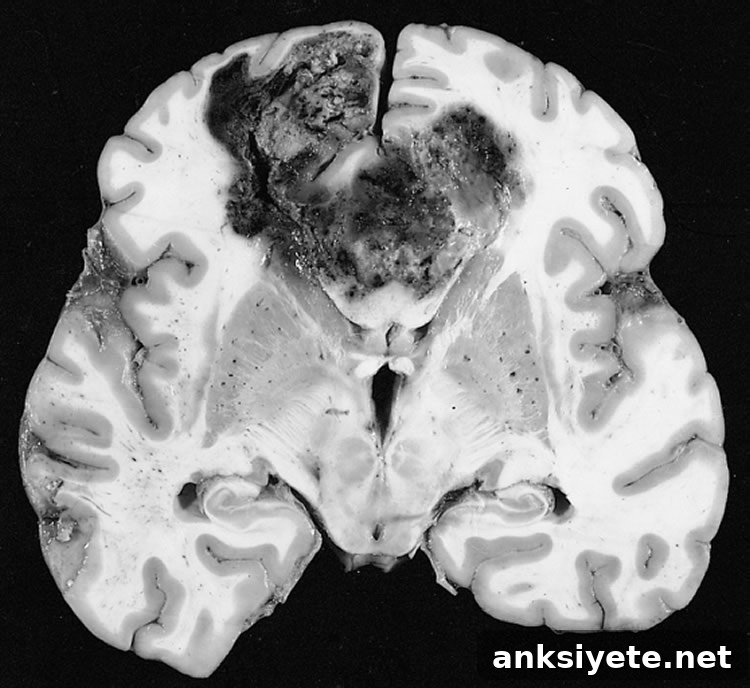
Image Source: The image is credited to The Armed Forces Institute of Pathology and is in the public domain
Original Research: Findings were presented at the 18th ECCO – 40th ESMO European Cancer Congress in Vienna, Austria.