
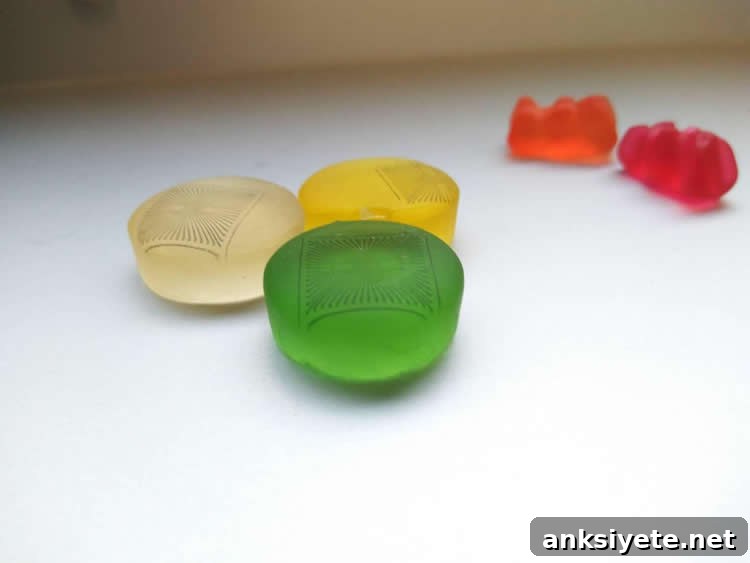
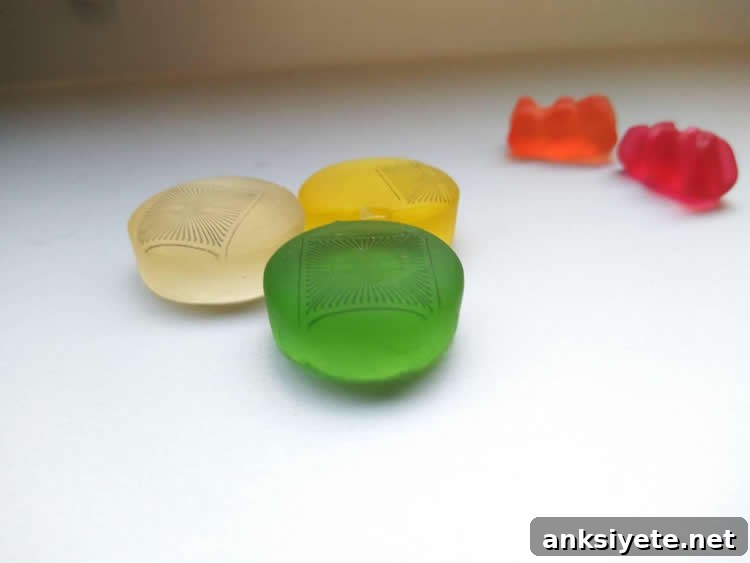
Summary: Researchers have developed a method to print microelectrode arrays directly onto gelatin candies and other soft substrates, a step that could enable new diagnostic and therapeutic bioelectronic devices.
Source: TUM
Microelectrode arrays (MEAs) enable direct measurement of electrical signals from tissues such as the brain and heart, but conventional MEAs are typically rigid. A team at the Technical University of Munich (TUM) has demonstrated inkjet printing of MEAs onto a range of soft materials, overcoming major challenges in integrating electrodes with soft biological environments.
Researchers from TUM and Forschungszentrum Jülich demonstrated inkjet printing of microelectrode arrays onto soft substrates, including a gelatin-based gummy bear. While the image of printing on candy might sound whimsical, the work highlights an important advance: the ability to deposit functional, high-resolution electrode patterns on mechanically soft materials that better match living tissue than traditional rigid substrates.
Microelectrode arrays, which contain many tiny electrodes, are used to detect voltage changes from neurons, cardiac cells, and other excitable tissues. Historically, MEAs have been fabricated from hard materials such as silicon, which can disrupt cell organization in vitro and provoke inflammation or diminished function when interfaced with living tissue in vivo. By contrast, soft substrates reduce mechanical mismatch and the associated adverse biological responses.
Rapid prototyping with inkjet printing
Printing electrodes directly onto soft materials enables rapid prototyping, lowering time and cost compared with conventional microfabrication that requires cleanrooms and specialized equipment. “If you print the electrodes, you can produce a prototype relatively quickly and cheaply. The same applies if you need to rework it,” says Bernhard Wolfrum, Professor of Neuroelectronics at TUM. This flexibility opens new possibilities for iterative device design in research and development.
The team uses a high-precision inkjet printing system to deposit carbon-based conductive ink in fine patterns. After printing the conductive traces, a neutral protective layer is applied to shield the sensor from stray signals and to define the active electrode areas. Achieving reliable adhesion, resolution, and reproducible electrical performance required optimization of both the printer settings and the ink formulation.
Materials tested and their potential uses
Researchers tested the printing method on several soft substrates: PDMS (polydimethylsiloxane), agarose (a common biological gel), and gelatin formulations, including a gelatin gummy that was melted and re-solidified. Each substrate offers different advantages. PDMS is widely used for flexible microdevices, agarose is convenient for cell-culture assays, and gelatin-based materials are attractive for implants because they can reduce foreign-body responses and better mimic the mechanical properties of tissue.
In cell-culture experiments, the printed MEAs produced reliable extracellular recordings of action potentials, demonstrating functionality. With conductor widths around 30 micrometers, the printed electrodes are small enough to record from single cells or small cell clusters—resolution that is difficult to achieve with many conventional printing techniques.
“The challenge lies in fine-tuning every component—both the technical setup of the printer and the ink composition,” explains Nouran Adly, the study’s first author. For example, PDMS required a specific surface pre-treatment to ensure the carbon ink adhered consistently and produced stable electrical traces.
Applications and future directions
Printed MEAs on soft substrates could serve a wide range of applications. In research, they enable rapid prototyping for experiments that study neuronal or cardiac networks. Clinically, soft, conformable electrode arrays hold promise for monitoring nerve or heart activity with reduced tissue irritation, and they may inform future soft pacemaker or neuromodulation technologies.
Ongoing work in Wolfrum’s group focuses on printing more complex three-dimensional MEA architectures and developing printable sensors that are chemically selective in addition to electrically sensitive. This could expand device capabilities to detect specific biomolecules or neurotransmitters while simultaneously recording electrical activity.
Source: Paul Hellmich, TUM
Publisher: NeuroscienceNews.com
Image credit: N. Adly / TUM
Original research: Nouran Adly et al., “Printed microelectrode arrays on soft materials: from PDMS to hydrogels,” Flexible Electronics. Published May 24, 2018. DOI: 10.1038/s41528-018-0027-z
Abstract
Printed microelectrode arrays on soft materials: from PDMS to hydrogels
Microelectrode arrays (MEAs) provide promising opportunities to study electrical signals in neuronal and cardiac cell networks, restore sensory function, or treat disorders of the nervous system. Nevertheless, most currently investigated devices rely on silicon or rigid polymer materials, which neither physically mimic nor mechanically match living tissue and can cause inflammation or loss of functionality. Here, the authors present a new method for developing soft MEAs as bioelectronic interfaces. Functional conductive structures are directly deposited on PDMS-, agarose-, and gelatin-based substrates using inkjet printing. The study demonstrates the versatility of this approach by printing high-resolution carbon MEAs on PDMS and hydrogels and using these soft MEAs for in vitro extracellular recording of action potentials from cardiomyocyte-like HL-1 cells. These results represent an important step toward next-generation bioelectronic interfaces created via rapid prototyping.
TUM (2018). Researchers Print Sensors on Gummi Candy. NeuroscienceNews. Published June 22, 2018.