
Stanford Study Finds Genetic Basis for Synchronized Brain Networks
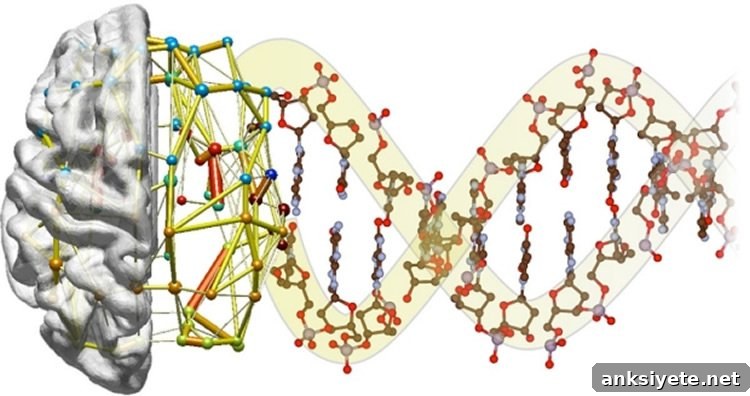
Imaging studies have long shown that discrete brain regions operate together as functional networks. New research from Stanford now demonstrates that these synchronized networks are supported by coordinated gene expression.
Researchers at the Stanford University School of Medicine report that synchronized physiological interactions between distant brain regions — revealed by resting-state functional magnetic resonance imaging (fMRI) — have measurable genetic underpinnings. The senior author of the study is Michael D. Greicius, MD, associate professor of neurology and neurological sciences and medical director of the Stanford Center for Memory Disorders. The study was published June 11 in Science.
Functional networks and resting-state fMRI
Contemporary neuroscience supports the view that cognitive processes arise from networks of anatomically and functionally connected brain regions rather than single isolated areas. Functional connectivity refers to the tight coupling of activity across those regions. Functional networks tend to be especially active during related tasks, but they also remain synchronized while the brain is at rest.
Resting-state fMRI captures this ongoing coordination by measuring small fluctuations in local blood flow while a person lies quietly in the scanner, relaxed and not performing a task. These scans consistently reveal multiple distinct networks — including the default-mode network involved in autobiographical memory, as well as sensorimotor, visuospatial and salience networks. Even at rest, these networks continue to “hum” with characteristic temporal patterns.
Probing the molecular basis of network synchronization
Some researchers have questioned whether resting-state fMRI signals truly reflect underlying neuronal activity. Greicius and colleagues sought molecular evidence to link imaging-derived functional networks to coordinated biology at the gene-expression level.
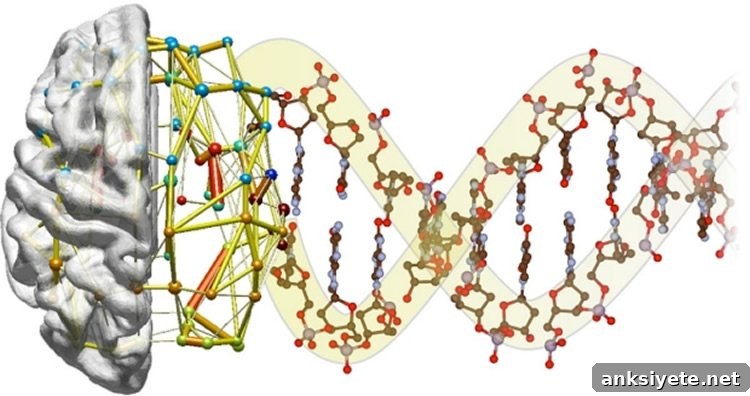
To begin, the team used computational analyses of eight-minute resting-state fMRI scans from 15 healthy adults to map well-defined functional networks. Next, they sought gene-expression profiles for the corresponding cortical regions — measurements that quantify activity levels of each gene in tissue samples.
Because gene-expression data cannot be obtained noninvasively from living human brains, the researchers used publicly available, carefully annotated post-mortem datasets from the Allen Institute for Brain Science. Those datasets include gene-expression profiles from hundreds of tissue samples taken throughout several human brains. Jonas Richiardi, PhD (lead author), and Andre Altmann, PhD (co-lead author), integrated the imaging-derived network maps with the Allen Institute gene-expression atlas to compare patterns across regions that belong to the same network versus regions in other networks.
Key findings: a set of genes tied to functional connectivity
Using robust statistical methods, the investigators identified a set of 136 genes whose expression patterns are more highly correlated within regions of the same functional network than between different networks or outside networks. In other words, when a gene was expressed at high, medium, or low levels in one region of a given network, it tended to show corresponding expression levels in other regions of that same network.
Crucially, many of these genes encode proteins involved in neuronal signaling: ion channels that shape and maintain membrane voltages, and proteins found at synapses where neurons communicate. This enrichment points to biological mechanisms that could support synchronized activity across distributed brain regions.
Validation across datasets and species
The team validated their results in several ways. They analyzed genetic-variant data from the IMAGEN Consortium — a large European study that combines imaging, cognitive measures and genomic information from adolescents. Andre Altmann led analyses testing whether polymorphisms in the 136 candidate genes relate to the strength of resting-state network connectivity in 259 healthy adolescents. The results indicated that variation in this gene set influences network connectivity.
Additional confirmation came from mouse data: analyses of the Allen Institute’s mouse-brain gene-expression and connectivity atlases showed that expression of these genes is associated with axonal connectivity in mice. Together, human post-mortem gene-expression data, adolescent genetic-variant associations, and mouse connectivity evidence provide convergent, multimodal support for a genetic basis of resting-state networks.
Clinical implications and next steps
Identifying genes associated with functional connectivity opens new avenues for research and clinical applications. For example, some neurodegenerative and psychiatric illnesses appear to propagate or disrupt pathology along specific networks. Alzheimer’s disease has been hypothesized to spread through the default-mode network; focusing on genes whose expression is coordinated specifically within that network could offer fresh insights into disease mechanisms and progression.
Future work will aim to refine the list of network-specific genes and investigate how alterations in their expression or genetic variants contribute to brain disorders. The study also highlights the value of shared, large-scale datasets that enable cross-disciplinary discoveries.
Key contributors include Jonas Richiardi, Andre Altmann, Anna-Clare Milazzo, Catie Chang and Michael D. Greicius among others. Funding was provided by the National Institutes of Health (R01NS073498), the Allen Institute, the Feldman Family Foundation, the IMAGEN Consortium and a Marie Curie Fellowship from the European Union.
Abstract (concise summary)
During rest, widely distributed brain regions synchronize activity to form functional networks. This study shows that those networks can be recapitulated by correlated gene-expression measures in post-mortem human brain tissue. The identified set of 136 genes is enriched for ion channel and synaptic function. Genetic polymorphisms in this gene set affect resting-state functional connectivity in adolescents, and expression levels associate with axonal connectivity in mice. Together, these findings provide multimodal evidence that synchronized activity in resting-state networks aligns with coordinated expression of genes linked to neuronal signaling and synaptic function.