
Artificial “Nose” Uses Diathermy Smoke to Identify Brain Tumours During Surgery
Summary: Researchers at Tampere University have developed a real-time method that analyzes diathermy (electrosurgical) smoke to distinguish malignant brain tumour tissue from healthy tissue during surgery.
Source: University of Tampere
Overview
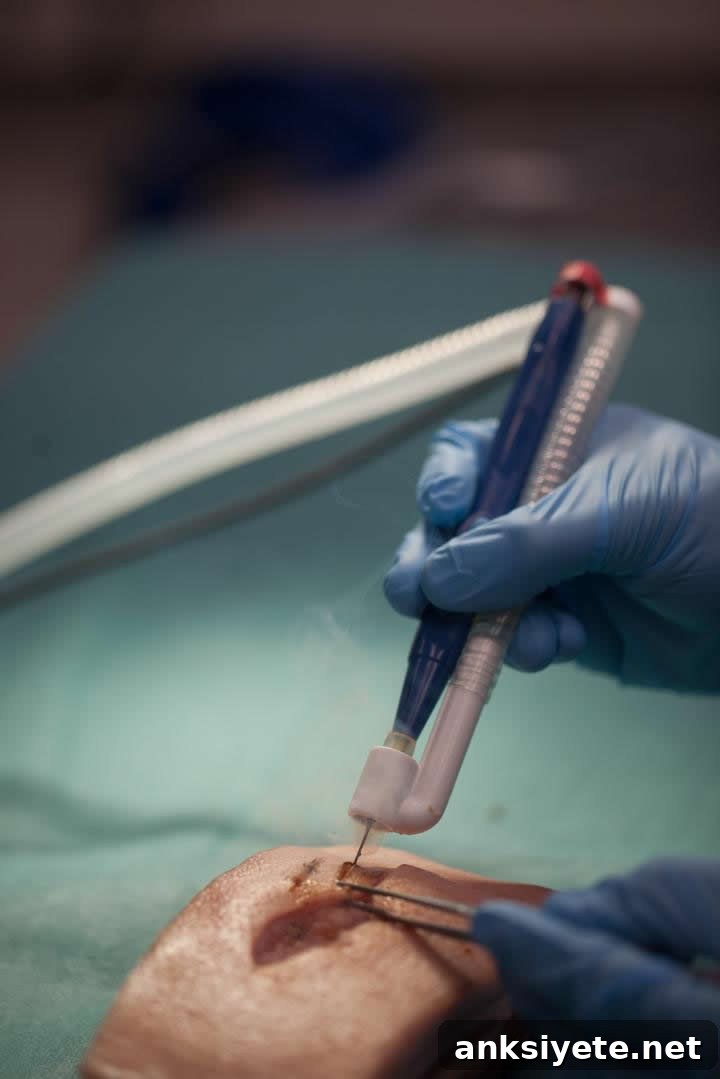
Neurosurgeons commonly use electrosurgical tools—such as an electric knife or diathermy blade—to cut and coagulate tissue during brain operations. When tissue is cauterised with these instruments, microscopic molecules are released into the surgical plume, often called surgical or diathermy smoke. Scientists at Tampere University have turned that smoke into a diagnostic signal by feeding it into a compact analyzer that functions like an “artificial nose.” The device detects patterns in the smoke that reliably differentiate tumour tissue from non-tumour brain tissue in real time.
The technique was reported in the Journal of Neurosurgery and offers a potential intraoperative complement to the established frozen section method, which requires removing a tissue sample and sending it to a pathologist for microscopic analysis. Frozen section gives accurate results, but it is time-consuming and provides only a single sampled location. The new smoke-based approach can continuously sample multiple points, potentially helping surgeons achieve more precise tumour margins while operating.
“This method provides a promising way to identify malignant tissue in real time and allows sampling from many points within the tumour,” says Ilkka Haapala, a researcher involved in the study.
Technology and how it works
The core technology is differential mobility spectrometry (DMS). In DMS, ionised molecules carried in gas are exposed to an oscillating electric field. Different chemical compositions respond differently, producing unique ion distribution patterns—an “odor fingerprint”—that reflect the tissue source. In this application, ions created from diathermy smoke are sampled and analyzed by the DMS device. A machine learning classification system interprets the DMS signals and assigns tissue categories, enabling near-instantaneous feedback to the surgical team.
Study design and results
The research team tested the system using 694 smaller tissue specimens derived from 28 neurosurgical samples. The original collection contained a variety of tumour types—meningiomas (WHO grade I), pilocytic astrocytomas (grade I), other low-grade gliomas (grade II), glioblastomas (grade IV), and central nervous system (CNS) metastases—together with control samples of hemorrhagic or traumatically damaged brain tissue. Each specimen was cauterised to produce diathermy smoke, which was then routed to the DMS analyzer for classification.
When all sample types were included, the system achieved an overall classification accuracy of 83% after excluding samples preserved in Tissue-Tek medium, which degraded performance. Performance further improved for specific comparisons: in a focused binary classification task distinguishing low-grade gliomas (grade II) from control tissue, the device reached 94% classification accuracy with 97% sensitivity and 90% specificity. These results indicate strong potential for accurate, intraoperative identification of tumorous tissue using diathermy smoke and DMS analysis.
Practical advantages and clinical potential
An important practical benefit of this approach is compatibility with existing neurosurgical equipment. The analyzer can be connected to standard electrosurgical instruments and integrated into the operating-room workflow without major changes to surgical practice. Because the system analyzes smoke continuously, it enables rapid, repeated sampling across multiple tumour sites, improving the surgeon’s ability to define tumour borders and reduce residual malignant tissue.
The authors emphasise that while results are promising ex vivo, further validation in live intraoperative settings and larger patient cohorts is needed before routine clinical deployment. Nevertheless, the device presents a cost-effective, portable alternative to other intraoperative technologies that can be expensive or impractical for broad clinical use.
Institution: University of Tampere
Lead contact: Ilkka Haapala, University of Tampere
Original research article: “Identifying brain tumors by differential mobility spectrometry analysis of diathermy smoke” by Ilkka Haapala et al., Journal of Neurosurgery. DOI: 10.3171/2019.3.JNS19274
Conclusion
This study demonstrates that diathermy smoke contains reproducible chemical signatures that reflect the biological nature of brain tissue. By combining differential mobility spectrometry with machine learning, researchers have built a portable “artificial nose” capable of distinguishing tumour from non-tumour tissue with high accuracy in controlled tests. If these findings translate effectively to live surgeries, the technology could improve intraoperative tumour identification, help surgeons achieve cleaner resections, and ultimately contribute to better patient outcomes in neurosurgical oncology.