
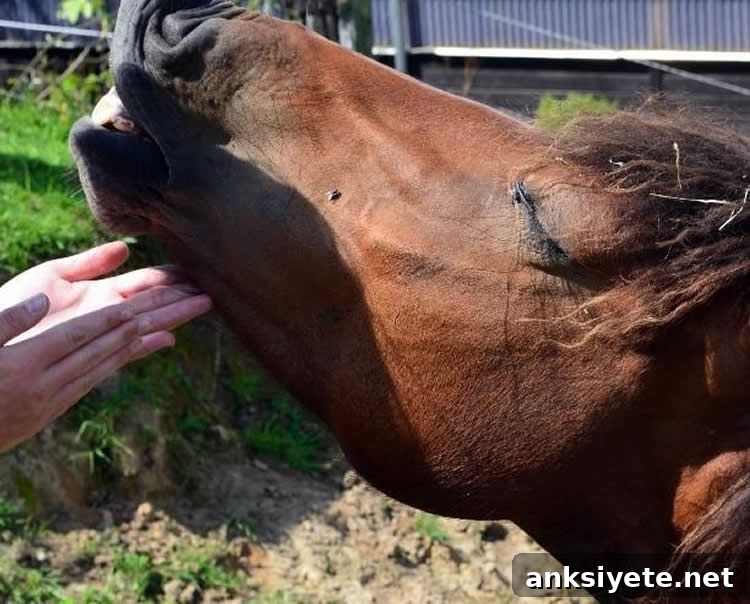
Summary: New research shows that horses produce snorts more frequently in positive situations, suggesting that snorts can serve as reliable indicators of positive emotional states and could be useful for improving horse welfare.
Source: PLOS ONE.
New research published July 11 in the open-access journal PLOS ONE, led by Mathilde Stomp of the Université de Rennes, provides compelling evidence that horses emit more snorts in favorable situations — a finding that may offer a practical indicator for assessing equine well-being.
Measuring positive emotions in animals remains challenging. Physiological measures often give mixed results and many behavioural signals are open to interpretation. Acoustic signals have been linked to internal states in several species, yet relatively few studies have focused on sounds associated specifically with positive emotions, and non-vocal sounds have been especially understudied.
Anecdotal observations had long suggested that horses snort more frequently when they are content. To test this systematically, Stomp and colleagues observed 48 horses living under two contrasting management conditions: restricted conditions typical of riding school horses that spend much of their time in individual stalls and receive a low-roughage diet, and naturalistic conditions in which horses lived in stable social groups and had continuous access to pasture.
The researchers recorded snort production across immediate locations (stall versus pasture) and behavioural and postural contexts, including feeding behaviour and ear position. They also assessed each horse’s overall welfare state using validated indicators such as stereotypic behaviours and habitual ear positions, and combined those measures into a composite total chronic stress score (TCSS) to reflect longer-term welfare compromise.
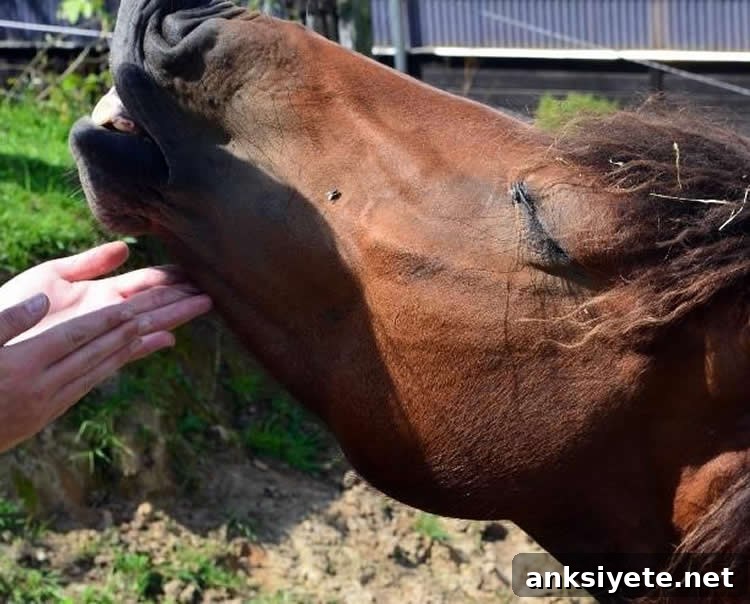
The analysis revealed several consistent patterns. Snort production was significantly associated with contexts commonly regarded as positive for horses, such as grazing and feeding in pasture. Snorts were also associated with postural indicators of a positive internal state — notably ears held forward or to the side rather than pinned back. Within the riding school population, horses produced roughly twice as many snorts when they were in pasture compared with when they were kept in their stalls.
Comparing across management types, the naturalistic group of horses living in pasture and stable social groups emitted significantly more snorts in comparable contexts than the riding school horses. Importantly, snort frequency correlated negatively with the composite stress score: horses with lower TCSS values — indicating better welfare — showed higher rates of snorting. Taken together, these observations support the interpretation that snorts are reliable acoustic markers of positive emotional states in horses.
Dr. Stomp summarized the findings by noting that the snort — a non-vocal sound produced during expiration through the nostrils — occurs more often in positive contexts (such as grazing or being in pasture) and when ears are in forward or sideward positions. She pointed out that snorts appear less frequent in horses exhibiting signs of compromised welfare, suggesting the sound could become a practical tool to identify situations that horses find favorable.
Funding: The study was funded by IFCE (Institut français du cheval et de l’équitation), the Fonds Éperons, the University of Rennes, and the CNRS. The funders did not influence study design, data collection and analysis, the decision to publish, or the preparation of the manuscript.
Source: Mathilde Stomp – PLOS ONE
Publisher: NeuroscienceNews.com (coverage of the study)
Image source: NeuroscienceNews.com image is in the public domain.
Original research: “An unexpected acoustic indicator of positive emotions in horses” by Mathilde Stomp, Maël Leroux, Marjorie Cellier, Séverine Henry, Alban Lemasson, Martine Hausberger. PLOS ONE. Published July 11, 2018.
DOI: 10.1371/journal.pone.0197898
PLOS. “Snorts Indicate Positive Emotions in Horses.” NeuroscienceNews, 11 July 2018. Coverage of research published in PLOS ONE.
Abstract
An unexpected acoustic indicator of positive emotions in horses
Indicators of positive emotions in animals remain limited, and many proposed behavioural markers are ambiguous. While acoustic signals have been linked to an animal’s internal state, few studies address positive emotions and even fewer focus on non-vocal sounds. The snort — a sound produced during expiration through the nostrils and shared by several perissodactyl species — has been associated with positive contexts elsewhere. This study tested whether snorts similarly indicate positive states in horses.
Observations of 48 horses in two contrasting living conditions (restricted stall housing with low roughage diet versus naturalistic stable-group pasture living) recorded the immediate environment and the behavioural/postural context for each snort. Welfare was evaluated using validated behavioural and postural indicators and summarized into a composite total chronic stress score (TCSS). Results showed that snort production was strongly associated with positive contexts (for example, feeding in pasture) and with positive ear positions (forward or sidewards). Riding school horses snorted twice as often in pasture as in stalls, and naturalistic horses snorted more than riding school horses in comparable contexts. Snort frequency was inversely related to TCSS: better welfare corresponded to higher snort rates. Overall, snorts emerge as a promising, non-invasive acoustic indicator of positive emotions in horses.