
Summary: Researchers have found that ultra-small, bowl-shaped nanoparticles—called nanobowls—can bind to amyloid beta aggregates that form the characteristic plaques of Alzheimer’s disease. This discovery offers a new, minimally disruptive way to isolate and study these toxic protein assemblies and suggests future diagnostic and therapeutic possibilities.
Source: Biophysical Society
Understanding and treating Alzheimer’s disease remains a major scientific challenge in part because the amyloid beta protein aggregates that form brain plaques are difficult to study without altering their structure. Amyloid beta can misfold and assemble into a variety of tangled forms in brain tissue. Conventional approaches to isolate and examine these aggregates often disturb their native organization, complicating efforts to determine which specific structures drive neurodegeneration.
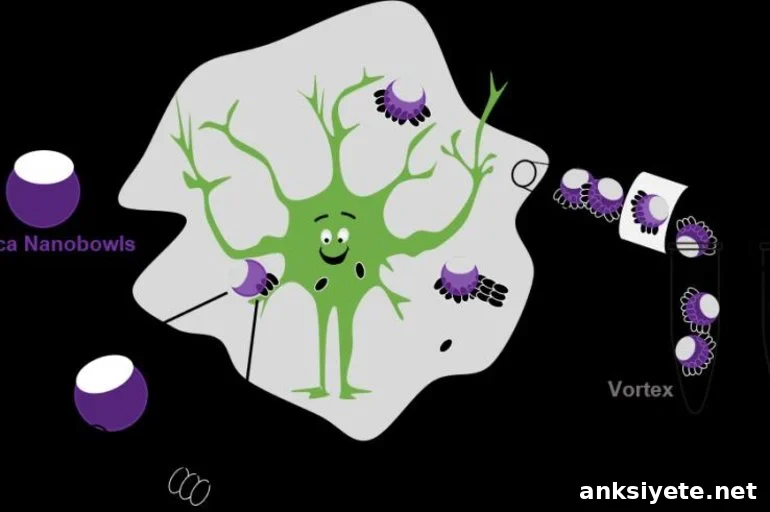
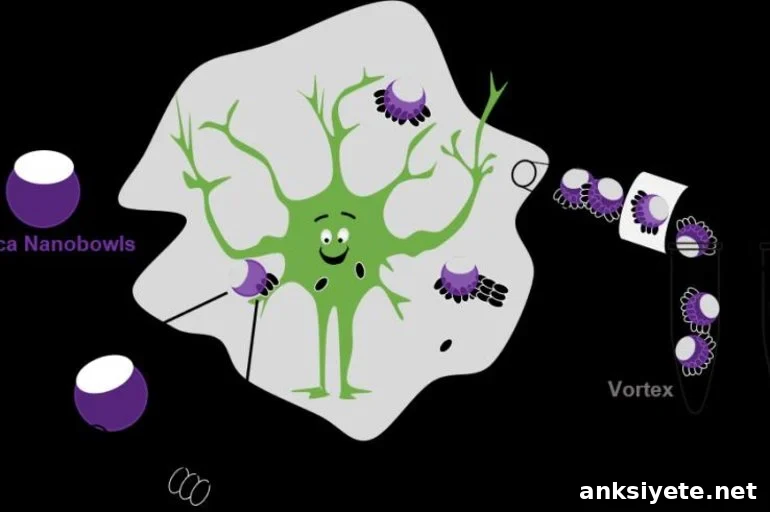
A research team at the University of California, San Diego—led by Ratnesh Lal and including graduate student Vrinda Sant and recent PhD graduate Madhura Som—has developed an alternative approach that uses engineered nanoparticles to capture amyloid beta assemblies directly from biological samples. Their findings, to be presented at the 65th Annual Meeting of the Biophysical Society on Friday, February 26, describe how hollow, bowl-shaped nanoparticles, dubbed “nanobowls,” can attract and hold amyloid beta aggregates without requiring additional drug coatings.
Nanoparticles have long been investigated for their potential to deliver targeted therapies or to serve as diagnostic agents because their surfaces can be modified to interact with specific molecules. In this study, the UC San Diego researchers synthesized nanobowls coated with a lipid-polymer shell. The team initially expected that the nanobowls would need to carry pharmaceutical agents to influence amyloid beta behavior. To their surprise, the amyloid beta proteins adhered to the nanobowls even when the particles were not loaded with active drugs. This inherent affinity allowed the researchers to remove toxic protein aggregates from cell cultures and tissue samples, enabling study of the captured structures.
Sant reports that the nanobowls functioned as a passive but effective means of capturing multiple forms of amyloid beta. The researchers observed that different aggregate species coexist in tissue, and not every form appears to transition directly into the dense plaques associated with Alzheimer’s pathology. These observations support prior hypotheses in the field that a diversity of amyloid beta assemblies may play distinct roles in disease progression.
By providing a gentle way to extract and concentrate amyloid beta aggregates, nanobowls have two immediate applications. First, they offer a tool for researchers to isolate intact assemblies from biological samples for structural and biochemical analysis, helping to clarify which aggregate types are most toxic or disease-relevant. Second, the nanobowls could inform the development of diagnostics that detect pathological protein assemblies at early stages. While therapeutic use remains exploratory, the discovery that the particles themselves can bind and remove amyloid beta points to possible future strategies in which nanostructures serve as carriers for targeted treatments or as therapeutic agents in their own right.
Beyond Alzheimer’s disease, amyloid beta and related misfolded proteins have been implicated in other conditions including certain neurodegenerative, cardiovascular, and cancer-related processes. The researchers note that the nanobowl platform may be adaptable for isolating or interacting with other pathogenic protein aggregates, broadening its potential impact across biomedical research and precision diagnostics.
About this nanotech research news
Source: Biophysical Society
Contact: Leann Fox – Biophysical Society
Image: The image is credited to Vrinda Sant.
Original Research: The findings will be presented at the 65th Annual Biophysical Society Meeting.