
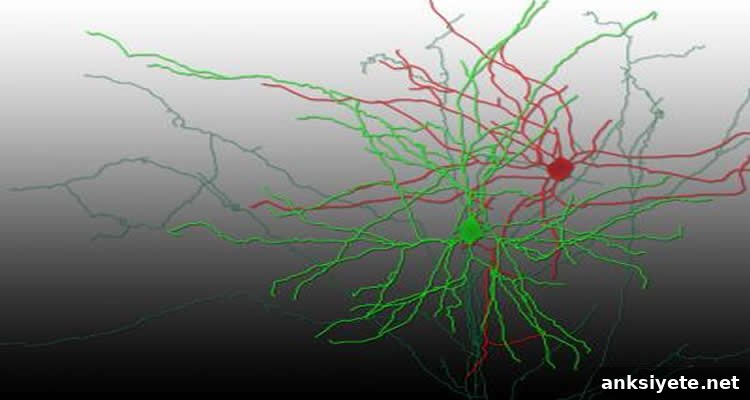
Neurons—the specialized cells of the nervous system—communicate by sending chemical signals across tiny junctions called synapses. This process, known as synaptic transmission, is essential for the brain and spinal cord to rapidly process large volumes of incoming sensory information and produce precise outgoing signals. Studying synaptic transmission in living animals has been technically challenging, often forcing researchers to rely on artificial preparations that do not fully reflect the natural environment of neurons. For the first time, scientists at EPFL have directly observed and measured synaptic transmission in a live animal using a novel approach that combines genetic tools with advanced optical physics. Their breakthrough is reported in the journal Neuron.
Aurélie Pala and Carl Petersen at EPFL’s Brain Mind Institute employed a cutting-edge technique called optogenetics, which has transformed experimental neuroscience over the last decade. Optogenetics uses light to control the electrical activity of genetically targeted neurons with millisecond precision in living, and even freely moving, animals. This level of control is crucial to dissect the roles of the many different neuron types in the brain and to link specific circuit activity to higher functions such as perception, memory, behavior and the dysfunctions underlying neurological or psychiatric disorders.
Activating neurons with light
Optogenetics relies on inserting a gene encoding a light-sensitive protein into selected neurons. The modified neurons express the protein in their membranes, where it functions as an ion channel that can be opened or closed by specific wavelengths of light. When light is delivered to those neurons, the channel permits ions to flow across the membrane, changing the cell’s electrical balance. If the light stimulus is strong enough, this can trigger an action potential—a rapid electrical impulse—allowing researchers to activate or silence neurons simply by turning a light source on or off.
The power of optogenetics lies in its specificity: experimenters can target single cells, defined classes of neurons, or entire neuronal populations with precise temporal control. This enables controlled perturbations of circuit activity and provides a means to probe how individual cell types contribute to the flow of information through neural networks.
Recording synaptic transmission in a living brain
In this study, Aurélie Pala used optogenetic stimulation to activate individual neurons in anesthetized mice and simultaneously recorded electrical responses from neighboring cells to measure synaptic transmission. The targeted neurons were located in the mouse barrel cortex, a region of the somatosensory cortex that processes tactile input from the animal’s whiskers. The barrel cortex is a well-studied model system for sensory processing and cortical circuit organization.
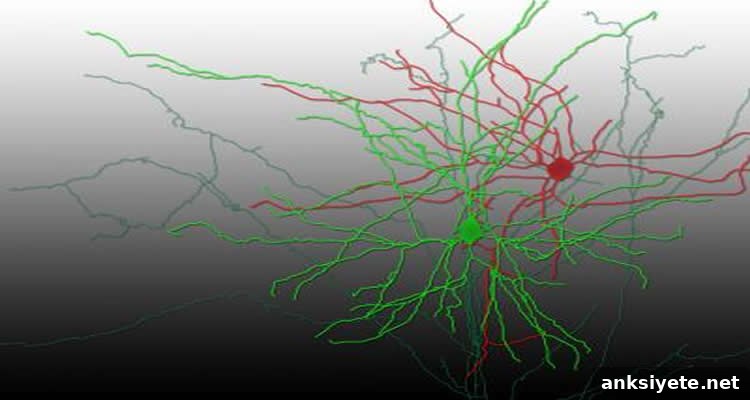
When Pala illuminated the genetically modified neurons with blue light, those neurons were driven to fire action potentials. At the same time, microelectrodes recorded small voltage changes in nearby neurons, detecting the postsynaptic responses that follow presynaptic firing. By combining optogenetic stimulation with sensitive electrophysiological recordings, the team could directly link the activation of a single presynaptic neuron to the resulting synaptic effects on its neighbors.
Focusing on connections from light-activated neurons onto nearby interneurons, the researchers examined how synaptic transmission varied across different interneuron types. Interneurons in cortical circuits are commonly inhibitory: when activated, they reduce the likelihood that downstream neurons will continue firing. The study used two-photon microscopy, an advanced optical imaging method that permits visualization deep within living brain tissue with reduced photodamage and high spatial resolution, to identify and classify the interneurons that received inputs from the stimulated cells.
The results revealed that synaptic transmission from the optogenetically targeted neurons differed depending on the interneuron subtype at the receiving end. These observations demonstrate that cell-type-specific connectivity and transmission can be measured in vivo, offering direct insight into how distinct neuron classes shape cortical circuit dynamics under naturalistic conditions.
“This work is a proof-of-concept that optogenetics can be combined with in vivo electrophysiology and advanced imaging to measure cell-type-specific synaptic connectivity and transmission,” says Aurélie Pala, who completed her PhD based on this research. “The approach opens the door to constructing more comprehensive maps of how different neuron types connect and communicate within intact brain circuits.”
The authors plan to expand these measurements to other neuronal types and connections within the barrel cortex and to apply the method in awake, behaving animals. Studying synaptic transmission while animals perform sensory tasks or exhibit natural behaviors will be critical to understanding how transiently switching neuronal activity by light impacts perception, decision-making and other higher brain functions.
Contact: Nik Papageorgiou – EPFL
Source: EPFL press release
Image Source: Image credited to Aurélie Pala/EPFL and adapted from the press release
Original Research: Full open access research: “In Vivo Measurement of Cell-Type-Specific Synaptic Connectivity and Synaptic Transmission in Layer 2/3 Mouse Barrel Cortex” by Aurélie Pala and Carl C.H. Petersen, Neuron. Published online December 24, 2014. DOI: 10.1016/j.neuron.2014.11.025