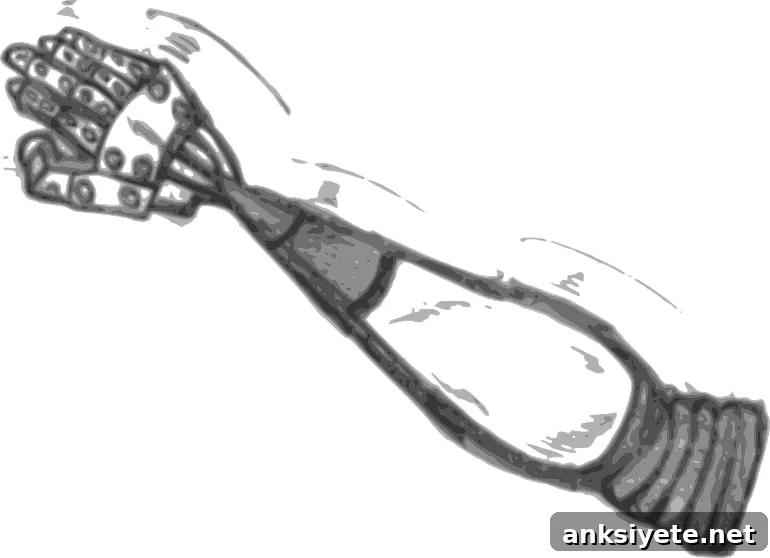
Summary: Researchers developed a virtual supernumerary robotic arm controlled by a user’s feet in a virtual environment. After training, participants reported that the extra limb felt integrated with their own body.
Source: University of Tokyo
What would you do with an extra arm — or, like Doctor Octopus, several more?
Work on supernumerary robotic limbs explores how people adapt, both mentally and physically, to having additional artificial appendages. This research aims to understand the limits of human plasticity: how the brain reorganizes and incorporates new tools or body parts into its sense of self.
Ken Arai, a doctoral student at the Research Center for Advanced Science and Technology (RCAST) at the University of Tokyo, became interested in whether humans can learn to treat extra limbs as part of their own bodies. Tool use offers a familiar example of this plasticity—artists and craftsmen often come to regard their tools as extensions of themselves, a phenomenon known as tool embodiment.
To test if people can embody added limbs, teams from the University of Tokyo, Keio University and Toyohashi University of Technology built a virtual supernumerary robotic limb system and invited participants to perform tasks in virtual reality (VR) using those extra arms.
Participants wore a head-mounted display that presented a first-person view of their own arms alongside additional virtual robotic arms. Uniquely, these robotic arms were controlled by toe movements. Tactile feedback devices on the tops and soles of participants’ feet conveyed sensations when the virtual arms touched virtual objects, such as a ball.
After training with the system, many participants reported that the virtual arms felt like genuine extra limbs, not merely extensions of their real arms or feet. Self-report measures showed significant increases in three core aspects of embodiment: sense of body ownership (feeling the limb is part of the body), sense of agency (feeling in control of the limb’s actions), and sense of self-location (feeling the limb occupies a consistent space relative to the body).
The researchers also measured changes in peripersonal space — the immediate space around the body that we treat as our own. They found that this perceived zone expanded to include the area around the virtual robotic arms, indicating a shift in how participants spatially located and related to their bodies in VR.
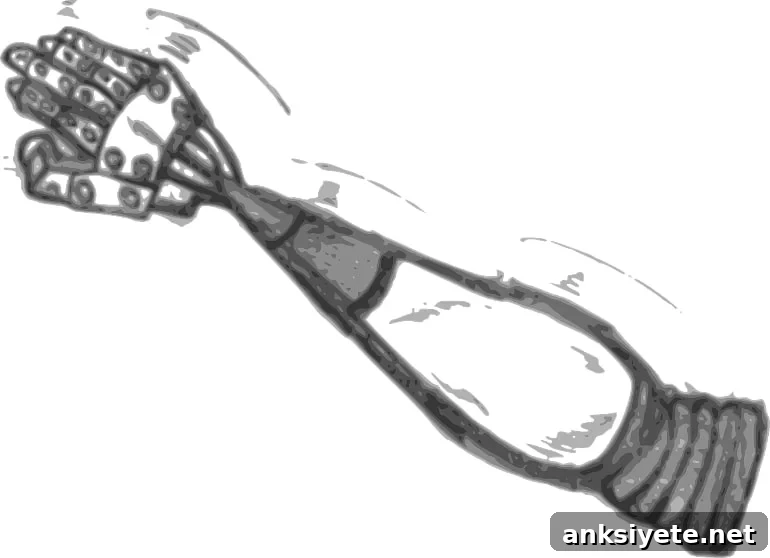
As Arai summarized, the team observed a clear relationship between changes in visuo-tactile perception around the robotic limbs (measured by crossmodal tasks) and participants’ subjective reports that they felt an increase in the number of their arms. In short, perceptual and subjective measures moved together: when visuo-tactile integration extended around the extra limbs, participants were more likely to feel those limbs as part of themselves.
Looking ahead, the team plans to study cooperative behaviors between a participant’s natural arms and the virtual robotic arms. Understanding how people coordinate natural and added limbs in VR will shed light on the mechanisms that allow supernumerary limbs to feel natural and effortless to use.
“Investigating the mechanisms and dynamics of the supernumerary limb sensation reported here from the standpoint of cognitive neuroscience will be important in exploring human plasticity limits and the design of supernumerary robotic limb systems,” Arai said. The goal is to translate findings from virtual experiments into real-world designs for additional limb systems that people can operate as naturally as their own bodies.
About this robotics research news
Author: Joseph Krisher
Source: University of Tokyo
Contact: Joseph Krisher – University of Tokyo
Image: The image is in the public domain
Original Research: Open access.
“Embodiment of supernumerary robotic limbs in virtual reality” by Masahiko Inami et al. Scientific Reports
Abstract
Embodiment of supernumerary robotic limbs in virtual reality
Supernumerary robotic limb systems are designed to expand human motor capability by adding extra, artificially designed limbs. For these systems to be practical and efficient, users must embody the added limbs so that they feel like part of the body, while cognitive load remains low. Previous embodiment studies focused mainly on substitution (replacing a lost limb) or extension (extending existing limbs’ reach), whereas the addition of completely new limbs has been less explored.
In this study, the team created a virtual supernumerary robotic limb system and evaluated whether users could treat the extra arms as part of their bodies. They combined subjective questionnaires with a visuo-tactile crossmodal congruency task to measure changes in peripersonal space and multisensory integration.
Results showed that participants could indeed embody the extra limbs after training with the system. Moreover, positive correlations emerged between perceptual changes in the crossmodal task and subjective reports of experiencing an increased number of arms — a phenomenon the authors call supernumerary limb sensation. These findings suggest that adding a new body part can create the subjective experience of acquiring a novel limb distinct from one’s original anatomy through functional expansion.