
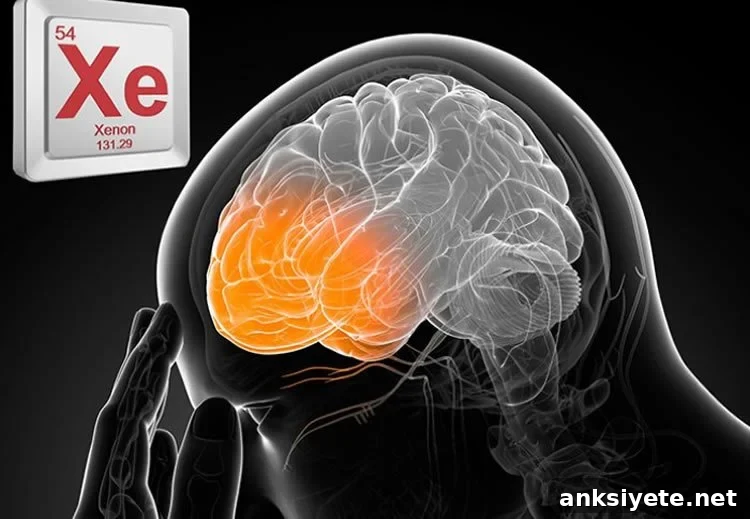
Treatment with xenon gas after a head injury reduces the extent of brain damage, according to a study in mice.
Traumatic brain injury (TBI) is the leading cause of death and long-term disability among people under 45 in developed countries, with most cases resulting from falls and road accidents. The initial impact produces a primary injury, but the secondary injury that unfolds over hours and days after the trauma is largely responsible for lasting neurological and physical impairments. Currently, there are no approved drug therapies that can be administered after the event to reliably prevent this secondary cascade of damage.
Researchers at Imperial College London report that xenon gas, administered within hours after the initial impact, significantly limits brain tissue damage and improves neurological recovery in mice. The study, published in Critical Care Medicine, demonstrates both short-term and long-term functional benefits and provides preclinical evidence that could support human clinical trials of xenon as a treatment for head injury.
Although xenon is chemically inert, it is biologically active: it has recognised general anaesthetic properties that have been known since the 1950s. Prior laboratory work at Imperial showed xenon’s ability to protect cultured brain cells from mechanical injury. The new study extends those findings to a live animal model, an essential step before considering clinical testing in patients with TBI.
In the experimental model, mice were anaesthetised and then subjected to a controlled mechanical impact to the brain to simulate traumatic injury. After this controlled TBI, groups of mice received xenon gas at varying concentrations and at different delays after the insult to evaluate both dose response and therapeutic time windows.
Animals treated with xenon showed measurable improvement in neurological tests that assess balance, movement, and sensorimotor function in the days following injury and also after one month. Importantly, xenon reduced the volume of secondary brain damage and improved functional outcomes even when treatment was started up to three hours after the initial impact, indicating a clinically relevant therapeutic window.
Dr Robert Dickinson, from the Department of Surgery and Cancer at Imperial College London and the study’s lead investigator, commented on the findings: “Following a blow to the head, most of the brain damage evolves in the hours and days afterwards rather than instantaneously. At present, we have no specific drugs to halt the spread of secondary injury, and targeting that secondary phase is likely to be the key to improving outcomes. Our data show that xenon can prevent both tissue damage and functional disability in mice, and crucially it remains effective when administered up to at least three hours after injury. That timeframe could allow treatment to begin in hospital emergency departments or even in ambulances.”
These preclinical results strengthen the rationale for advancing xenon toward clinical testing in human TBI. Because xenon is already known to be a safe anaesthetic in controlled settings, and because it can be delivered relatively rapidly, it is a promising candidate for translation. The research team emphasizes, however, that human clinical trials are needed to confirm safety, optimal dosing, and effectiveness in people who sustain head injuries.
The study received funding support from the European Society for Anaesthesiology, the Royal College of Anaesthetists, the British Journal of Anaesthesia, the Medical Research Council and the Fundação para a Ciência e a Tecnologia, Portugal.
Separately, xenon is also under investigation in clinical trials for newborns who suffer oxygen deprivation at birth; these neonatal studies are being led by Imperial College London in collaboration with the University of Oxford and explore xenon’s potential neuroprotective effects in a different, but related, clinical setting.
Contact: Sam Wong – Imperial College London
Source: Imperial College London press release
Image Source: Adapted from the Imperial College London press release
Original Research: Abstract for “Xenon Improves Neurologic Outcome and Reduces Secondary Injury Following Trauma in an In Vivo Model of Traumatic Brain Injury” by Campos-Pires et al., published online September 3, 2014, in Critical Care Medicine.