
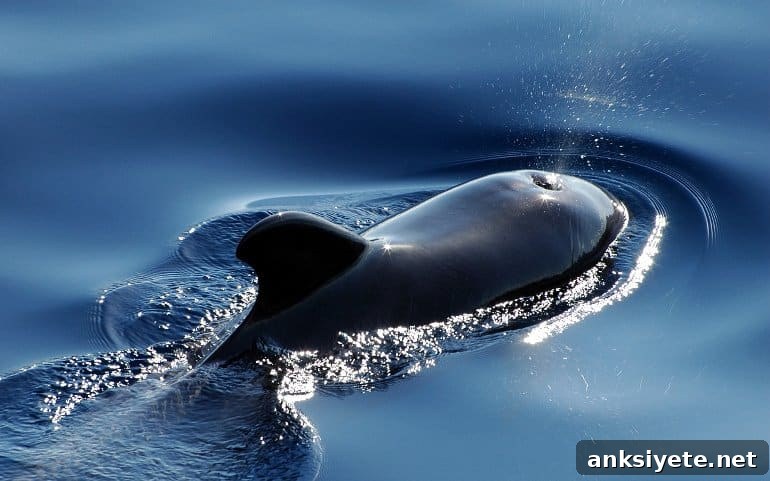
Summary: New research from the University of British Columbia suggests that specialized vascular networks in whale brains, called retia mirabilia, protect the brain from movement-generated blood pressure pulses produced during swimming.
Source: University of British Columbia
Specialized blood vessel networks in cetacean brains appear to shield them from pressure pulses created by swimming, preventing damage that could otherwise accumulate over time.
Researchers at the University of British Columbia propose that the large vascular plexuses surrounding the brain and spinal canal of whales and other cetaceans—the retia mirabilia—serve a protective role against the rhythmic spikes in blood pressure generated by their distinctive dorsoventral swimming motion. Using biomechanical data from multiple species and a computational model, the team offers a new explanation for why these “wonderful nets” evolved and how they preserve brain health during sustained locomotion.
In many terrestrial animals, locomotion produces periodic internal pressure changes. For example, galloping horses experience blood pressure pulses with each stride, and respiration helps moderate those pulses. Cetaceans, by contrast, swim with powerful up-and-down tail strokes and spend long periods holding their breath while diving, so they cannot rely on respiratory cycling to normalize pressure fluctuations.
Lead author Dr. Margo Lillie and her colleagues suggest that swimming generates internal pressure pulses that travel through the arterial supply to the brain. If those arterial pulses were not balanced by corresponding changes in venous pressure, the resulting differences across the cerebral circulation could damage delicate vessels and tissue. In humans, chronic exposure to such pulsatile pressure differentials is a known contributor to vascular injury and cognitive decline.
To explain how cetaceans avoid this risk, the team developed the pulse-transfer hypothesis. Instead of damping or eliminating pressure pulses, the retia mirabilia transfer the timing and amplitude of arterial pulses to the venous side. By synchronizing arterial and venous pulsations, the net pressure difference across the brain remains steady even while large pulses still move through the circulatory system. In effect, the retial complex preserves mean arterial-to-venous pressure while removing harmful pulsatility from the cerebral circulation.
The researchers compiled morphological and biomechanical parameters from 11 cetacean species, including fluking frequency and other locomotor variables, and fed these data into a computational model. The model indicates that the combination of substantial arterial capacitance within the retia and the limited extravascular space inside the cranium and vertebral canal can reduce pulsatile pressure transmission to the brain by as much as 97 percent. Senior author Dr. Robert Shadwick and the team emphasize that this pulse-transfer mechanism is a distinctive evolutionary solution likely linked to the development of dorsoventral fluking in cetaceans.
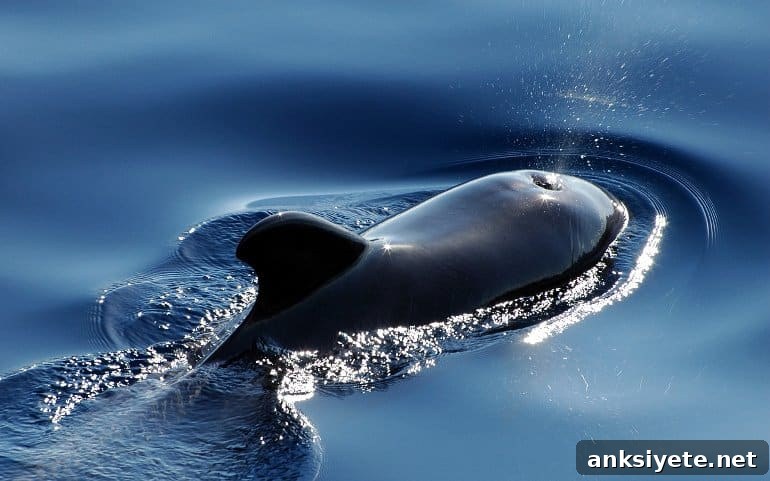
The model also highlights broader applications: similar computational approaches could probe pulse dynamics in other animals, including humans, and help clarify how various physiological systems interact to regulate intracranial pressures during movement. However, the authors note important limitations. Direct measurement of blood pressure and flow in the brains of actively swimming cetaceans would provide definitive tests of the hypothesis, but such experiments are currently not feasible for ethical and technical reasons.
“If cetaceans cannot use respiration to moderate locomotion-generated pulses, they must rely on another mechanism,” says Dr. Lillie. “Our modeling supports the idea that the retial complex performs that role by transferring pulse energy so the brain does not experience dangerous pressure differentials during fluking.”
Co-author Dr. Wayne Vogl points to logical next steps: understanding how the thorax and lungs respond to hydrostatic pressures at depth and how those changes influence vascular pressures would refine the model. Collecting in vivo vascular measurements remains a long-term goal but is constrained by the practical challenges of studying the world’s largest animals in their natural environment.
About this neuroscience research news
Author: Alex Walls
Source: University of British Columbia
Contact: Alex Walls – University of British Columbia
Image: The image is in the public domain
Original Research: Closed access. “Retia mirabilia: Protecting the cetacean brain from locomotion-generated blood pressure pulses” by Robert Shadwick et al., published in Science.
Abstract
Retia mirabilia: Protecting the cetacean brain from locomotion-generated blood pressure pulses
Cetaceans possess extensive vascular plexuses (retia mirabilia) whose function has been unclear. All cerebral blood flow passes through these retia, and the authors hypothesize that they protect cetacean brains from pulsatile blood pressures generated by locomotion.
The study proposes a pulse-transfer mechanism that minimizes pulsatility in the arterial-to-venous cerebral pressure differential without removing the pressure pulses themselves. Using a computational model informed by morphology and locomotor parameters from 11 species, the researchers show that the large arterial capacitance within the retia, combined with the limited extravascular capacitance of the cranium and vertebral canal, could shield the cerebral vasculature from up to 97% of systemic pulsatility.
The evolution of the retial complex in cetaceans—likely associated with the emergence of dorsoventral fluking—provides a unique physiological adaptation that mitigates adverse locomotion-generated vascular pulsatility and helps explain how these animals preserve brain health while performing powerful, breath-hold swimming behaviors.