
Summary: Researchers at UC San Diego identified two microRNA molecules that regulate neurotransmitter switching, a mechanism that shifts social behavior between aversion and attraction.
Source: UC San Diego
A separated lamb finds its flock. Salmon return to their exact spawning grounds. How do animals so reliably recognize kin and home? These behaviors—often described as imprinting or social attachment—have long puzzled scientists at the cellular and molecular level.
Biologists at the University of California San Diego have uncovered key pieces of this puzzle, revealing how changes in neurotransmitter identity and microRNA regulation control attraction and aversion responses linked to kinship odors. Their findings clarify mechanisms of social preference that may apply across species, including implications for mammalian neonatal attachment.
The research team—led by Davide Dulcis from UC San Diego’s Department of Psychiatry along with Giordano Lippi, Darwin Berg and Nicholas C. Spitzer of the Division of Biological Sciences—published their results in Neuron on August 31, 2017.
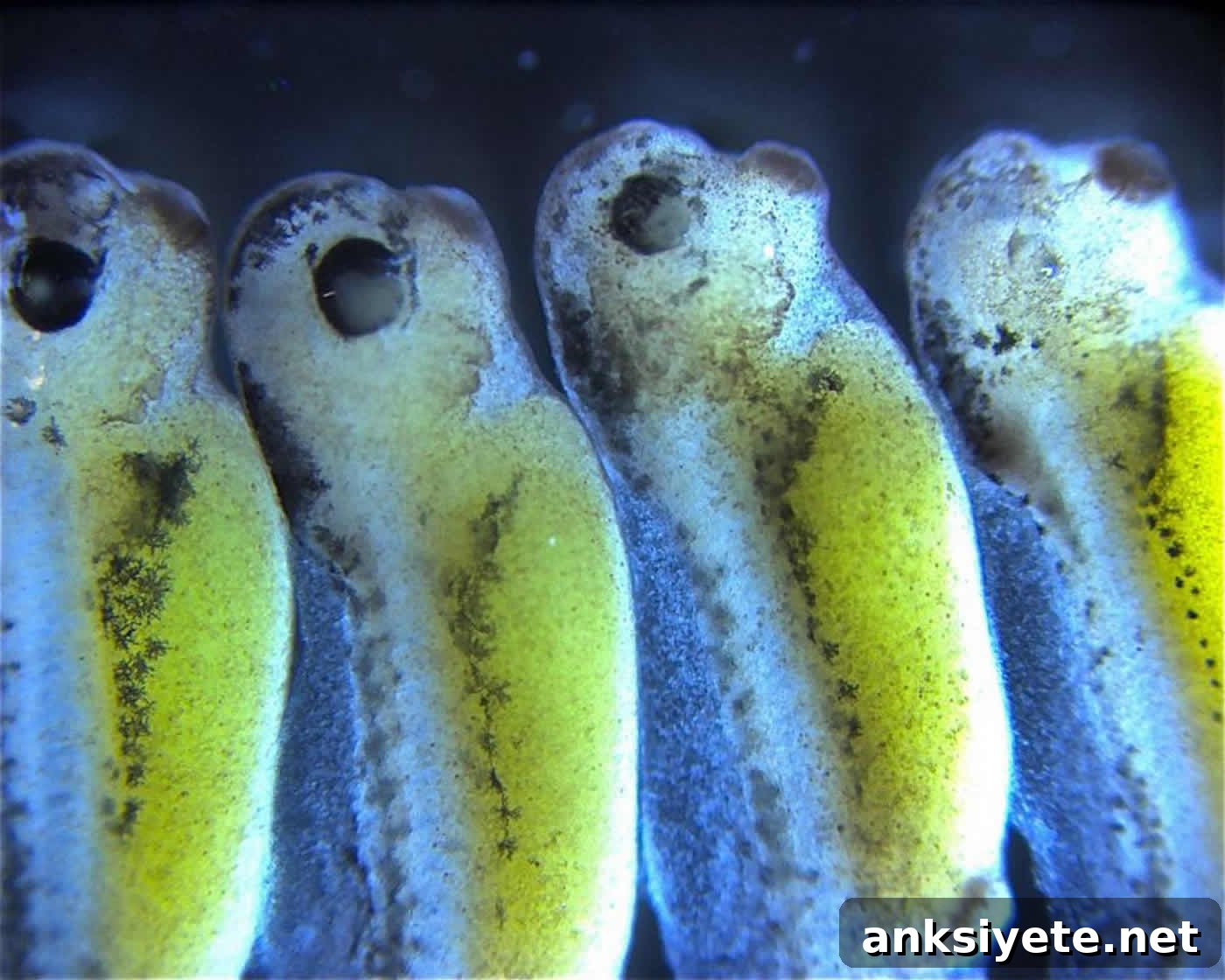
Over eight years of neurobiological experiments, the researchers used larval frogs (tadpoles) as a model because these animals naturally swim in family clusters and respond to familial olfactory cues. Focusing on two- to four-day-old tadpoles, the team showed that sustained exposure to specific odors drives a change in social preference: tadpoles normally prefer to swim with true kin, but prolonged exposure to non-kin odors during an early sensitive period can shift that preference toward the odor source, effectively expanding their social affiliation beyond biological relatives.
The molecular basis for this change is a process called neurotransmitter switching. In the accessory olfactory bulb (AOB) interneurons, sustained odorant exposure alters the balance between dopaminergic (DA) and GABAergic (GABA) neurons. Typical kinship recognition is associated with higher levels of dopamine signaling, whereas attraction triggered by artificially introduced non-kin odors corresponds to an increase in GABAergic identity. Manipulating the relative numbers of DA- and GABA-expressing neurons or applying local DA or GABA receptor antagonists was sufficient to change kinship preference, demonstrating that neurotransmitter phenotype directly affects social behavior.
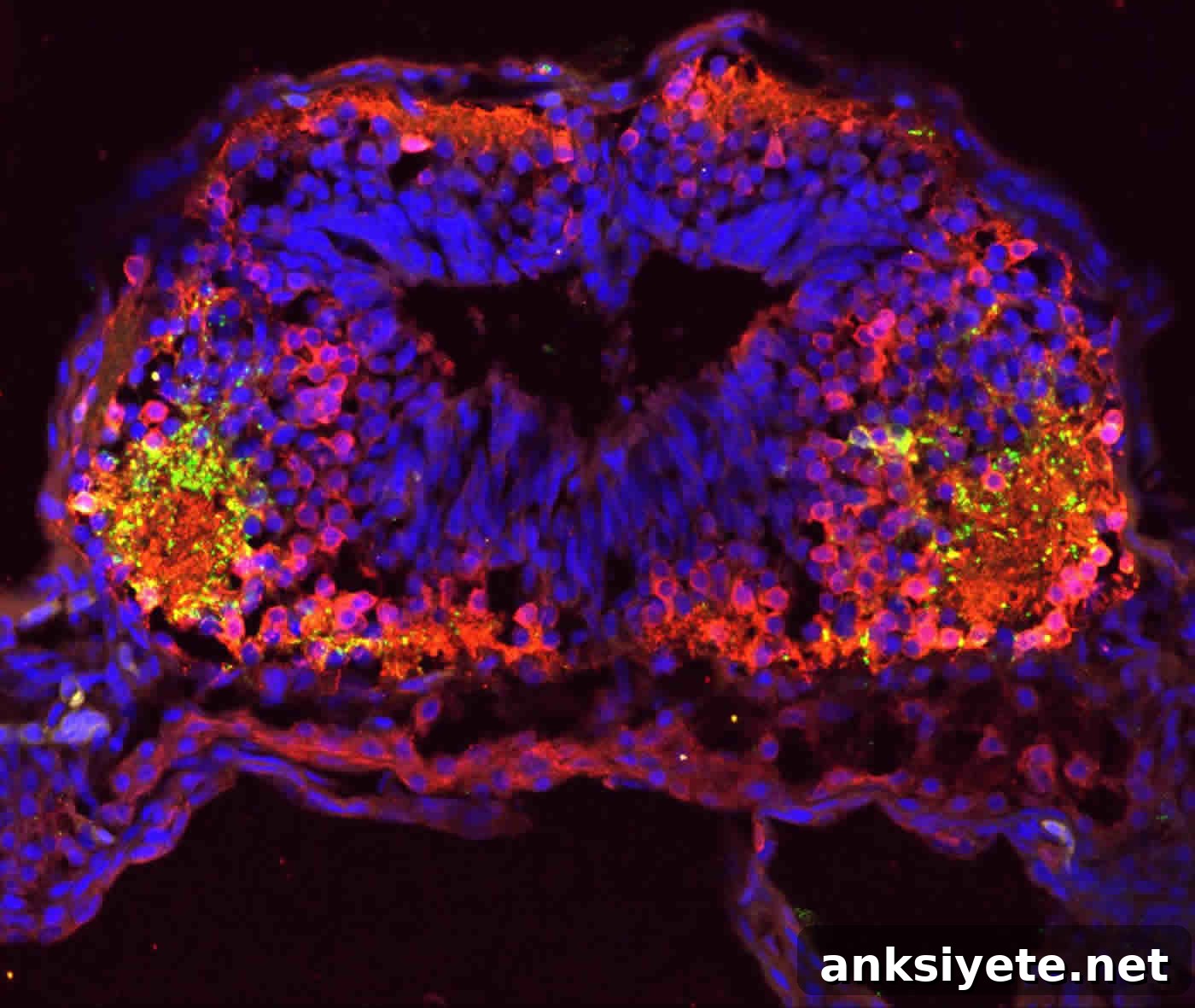
A confocal image of a tadpole brain shows dopaminergic (green) neurons, enriched during typical kin recognition, and GABAergic (red) neurons, elevated when social preference is shifted toward non-kin odorants. Image credit: UC San Diego.
To identify the genetic regulators behind neurotransmitter switching, the researchers performed sequencing of AOB microRNAs and screened candidates differentially regulated by odorant exposure. From hundreds of possibilities, they isolated two microRNAs—microRNA-375 (miR-375) and microRNA-200b (miR-200b)—as critical regulators of the DA-to-GABA switch. Functional experiments revealed that these miRNAs act on transcription factors Pax6 and Bcl11b, which in turn control the specification of dopaminergic and GABAergic phenotypes and thus influence attraction versus aversion behavior.
“MicroRNAs were ideal candidates for the job,” said Giordano Lippi, noting that miRNAs can repress multiple mRNAs post-transcriptionally, coordinate genetic programs and trigger developmental switches. The work builds on earlier studies of neurotransmitter switching from the Spitzer laboratory and extends that concept to sensory-driven social preference.
The study began in 2009 and grew in scale and complexity over several years. Peer reviewers praised the comprehensive nature of the experiments. The combination of behavioral assays, neurotransmitter phenotyping, pharmacological manipulation and molecular regulation provides an integrated view of how sensory experience can reconfigure neural circuitry to change social preference.
“Social interaction is shaped by many factors,” said Nicholas Spitzer, co-director of the Kavli Institute for Brain and Mind at UC San Diego. “While humans rely on multiple cues for bonding, this mechanism—where olfactory experience drives neurotransmitter switching through microRNA and transcription factor pathways—likely contributes to how social preferences form and change.”
Authors: Davide Dulcis, Giordano Lippi, Christiana J. Stark, Long H. Do, Darwin K. Berg, and Nicholas C. Spitzer.
Funding: Supported by the NIH/National Institute of Neurological Disorders and Stroke.
Publication: Article published online August 31, 2017 in Neuron: “Neurotransmitter Switching Regulated by miRNAs Controls Changes in Social Preference.”
Abstract
Neurotransmitter Switching Regulated by miRNAs Controls Changes in Social Preference
Highlights
• Developmental odorant exposure reversibly alters attraction and aversion behavior.
• Kinship odorants drive dopamine–GABA switching in accessory olfactory bulb interneurons.
• MicroRNAs act on Pax6 and Bcl11b to regulate DA/GABA levels and social preference.
• Findings may be relevant to olfactory imprinting and neonatal attachment in mammals.
Summary
Sustained exposure to kin or non-kin odorants during development changes social preference in amphibian larvae by altering neurotransmitter expression in accessory olfactory bulb interneurons. The number of dopamine- versus GABA-expressing neurons shifts with odorant exposure, producing corresponding attraction or aversion behaviors. Manipulating these neuronal populations or blocking DA/GABA receptors modifies kinship preference. Differentially regulated microRNAs in the AOB, specifically miR-375 and miR-200b, were found to target transcription factors Pax6 and Bcl11b, thereby controlling dopaminergic and GABAergic phenotypes. These results illuminate a molecular and cellular pathway by which sensory experience drives neurotransmitter switching and experience-dependent social preference.